 RunningCrews
The Rarest Flower in the Garden
There is a Barrington Levy song that most runners have never heard. It was a hit in Jamaica, deep in the roots of dancehall culture, and it tells the story of the rarest flower in the garden, the kind you almost never see. That image sits at the heart of Black Roses NYC, a running collective that operates in New York City on its own terms, at its own pace, and entirely outside the reach of mainstream running marketing. The name is not decorative. It is a statement of intent. When Jessie and Knox built this crew, they were not building a running club in the conventional sense. They were building something rarer, a collective that would attract people serious enough, and interesting enough, to deserve it. Black Roses NYC came together in 2012, rooted in the downtown New York City scene. The crew was conceived for runners who were already part of that world, people who knew the city's late-night rhythms as well as its early-morning streets, who moved through creative and cultural spaces and also happened to run fast. The founders did not advertise widely or open the doors to anyone who could log a few comfortable miles. From the beginning, the question was never just how fast you ran. It was whether you understood what the collective was trying to build, and whether you were ready to be part of something with higher stakes than a casual Saturday jog.Training Built Around Real Goals
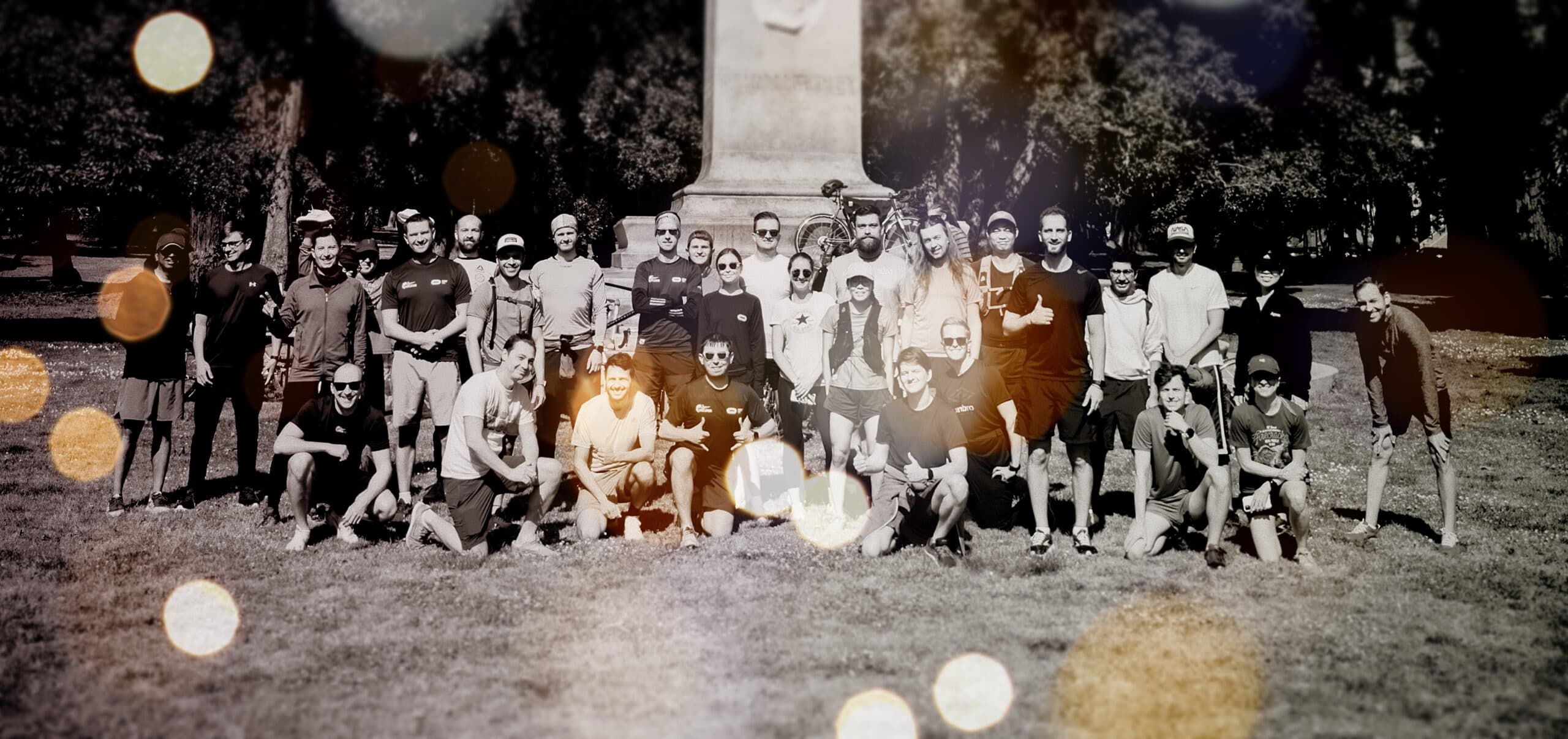
The training approach at Black Roses NYC reflects that same seriousness. This is not a coaching program, and no one here is handing out personalized training plans or monitoring heart rate zones. What the crew offers instead is structure built around collective momentum. Sessions are organized according to members' upcoming goal races, which means the workouts shift with the calendar and with the ambitions of the group. One week might bring five consecutive 1K repeats. Another might feature a descending ladder, starting from a 5K effort, pulling back through 3K and 1K, and finishing with hard, aggressive 300-meter efforts. The pace is honest. The expectations are clear. The crew meets twice a week for structured track practices. Meeting points vary depending on the type of workout, keeping the training environment dynamic and responsive rather than routine. There is a logic to this variability. When you are preparing runners for performances at the level Black Roses NYC aims for, sameness becomes an obstacle. The body adapts and the mind follows, but neither adapts well to stagnation. So the locations shift, the workouts adjust, and the pressure to show up ready is constant. Around 35 members make up the collective, a number small enough that accountability is unavoidable.The Black Bib and What It Means
Getting into Black Roses NYC requires an invitation. There is no application form, no open recruitment drive, no sign-up sheet at a local running store. The entry point is the black bib, and wearing it means something. It means someone already inside the collective saw you, recognized what you were capable of, and decided you belonged. That mechanism is not about exclusivity for its own sake. It is about the integrity of what happens inside the group, about ensuring that every person on the track shares the same level of commitment and the same appetite for pushing beyond what is comfortable. The pace at Black Roses NYC sessions places it firmly in the company of Boston Marathon qualifiers and athletes operating close to a professional standard. These are runners who do not arrive to socialize through easy miles. They arrive to work. But the intensity on the track does not define the entire culture. The crew is also known for its social energy, for the life that happens after the workout is done and the cool-down is over. There is a balance here, between the discipline of serious training and the vitality of a crew that genuinely enjoys being together. That combination, hard work followed by real celebration, is part of what gives Black Roses NYC its particular texture.An Eclectic Mix of New York Originals
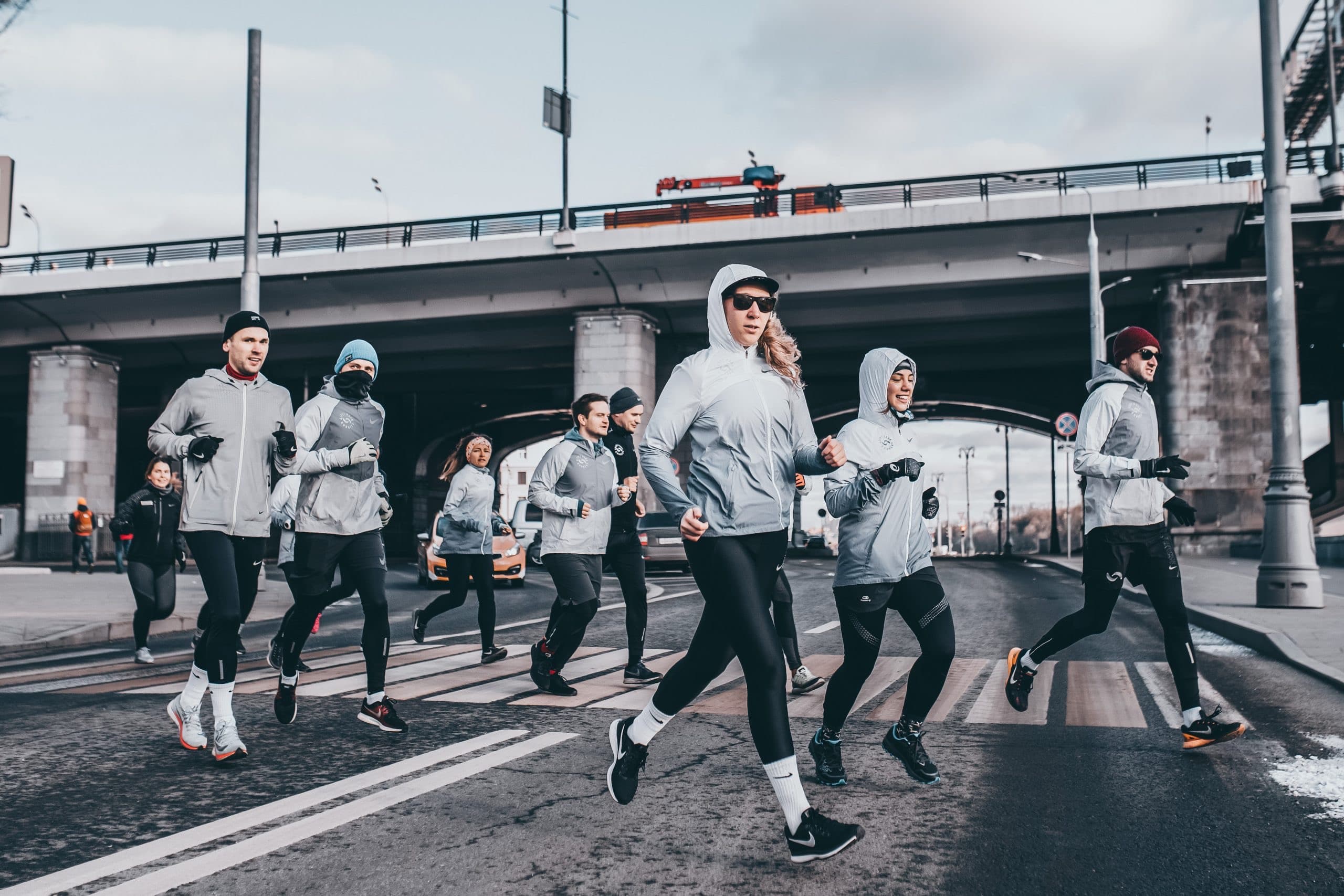
Look around at a Black Roses NYC practice and you will not see a homogeneous group of performance-focused athletes in matching kit. The collective draws from across New York City's working and creative world. Nurses who finish overnight shifts and make it to the track anyway. Bartenders between gigs. Marketing professionals. DJs who know exactly which Barrington Levy record to play and why. What connects all of them is not a shared profession or neighborhood but a shared hunger, for the training, for the culture, and for the idea that running can exist in conversation with the rest of a full, complex life in the city. That diversity is one of the crew's genuine strengths. When people from different corners of New York City's social landscape train together at a high level, something interesting happens. The conversations after sessions are not limited to split times and shoe technology. The crew feeds on the richness of its own mix, and that feeds back into the running. There is a reason Black Roses NYC has remained around 35 members rather than scaling into the hundreds. A certain size makes a certain kind of culture possible, and that culture is not an accident.Goals Beyond the Finish Line
One of the guiding ideas inside Black Roses NYC is a concept Knox calls "goals beyond." The premise is straightforward but demanding: once you achieve the goal in front of you, what comes next? If you qualify for the Boston Marathon, then what? If you hit the standard for the Olympic Trials, where does your ambition go from there? The crew is not in the business of helping people tick boxes and move on. It is in the business of pushing runners to think past the obvious endpoint, to hold a larger vision of what running can produce in a life and in a community. This philosophy sits at the heart of what makes Black Roses NYC distinct from most running collectives operating in New York City today. The crew does not measure success purely in race results, though those results are taken seriously. It measures success in the growth of individual runners and in the effect the collective has on running culture more broadly. The ambition is not just to run faster. It is to change how running is understood, who feels at home in it, and what role a running crew can play in a city as sprawling and culturally dense as New York.Running in New York City
New York City is one of the great running cities in the world, and not simply because of Central Park's paths or the Hudson River Greenway stretching along the west side of Manhattan. The city's scale, its density, and its perpetual forward motion make running feel like both escape and immersion at once. You can run through a neighborhood that changes character every few blocks, from the warehouse quiet of early morning in one borough to the noise and crowd of another. Prospect Park in Brooklyn offers terrain with genuine variation. Flushing Meadows Corona Park in Queens opens up into something that briefly forgets it is surrounded by a metropolis. The city rewards those who run it with eyes open. New York City is also home to the New York City Marathon, one of the oldest and most celebrated road races anywhere in the world. Since its expansion to all five boroughs in 1976, the marathon has grown into a defining civic event, a course that takes runners from the bridges of Staten Island through Brooklyn, Queens, and the Bronx before finishing in Central Park. For a crew like Black Roses NYC, the marathon is one reference point among many. The crew's world includes the marathon, but it is not limited to it. Track sessions, goal races of varying distances, and the ongoing project of developing runners who think well past the next finish line are all equally present in the culture.Where Black Roses NYC Fits in the City's Running World
New York City has built one of the most active and varied running crew scenes anywhere in the world. Crews like Harlem Run, BridgeRunners, Lostboys Track Club, and Goldfinger Track Club each bring their own personality and community to the city's streets and tracks. We Run Uptown is rooted in Washington Heights. Boogie Down Bronx Runners and 24x7 Movement carry community engagement as central to their mission. Team Wepa, Streets 101, Iron Runners NYC, and MTAR Crew each represent a different facet of what running can look like in a city this size. No Regrets Runners, Spartan Sundays Run Club, and Old Man Run Club round out a landscape that is generous and diverse in its welcome. Black Roses NYC occupies a deliberate position within that landscape, not competing with these crews but existing alongside them as something clearly and intentionally its own. The collective does not chase growth or visibility. It does not soften its standards to widen its appeal. It follows the logic of the song that inspired its name: the rarest flower in the garden is not rare because it hides. It is rare because it is genuinely unlike everything else growing around it. That, more than any workout format or invitation-only policy, is the real story of Black Roses NYC. Follow the crew on Instagram to see what that looks like from the outside.Featured Crew
R
RunningCrews Editorial
RunningCrews.com