 RunningCrews
Two Friends, One Forest, an Unexpected Crew
It started with a simple observation: the trails around Brussels were remarkable, and almost nobody seemed to know about them. In January 2020, Jasper and Sam had already been running those trails on their own, threading through the ancient beech canopy of the Sonian Forest, finding quiet loops and muddy shortcuts that Brussels' city maps never mentioned. At some point, keeping those routes to themselves started to feel wrong. So they did what any reasonable pair of running enthusiasts would do: they invited strangers to come along. They called themselves Trail Trash, a name that manages to be self-deprecating and proud in equal measure, and they set a date for every other Sunday at nine in the morning. What happened next caught even them off guard. The crew grew quickly, quietly, and without any grand recruitment strategy. People just kept showing up, because the trails were good and the company was better. Within a few years, Trail Trash had grown to around a hundred members, a number that still surprises those who were there at the beginning. The founding instinct, though, has never really changed: find a beautiful route, share it generously, and see who comes.The Sonian Forest as a Second Home
Brussels is not the first city that comes to mind when people think about trail running, but that reputation is largely a failure of imagination. At the southeastern edge of the city, the Sonian Forest stretches across more than 4,400 hectares of protected woodland, a UNESCO World Heritage Site that holds one of the last remaining stands of ancient beech forest in Western Europe. The trees here are old and tall, with trunks wide enough to put your arms around, and on a foggy Sunday morning the light through the canopy has a quality that is genuinely difficult to describe without sounding dramatic. Trail Trash has claimed this forest as its home turf, and the crew knows it with the intimacy that only comes from running the same paths across different seasons. The Sonian Forest has its own history too, having served as a royal hunting ground for the Habsburg Imperial family for centuries. Its imagery was captured in the famous "Hunts of Maximilian" tapestries, which now hang in the Louvre. Trail Trash members are unlikely to think about that on a Sunday morning, legs pumping, lungs full of cold forest air, but they are running through a landscape that has been prized for its wildness for a very long time. That continuity, even if it goes unspoken, feels appropriate for a crew that chose this forest before almost anyone else in the Brussels running scene did.Signature Routes Worth Getting Up Early For
Over the years, Trail Trash has mapped out a set of routes that have become favourites among the crew. The Zoniënwoud Loop is among the most celebrated: a fifteen-kilometre circuit that moves through the heart of the forest, tracing the edges of quiet lakes and descending into hollows where the trail narrows and the trees press close. It is a route that rewards attention, changing character depending on the weather and the season. When the beech leaves are down in late autumn, the forest opens up and the sightlines extend in every direction. In spring, the undergrowth thickens and the path becomes something more intimate. Another well-loved run is the Tervuren Royal Park route, a ten-kilometre course that carries runners past the Royal Museum for Central Africa and the formal grounds of Tervuren Palace before looping back through parkland that softens into forest at its edges. These are not technical mountain trails, but they ask something of the people who run them: attention, a tolerance for uneven ground, and the willingness to get a little mud on the shoes. Trail Trash has never had much patience for pristine kit, which is, of course, part of the point.Organized Around Friendship, Not Performance
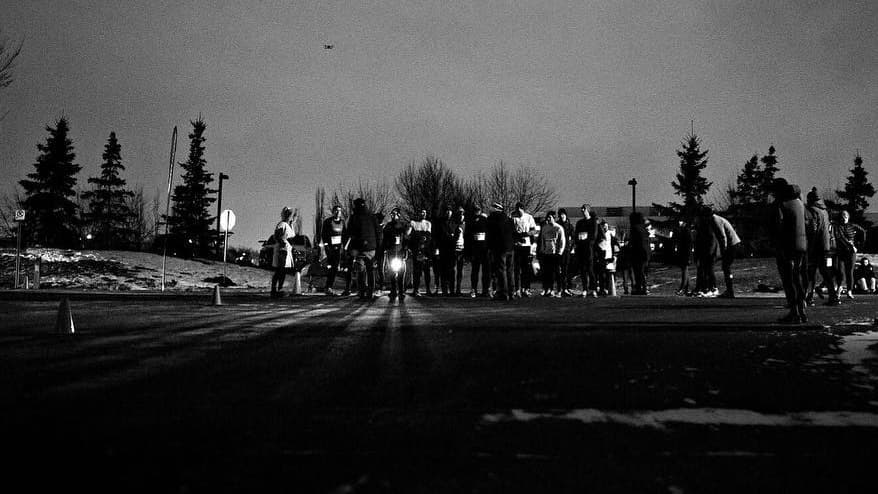
The crew runs every other Sunday, gathering at nine in the morning in the Sonian Forest. The pace sits around six minutes per kilometre, a tempo that is firm enough to feel like real effort but relaxed enough to allow conversation. Distances vary, and the crew has been known to cover anything from a quick ten kilometres to much longer adventures depending on the day and who shows up. What does not vary is the post-run tradition: beers. Not a rushed drink before everyone heads home, but a proper sit-down, the kind where stories accumulate and the run gets retold from several different angles simultaneously. That ritual matters to Trail Trash in a way that is worth taking seriously. Running together creates a certain kind of trust, and the post-run hour is where that trust gets expressed in language. People who met on a trail and said nothing but breathing for the first hour find that they have quite a lot to say once they stop. The beer is incidental. The conversation is the point.The People Who Keep It Running
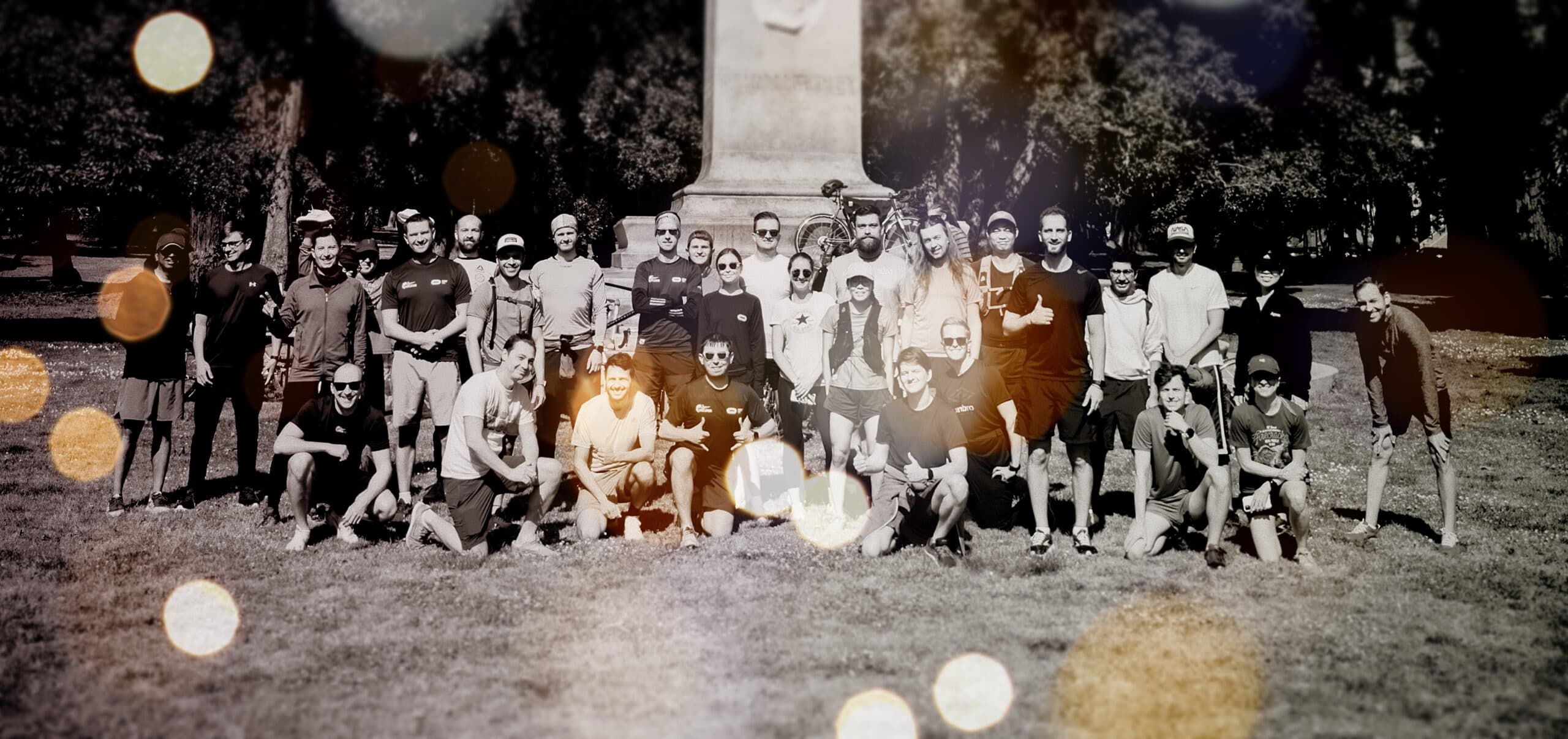
Trail Trash operates with a small leadership structure that has stayed close to its founding spirit. Sam and Jasper founded the crew and remain involved as captains alongside Yasko and Jan. The captain structure is less about hierarchy than about making sure there is always someone with a plan, someone who knows the route, and someone willing to wait at the back for whoever needs it. Trail Trash has never positioned itself as an elite training group. The crew's own language about itself is disarmingly honest: they are, by their own description, running idiots, people who love trails more than they love good sense, who signed up for a hobby and somehow ended up building a community. Around a hundred people now run regularly with the crew, drawn from across Brussels and its surrounding municipalities. The group reflects the city itself in its variety: different languages, different backgrounds, different reasons for being there, but all finding common ground in the act of moving through the same forest together.Racing as a Shared Adventure
Several races have taken on special meaning within the Trail Trash calendar. The 20km of Brussels is a fixture, an iconic road race that threads through the city's historic centre and draws thousands of participants each year. Trail Trash members tend to run it together, using the familiarity of the group to make a mass participation event feel personal. The Trail de Bruxelles offers something more aligned with the crew's everyday running life: an off-road challenge that swaps city streets for dirt and roots, demanding the kind of adaptability that Sonian Forest training develops almost without trying. These races are not primarily about times or placings for Trail Trash. They function as milestones in the crew's year, occasions to gather in a different context and to measure how far everyone has come, literally and otherwise. The preparation happens on Sunday mornings in the forest. The races are where that preparation meets something larger.An Open Invitation to the Forest
Trail Trash does not advertise aggressively and does not need to. The crew has grown through the oldest mechanism available: people running with the group, enjoying it, and telling someone else. The Trail Trash Instagram and the crew's website at trailtrash.be carry enough information to find the next run, and the welcome on Sunday morning does the rest. The Sonian Forest is large enough to absorb new arrivals without losing its sense of wildness, and the crew is loose enough in its structure to make room without becoming a stranger to itself. If you arrive with the expectation of a high-performance training squad, you will need to recalibrate. If you arrive curious, willing to move at a solid but unhurried pace through one of the most beautiful pieces of woodland near any European capital, and prepared to stay for a beer once the running is done, Trail Trash will feel immediately like somewhere you belong. That is the offer: a good route, honest company, and the particular satisfaction of finishing a trail run in a forest that has been absorbing human movement, in one form or another, for centuries.Featured Crew
R
RunningCrews Editorial
RunningCrews.com