 RunningCrews
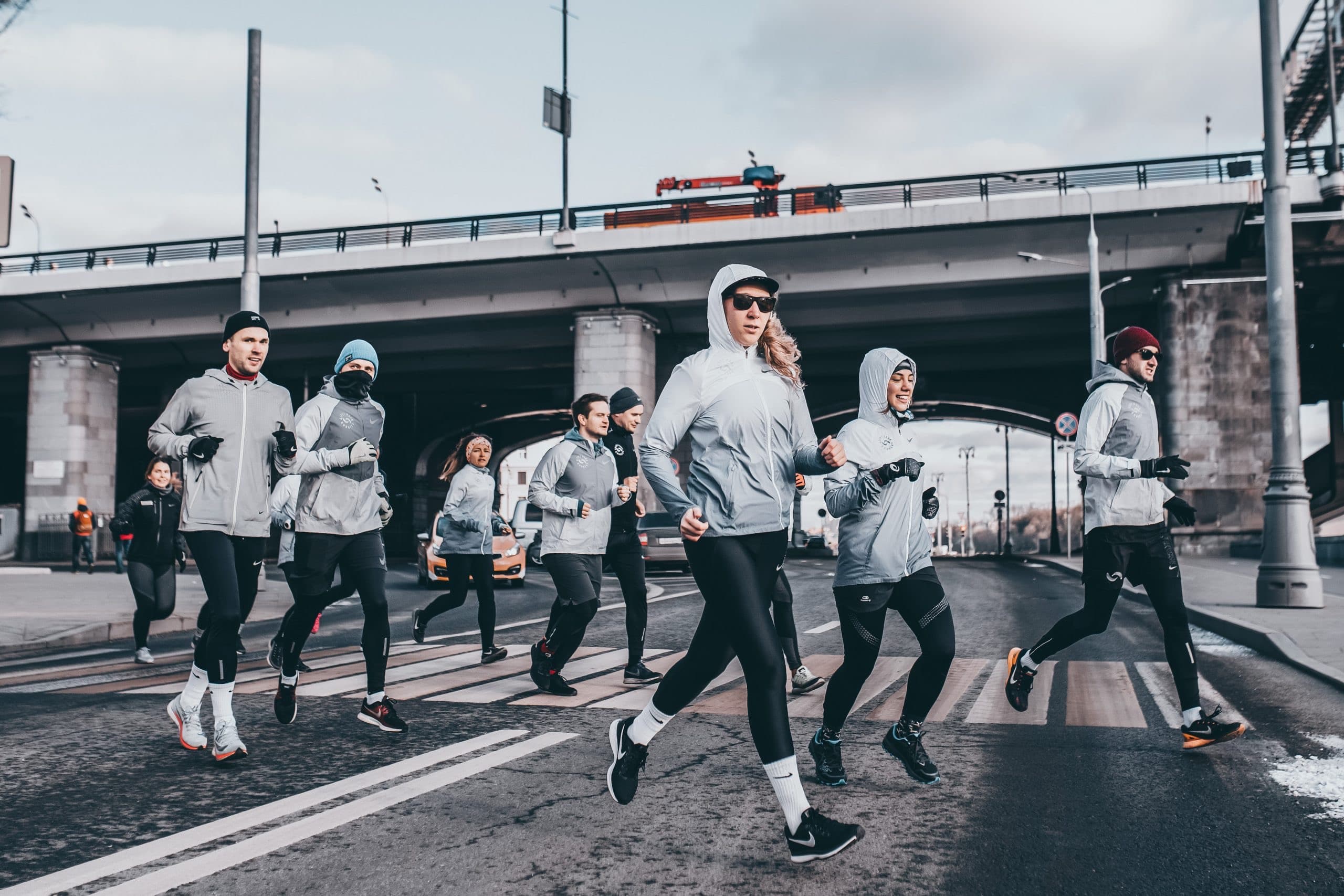
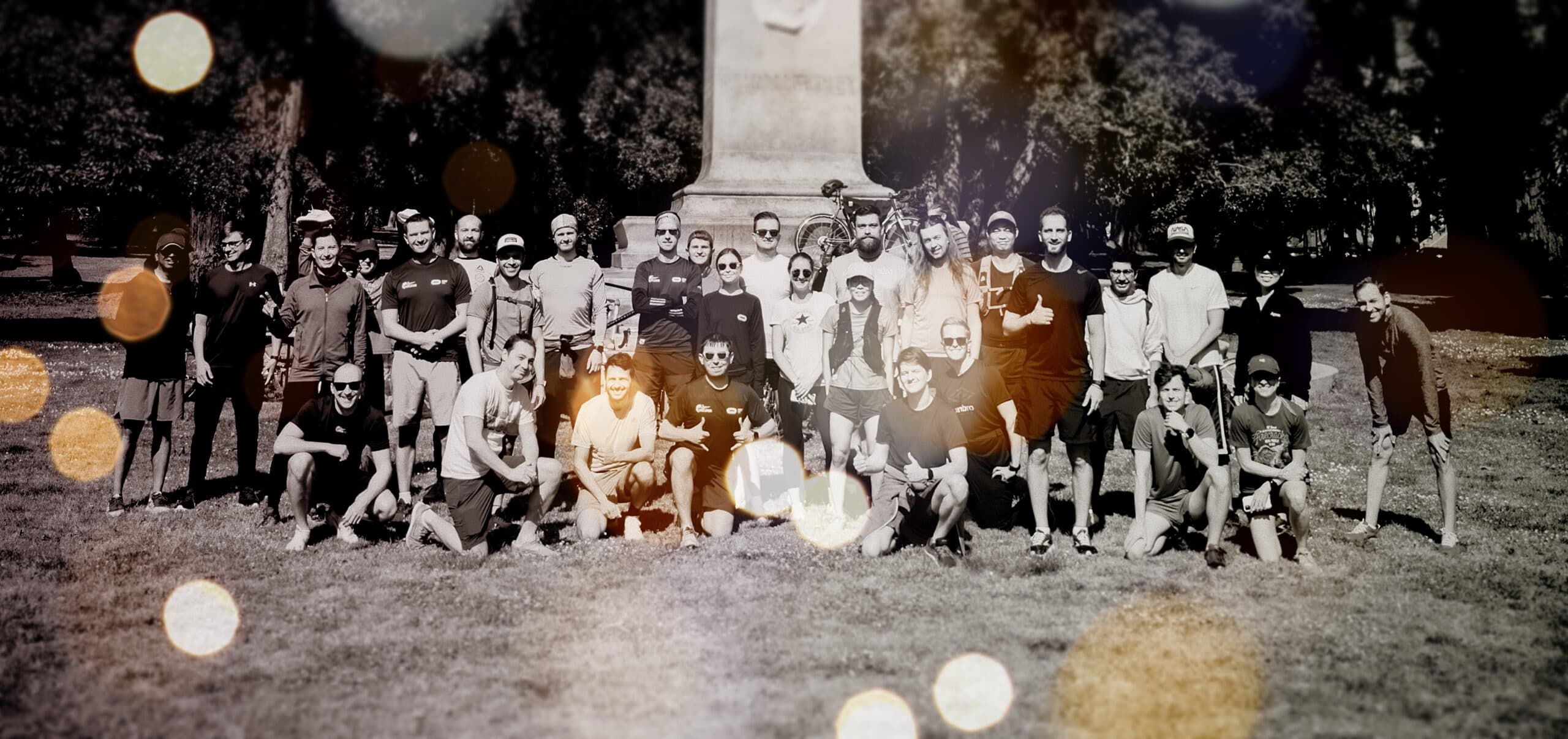
There is a particular Wednesday evening energy in Seoul that belongs, in part, to Private Road Running Club. The city hums with neon and noise, and somewhere in it, a group of around 300 runners gathers because six friends decided, back in March 2013, that running could be something more than a solitary habit. What they built over the following decade is one of Seoul's most enduring crew cultures, rooted in a deceptively simple idea: that movement is better when it is shared, and that sharing is better when everyone is welcome.
The founding group was anything but accidental. Paul Jung, known to the crew as JBW, brought together a circle of friends whose day jobs ranged across the creative industries. Jinbok Lee, the crew's creative director who goes by Make-1, gave Private Road Running Club its visual identity and cultural texture. James Lee McQuown stepped into the role of frontman and pacemaker from the very beginning, setting the rhythm not just for the runs but for the whole collective spirit. Alongside them, Minjun Kim (known as Lil Min), Zayn Kim, and Chanho Shin rounded out the founding core. Together they carried a shared conviction: that running should be something that brings people together rather than filtering them out.
A Name That Tells the Whole Story
The word "Private" in the crew's name is, in a way, the most honest part of its history. When Private Road Running Club launched, it was genuinely private, a tight circle of friends who ran together because they knew each other and liked each other. That closeness was never a gate to keep others out. It was simply where things started. As the months passed and the city took notice, the crew made a deliberate shift. The doors opened. The circle widened. The name stayed, but its meaning inverted. What had been a description became almost an inside joke, a reminder of how far the crew had come from those early runs with just a handful of people. That evolution reflects something real about how the best communities form. They do not usually begin with a grand vision of scale. They begin with a few people who enjoy each other's company, who share a route and a pace and a post-run conversation. Private Road Running Club grew because the thing at its core, genuine warmth toward whoever showed up, was contagious. A crew with around 300 members does not accumulate that kind of following through logistics alone. It earns it through feel.Running as a Cultural Act in Seoul
Seoul offers a running landscape that few cities can match in variety or character. Private Road Running Club has access to all of it. The Han River Park, stretching along both banks of the Han River, gives runners a flat, open corridor through the city's middle, a place where pace groups and casual joggers coexist without friction. Namsan Park rises sharply in the heart of the city, rewarding those who climb its trails with views that cut across the skyline. The Cheonggyecheon Stream, a restored urban waterway threading through central Seoul, turns a run into something closer to a guided tour, the city's layers of old and new visible on every block. The crew's typical group runs cover between 7 and 12 kilometres, a range that accommodates different fitness levels without making anyone feel like they have been sorted into a tier. On Sundays, a dedicated subgroup turns up for track intervals and longer efforts, the kind of training that suits runners building toward a race. The Seoul International Marathon, held each March and drawing runners past landmarks including Gyeongbokgung Palace and Gwanghwamun Square, gives those members a meaningful target. For others, the run itself is the event, no bib required.Wednesday Nights and the Rhythm of Belonging
The crew's regular gathering is Wednesday evening at 8 p.m., a midweek anchor that has become a fixture for members across the city. There is something intentional about a Wednesday run. It is not the weekend, when time is more available and motivations more obvious. It is a mid-week commitment, the kind that says something about priorities. Showing up on a Wednesday night in Seoul, after the workday and the commute and everything else the city asks of its residents, is a small act of choosing community over convenience. Private Road Running Club has made that choice easy to repeat. The crew tags its runs and culture with #CrewLove, a phrase that could read as simple branding but functions more like a genuine shorthand for what happens when the group moves through the city together. Inclusivity is woven into Korean social culture in ways that go beyond surface gestures, reflected in a language built around collective pronouns and shared identity. Private Road Running Club draws on that instinct and amplifies it. The run stops being exercise and becomes something that belongs to everyone present. That shift in feeling is what keeps people coming back on Wednesday nights, week after week.Creative Roots and Visual Identity
The creative backgrounds of the founding members left a visible mark on Private Road Running Club in ways that go beyond aesthetics. Make-1's work as creative director gave the crew a visual language that feels coherent and considered, the kind of brand identity that emerges when the person behind it understands both design and community. The result is a crew that looks like itself, that has a consistent presence across its platforms and events without feeling manufactured or corporate. That creative sensibility also informs how Private Road Running Club thinks about its place in Seoul's broader cultural scene. The crew emerged from street culture and grassroots community building, not from a gym or a race organisation. Its DNA is collaborative, curious, and rooted in the city's neighbourhood rhythms. The crew's website and its Instagram presence reflect that sensibility, offering a window into a community that takes both running and culture seriously without taking itself too seriously.Part of Seoul's Running Ecosystem
Private Road Running Club did not grow in isolation. Seoul's running scene is dense and varied, with crews emerging from different neighbourhoods and subcultures across the city. Among them are Social Running Crew Seoul, 1991runners, Mutant, Crewghost, Night 1 Running Club, and Rush, each with its own character and community. What this ecosystem reflects is a city that has embraced crew running not as a trend but as a durable social form. Private Road Running Club was among the earliest crews to plant that flag in Seoul, founding in March 2013 when the global crew movement was still finding its shape. Being early matters in a scene like this. It means the crew helped define what Seoul crew culture looks like, the values it holds, the way it presents itself, the standard it sets for how runners treat each other. Private Road Running Club's longevity, more than a decade and roughly 300 members strong, is the most direct evidence of that influence. The city has grown its running community around and alongside this crew, and the crew has grown with the city in return.An Open Road for Anyone Ready to Run
The name says "Private" but the reality has always been something closer to the opposite. Anyone willing to show up on a Wednesday evening, lace up, and keep pace with a group that values company over competition will find themselves welcome. That is not a policy statement. It is simply what the crew has demonstrated, consistently, since March 2013. Paul Jung, James Lee McQuown, Make-1, Lil Min, Zayn Kim, and Chanho Shin started something in Seoul that outlasted the moment of its founding and built its own momentum. Around 300 members later, the road is still open.Featured Crew
R
RunningCrews Editorial
RunningCrews.com