 RunningCrews
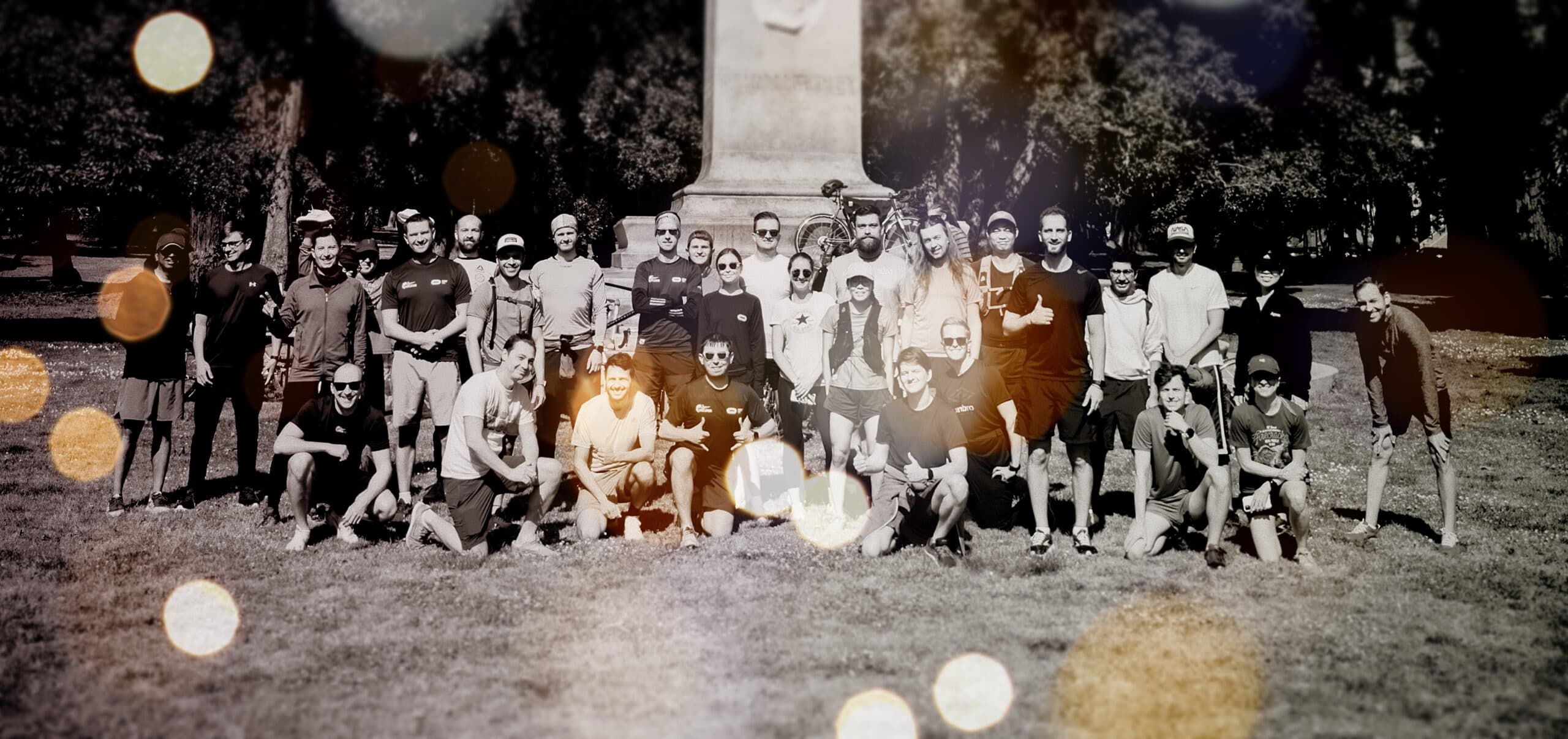
Three people sat down in Berlin in 2019 with a conviction that most of the running world had gotten something fundamentally wrong. Sven and Björn, two brothers with a shared obsession for the sport, and Benny, the coach who would shape their athletes' development, believed that running had been miscast as a solitary pursuit for far too long. The club they launched that year, originally under the name BTC Racing Team, was their direct answer to that miscast. Their opening focus was tight and deliberate: middle-distance and 10-kilometer racing, the distances where teamwork in training pays the sharpest dividends. That focus has since widened to encompass every discipline from 800 meters on the track to the marathon on the road, but the founding argument has never changed. Running, they insist, works better together.
Where the Team Spirit Was Built
The early days of Berlin Track Club were defined less by results than by a commitment to a method. Sven, one of the co-founders, put the philosophy plainly: the crew wanted to push the sport of running forward and demonstrate that it belongs not to lone individuals but to teams. That statement carries more weight in Germany than it might elsewhere. Traditional athletics clubs in the country have long operated along conservative, hierarchical lines, where competitive runners train in relative isolation and recreational runners occupy a separate world entirely. Berlin Track Club positioned itself against that grain from the start. The idea was to build something that borrowed the discipline and structure of an elite training environment while making it genuinely accessible to anyone with the motivation to show up and work. The team does not ask for professional credentials. It asks for curiosity, ambition, and a willingness to invest in the people running alongside you. Those qualities, the founders argued, are more transferable than a personal best time, and they matter more to the health of a team culture in the long run.A Process Built Around People
Joining Berlin Track Club is not simply a matter of filling in a form. The crew opens its doors to new members twice a year, in April and October, and the admission process reflects the seriousness with which they approach team cohesion. Time standards exist as part of the process, but they are framed as a practical tool rather than an exclusionary gate. The goal is to ensure that every runner trains alongside teammates of a comparable performance level, because meaningful training partnerships depend on that kind of parity. A runner who is significantly faster or slower than everyone else in their group ends up isolated even within a team setting, and isolation is precisely what Berlin Track Club was built to prevent. Beyond the standards, the process pays close attention to character. Coaches and existing members look for people who will genuinely invest in the community, who will celebrate a teammate's breakthrough with as much energy as their own, and who will still show up and contribute when they are managing an injury or a difficult stretch of training. That last point matters: injured members are not sidelined from the team's life but actively included, because the crew understands that setbacks are a structural part of endurance sport rather than an interruption to it.Training Together, Improving Together
The crew organises its members into training groups based on performance level, a practical structure that allows runners to push each other effectively without anyone feeling left behind or unchallenged. The motto that appears consistently in the crew's communications, #traintogether #improvetogether, is not merely a slogan. It describes the actual mechanics of how sessions are designed and how accountability is distributed. When a training group lines up for an interval session, the expectation is that the people around you are not spectators to your effort but active participants in it. That dynamic changes the quality of hard training in ways that are difficult to replicate alone. It also changes the emotional texture of the experience. A long threshold run shared with people who know your tendencies, who will notice when your form breaks down before you do, and who will keep you honest without being harsh about it, becomes something qualitatively different from the same run done solo. Berlin Track Club has built its training culture around that difference.Fast Running for Everyone
One of the more distinctive ambitions driving Berlin Track Club is the desire to make fast running attractive to a broader audience. The crew is explicit that its goal is not to produce professional athletes. The aim is to help each individual runner arrive at their own personal definition of fast, and then to exceed it. That framing dismantles a hierarchy that tends to calcify in competitive running communities, where the respect given to a runner is often tied too closely to their finishing time. At Berlin Track Club, the runner who drops three minutes from their 5K personal best through a season of disciplined team training earns the same kind of recognition as the one chasing a national standard. The crew also looks beyond its own membership. Founders Sven and Björn have spoken about wanting to pass the joy of running fast to younger people, to show teenagers and young adults that the sport can be exciting and communal and worthy of their time. That outward-facing ambition gives the club a sense of purpose that extends past its training schedule and its race calendar.What the Ideal Member Looks Like
Berlin Track Club has thought carefully about the kind of person who thrives in their environment, and they are candid about it. The traits they describe are not about athletic profile but about disposition. Team players, people who place collective progress alongside personal goals. Curious runners, willing to examine their own limits without assuming they already know where those limits lie. Determined and independent individuals who can manage their own training load responsibly while remaining genuinely connected to the group around them. Optimists, particularly in the difficult moments, because a team culture is only as resilient as its members' capacity to maintain perspective when things go wrong. Former professional athletes have found a home in this crew, arriving with competitive backgrounds but an appetite for the particular kind of community that Berlin Track Club offers. First-time racers have found a home here too, using the team structure as the scaffolding for their development. The admission process is selective, but the spirit is deliberately wide.Berlin and Its Running Community
Berlin Track Club exists within a city that has developed one of the most genuinely diverse running cultures in Europe. The crews that have taken root here reflect the city's character, each occupying a different corner of the running ecosystem. Berlin Bagels have built a close-knit community through consistent group runs and a culture of belonging. Berlin Braves have focused on creativity and youth development, pushing into spaces that traditional athletics structures have not always reached. Run Pack Berlin, founded in 2013, were among the early crews to demonstrate that informal running communities could carry real ambition. Kraft Runners grew out of a pacing community and developed their own distinct identity around the idea of pushing limits as a group. After Work Track Club, founded in 2022, have made a case for running as something that fits around demanding lives rather than demanding that life reorganise itself around running. Fierce Run Force have broken genuinely new ground as Germany's first women's sports club to offer cycle-oriented training, centring visibility and gender equality in everything they do. Berlin Track Club sits within this landscape as one of its more deliberately structured members, bringing a coaching-led, performance-oriented approach to a city that has shown it can hold many different ideas about what running is for.An Invitation to Rethink Running
The invitation Berlin Track Club extends is straightforward, even if the commitment behind it is not. If you believe that you have more in you than solo runs have uncovered, that the right training partners and the right structure could take your running somewhere you have not reached on your own, then the crew wants to hear from you. The twice-yearly intake windows mean that the process has rhythm and intention, not the chaos of an open-door policy that puts quantity above culture. The crew has grown since those first sessions in 2019 with Sven, Björn, and Benny, and its ambitions have grown with it. More distances, more athletes, more cities represented within the team. But the core argument that the founders made at the very beginning remains the crew's most defining characteristic. Running is a team sport. Berlin Track Club has spent every year since 2019 making that case one training session at a time, and the evidence is accumulating. You can find them at berlin-track-club.de and follow along on Instagram.Featured Crew

R
RunningCrews Editorial
RunningCrews.com