 RunningCrews
A Movement That Starts Before the City Wakes Up
Six twenty-nine in the morning is an unusual time to feel genuinely happy. But at Place Jacques-Cartier, the old cobblestoned square in the heart of Old Montreal, that is exactly what happens every Wednesday when November Project Montréal gathers. The square, flanked by the kind of 18th-century stone buildings that make tourists stop mid-stride, transforms briefly into something else entirely: a warm, chaotic, sweaty gathering of people who chose an early alarm over a snooze button. Some arrived alone. Most will leave feeling otherwise. That specific detail, the social alchemy that happens between 6:29am and 7:15am, is the clearest way to understand what this crew is actually about. November Project Montréal is a chapter of a global free fitness movement that was originally born in Boston as a way for two friends to stay accountable and active through brutal New England winters. The founding logic was disarmingly simple: make a verbal commitment to show up, then show up. No contracts, no fees, no gear requirements. That philosophy has since spread to cities across North America, Europe, and beyond, each chapter rooted in local character while sharing the same foundational belief that fitness should be accessible to everyone, unconditionally. The Montréal chapter launched in November 2016, and the city, with its particular mix of bilingual culture, fierce winters, and deep love of communal life, turned out to be a natural fit.Founded on a Handshake and a Verbal Commitment
The Montréal chapter was brought to life by Mila and Derek, the two founders who saw in their city the same need that sparked the original movement in Boston: people who wanted to move, wanted community, and were tired of fitness being treated as a luxury. They built something that asked very little of participants beyond presence. No membership fee, no registration form, no prerequisite level of fitness. The only currency is showing up, and that accountability, kept alive through verbal commitment and the social pressure of knowing others are waiting in the cold, has proven remarkably effective. The movement calls it verbal commitment. Anyone who has ever not wanted to let down a friend on a dark Wednesday morning will immediately understand why it works. Steering the crew week to week are captains Laurent and Dora, who bring the energy required to make 6:29am feel like a reasonable hour. Captains in the November Project world are part coach, part host, part social glue. They design the workouts, welcome newcomers, remember names, and maintain the particular culture of warmth and absurdity that makes the movement recognizable regardless of which city you join it in. In Montréal, that role also carries a bilingual dimension that gives the chapter its own distinct flavor.Bilingual Workouts in a Bilingual City
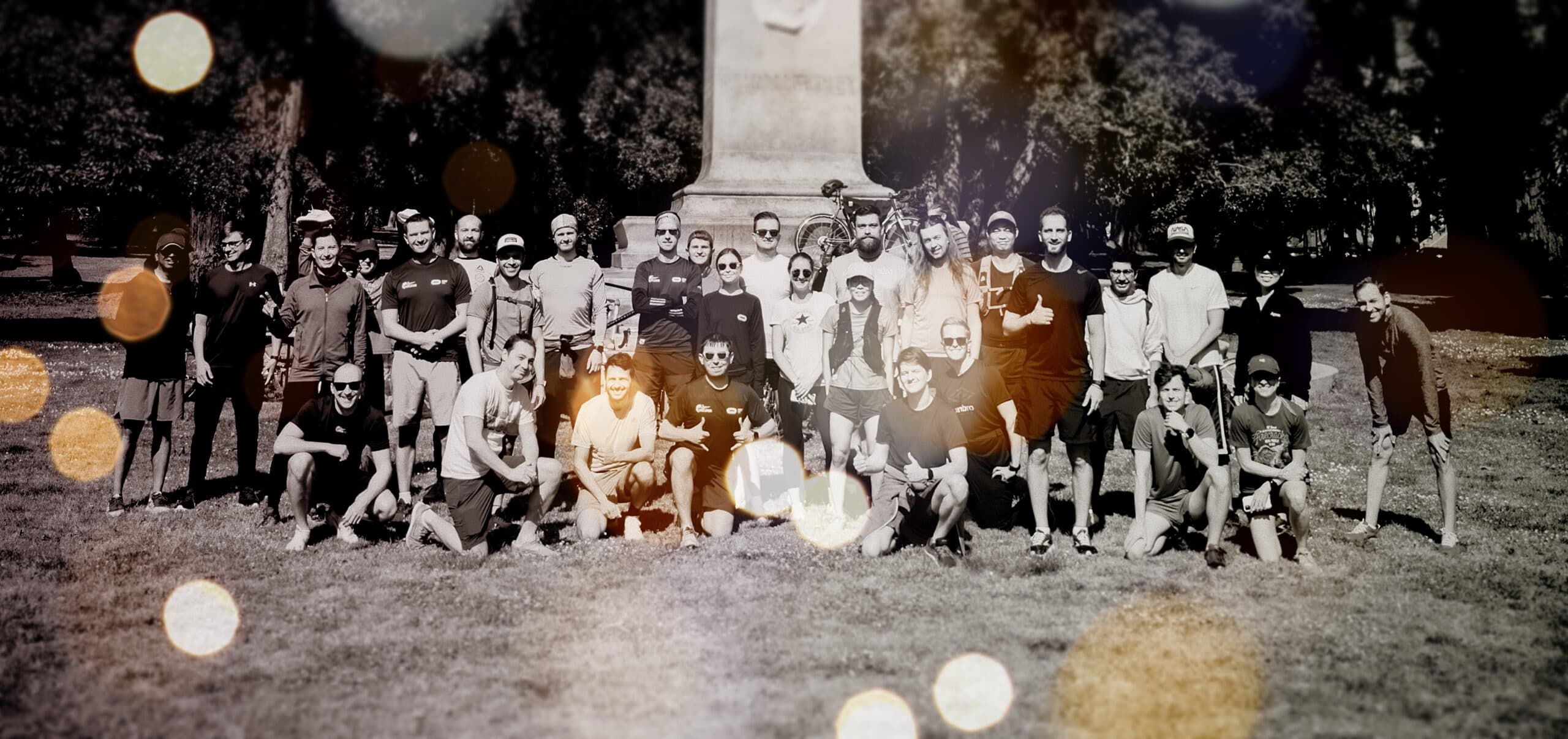
Montréal is one of the few genuinely bilingual major cities in North America, and November Project Montréal leans into that reality rather than ignoring it. Every workout is conducted in both French and English, which in practice means every instruction, every joke, and every motivational shout gets delivered in both languages. It is a small thing, perhaps, but it signals something important about who the crew is for. In a city where language can sometimes function as a dividing line, the bilingual format makes an implicit statement: you belong here regardless of which language you dream in. This matters because the crew's reach is genuinely wide. The roughly 50 members who turn up regularly span an extraordinary range of backgrounds and fitness histories. There are Olympic medalists and professional athletes in the group, people who have spent careers training at the highest levels. There are marathoners and triathletes with spreadsheets full of training data. And then there are people who, not long before finding November Project Montréal, were doing very little physical activity at all. These groups sweat side by side, and the workout is designed to accommodate that range. The format is always a combination of running and bodyweight exercises, scaled to the individual, finished in around 45 minutes, and free to every single person who shows up.Place Jacques-Cartier as the Starting Line
The choice of Place Jacques-Cartier as the meeting point is not incidental. Old Montreal is one of the most historically layered neighborhoods in Canada, a dense, walkable grid of narrow streets, vaulted cellars, and public squares that have served as the city's civic heart for centuries. The square itself slopes gently down toward the St. Lawrence River, and on a clear morning the view from its upper end takes in the water, the Jacques-Cartier Bridge, and, depending on the season, a sky that shifts through colors that a photograph rarely does justice to. Running through this neighborhood means running through Montréal's story. The streets are uneven, the inclines are real, and the architectural context is unlike anywhere else in North America. For the crew, it functions as both a practical meeting point and a reminder of where they are. Fitness communities often talk about belonging to a city. In Old Montréal, with centuries of urban life literally underfoot, that sense of belonging takes on a tangible, textured quality. The workouts incorporate the terrain honestly, using staircases, inclines, and open stretches of the square as natural obstacles and intervals.What Happens in 45 Minutes
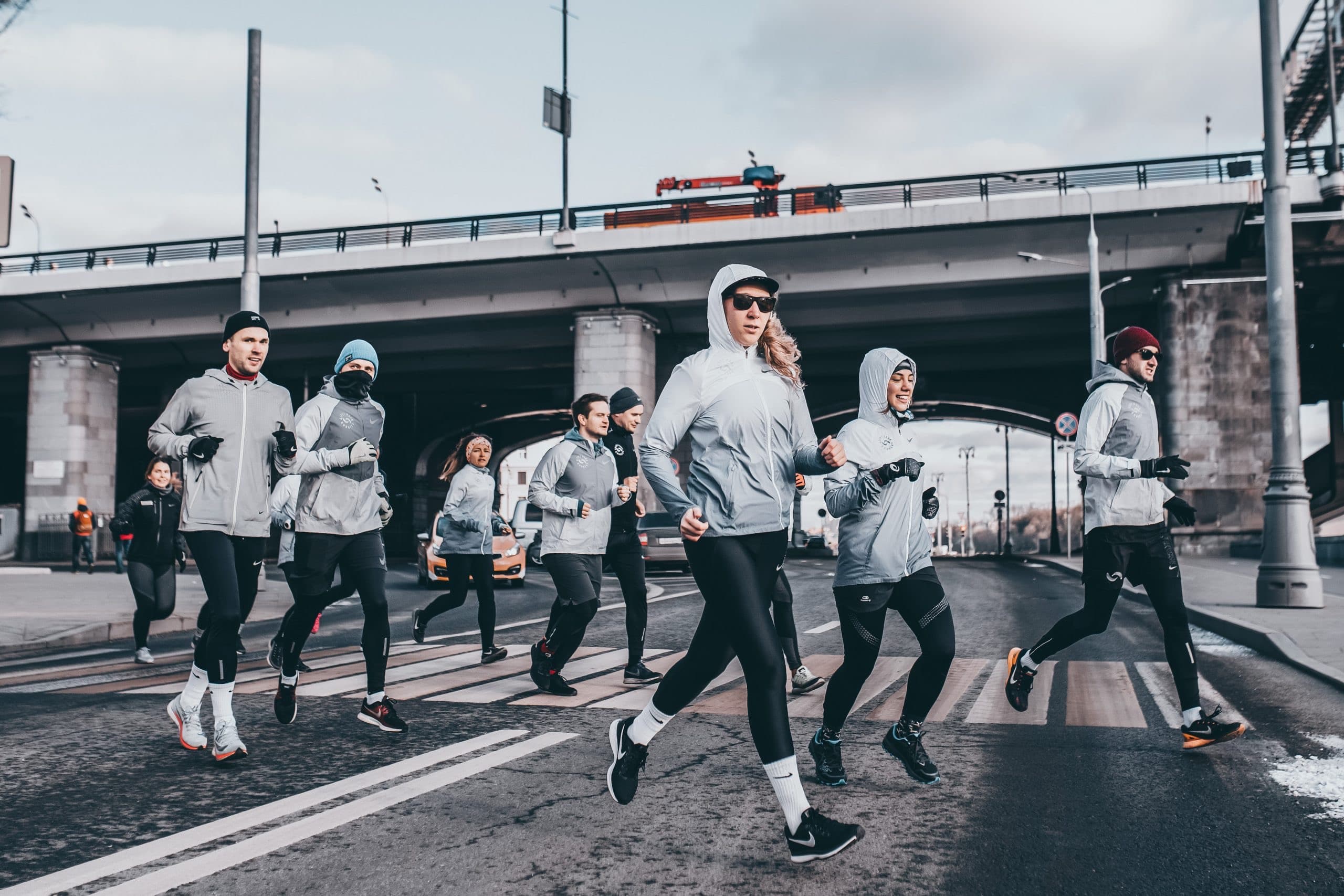
The structure of a November Project Montréal workout is deliberately uncomplicated. People arrive at Place Jacques-Cartier at 6:29am, and the session runs until roughly 7:15am. Within those 45 minutes, the crew works through a combination of running segments and bodyweight exercises, calibrated to push everyone without excluding anyone. There is no prescribed pace, no minimum distance, no finishing time to hit. The goal is effort relative to the individual, sustained by the collective energy of people moving together in a shared space. What the structure does not fully capture is the texture of the experience. November Project workouts are known for being loud. There is music. There is shouting. There is a specific culture of enthusiastic encouragement that can feel unusual the first time and addictive shortly after. The movement's signature greeting, the hug given freely to strangers and regulars alike, is not a gimmick but a deliberate practice rooted in the belief that physical contact and genuine warmth accelerate the sense of belonging. First-timers are warned about the hugs. Most come back for more.Showing Up Is the Whole Point
The language November Project uses around attendance is worth noting. The phrase hashtagged across the movement globally is "just show up," and it captures the crew's philosophy with unusual precision. The barrier to entry is presence, nothing more. The crew does not ask newcomers to be fit, to be fast, to be experienced, or to speak a particular language. It asks only that they set an alarm, get dressed, and make their way to the square before the city's commute has properly begun. This simplicity is harder to sustain than it sounds. Building a culture where a diverse group of people, some of them elite athletes, some of them beginners on their first week of regular exercise, genuinely feel equally welcome requires consistent, thoughtful effort from everyone involved. November Project Montréal has around 50 regular members, a number that reflects an active, stable community rather than passive sign-ups on a list. These are people who come back week after week, who bring friends, who stay after workouts to talk, and who have built real connections through the shared discipline of early mornings and honest effort.An Invitation Written in Cold Air
November Project was born partly as a response to winter, to the particular inertia that sets in when temperatures drop and the temptation to stay horizontal grows. Montréal winters are serious, the kind of cold that makes the original Boston winters feel relatable as a founding context. The crew runs through them. Bundled in layers, breath visible in the morning air, the Wednesday gathering at Place Jacques-Cartier continues regardless of what the forecast says. There is something clarifying about choosing to move in cold weather with other people who made the same choice. The discomfort becomes a bond. For anyone curious enough to try, the process is simple. Find November Project Montréal on Instagram, check the details, and show up on a Wednesday at 6:29am at Place Jacques-Cartier. Come alone if you need to. Expect noise, movement, and the mild shock of being welcomed more warmly than you anticipated. Leave having done something real with the first hour of your day, and with at least a few new names to remember. The workout is free. The community is genuine. The alarm is the hardest part.Featured Crew
R
RunningCrews Editorial
RunningCrews.com