 RunningCrews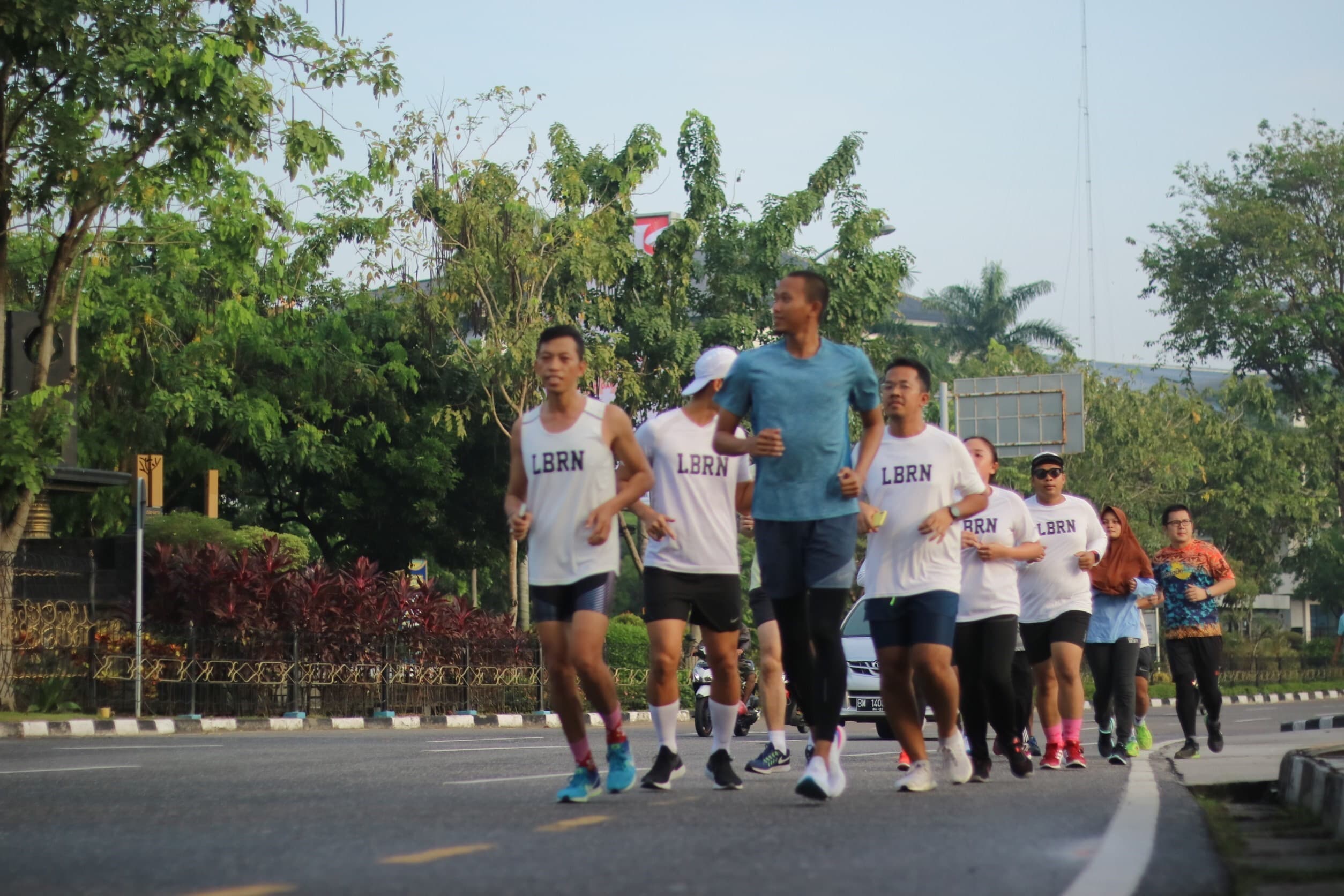
A Holiday That Never Ended
The word libur means holiday in Indonesian, and there is something deliberately joyful about naming a running crew after the feeling of freedom that comes with a day off. That was exactly the point. When Afdhal, Ricky, Ridho, Viki, Mike, Fadria, and Irianata gathered in April 2014 to start what would become LibuRUN, they were not thinking about building an institution. They were thinking about running together on days when the week let them breathe. The name came naturally, a straightforward fusion of libur and running, two words that described exactly what they were doing and how it felt to do it. That simplicity turned out to be a kind of genius. It communicated a mood before a single kilometre had been run: this is supposed to feel good, not like work. Pekanbaru, the capital of Riau province on the island of Sumatra, is a city that moves at its own pace. It is one of Indonesia's fastest-growing urban centres, built on commerce, palm oil, and a restless energy that shapes daily life. The city sits far from the running culture hotspots of Jakarta or Bali, which made the arrival of LibuRUN all the more significant for a community that wanted to build something local, something rooted in the streets and squares of their own hometown. The founders were not importing a trend. They were answering a need they felt themselves: a reason to get outside, to move, and to do it alongside people they trusted.From a Few Friends to 150 Members
A decade on, LibuRUN has grown into one of Pekanbaru's most recognisable urban running communities. What began with a handful of friends has expanded to around 150 members, a number that continues to shift as the crew attracts new faces drawn by word of mouth, social media, and the simple visibility of a group of people running together through the city. The membership reflects Pekanbaru itself: diverse in profession, background, and age. There are healthcare workers among the ranks, including captain Riska, alongside entrepreneurs, students, office workers, and creatives. Running, it turns out, is one of the few activities that genuinely cuts across the social and professional lines that otherwise keep people in separate worlds. Captain Rici helps steer the community alongside Riska, and the presence of two captains alongside multiple founders speaks to a crew that has developed real organisational depth without losing its original warmth. The people who started it are still around, and that continuity matters. It keeps the founding spirit intact even as the group scales.Three Runs, Three Landmarks
The weekly rhythm of LibuRUN is built around three meeting points, each carrying its own character within the city's geography. On Tuesday evenings, the crew gathers at Sudirman City Square at 19:45, one of Pekanbaru's central commercial and social hubs where the urban pulse is easy to feel. On Friday evenings, also at 19:45, the meeting point shifts to Tugu Perjuangan, a landmark whose name translates roughly as Monument of Struggle, a site with civic weight that gives the end-of-week run a quietly meaningful backdrop. Then on Sunday mornings, the alarm goes off early and the crew meets at Tugu Zapin at 06:30. Zapin is a traditional Malay dance form deeply associated with Riau's cultural heritage, and the monument dedicated to it stands as a reminder that this city has roots that run deeper than its modern commercial identity. Running past it at dawn, before the heat of the Sumatran day sets in, is a different kind of experience from the evening sessions, cooler, quieter, and with a particular quality of light that only early risers know. The three-run-per-week structure reflects something important about how LibuRUN operates. There is no single flagship event that defines the crew and leaves the rest of the week empty. Instead, the rhythm is woven into ordinary life: a Tuesday, a Friday, a Sunday. Members can make one run or all three depending on what their week allows. This flexibility has likely been central to the crew's long-term health. People stay when the schedule works around their lives, not the other way around.What the City Looks Like at Running Speed
Pekanbaru is not a city with an obvious running culture in the way that some Southeast Asian capitals have developed one. It does not have a famous riverside promenade or a colonial-era park that serves as a natural gathering place for runners. What it has instead is a grid of wide streets, scattered monuments, and neighbourhoods that reward exploration on foot. LibuRUN's choice of meeting points across the city reflects a deliberate instinct to claim urban space for movement. Tugu Perjuangan and Tugu Zapin are not just convenient spots to park a car and stretch. They are civic landmarks, places that carry the identity of Pekanbaru in their names and forms. Starting a run from them is a small act of connection between the crew and the city they live in. Running through Pekanbaru in the evening means navigating a city that comes alive after dark. The equatorial heat that defines Sumatran afternoons begins to ease, street food vendors set up along the roadside, and the roads fill with the particular energy of a city shifting from work to rest. LibuRUN's Tuesday and Friday evening runs slot directly into that transition, pulling members out of their routines and into the city at one of its most alive moments. The Sunday morning run operates in a different register entirely, catching Pekanbaru before it fully wakes, in the relative cool of early morning when the streets belong almost entirely to those who chose to get up and move.A Name That Still Fits
One of the more telling things about LibuRUN is that the name has not aged out. A decade after those first founders laced up and decided to run together on their days off, the crew's identity remains organised around that original spirit of enjoyment. There is no pressure attached to membership. The crew does not project ambition in the competitive sense, no qualifying paces, no hierarchies built around race results. What matters is showing up, moving through the city, and being part of something that asks relatively little of you beyond your presence. That accessibility has enabled the crew to grow in the way it has, not by marketing itself aggressively but by being genuinely welcoming to anyone who wants to run. The founders deserve credit for holding that line. Building something that stays true to its original character over ten years is harder than it sounds, especially when the temptation exists to formalise, to chase numbers, to turn a community into a brand. LibuRUN has grown without losing the feeling that prompted its founding: a group of friends who thought running on holidays sounded like a good idea, and who turned out to be right.Finding LibuRUN in Pekanbaru
For anyone in Pekanbaru, or anyone passing through the city, finding LibuRUN is straightforward. Three weekly runs, three well-known landmarks, and a community of around 150 people who have been doing this long enough to know how to make a newcomer feel at home. The crew is visible on Instagram at @liburun, where run details and community moments are shared regularly. Show up at Tugu Zapin on a Sunday morning before the city heats up, or at Tugu Perjuangan on a Friday evening when the week is nearly done, and you will find what the founders found in 2014: that running with other people, for the pleasure of it, is one of the more uncomplicated good things available to anyone willing to step outside and move.Featured Crew
R
RunningCrews Editorial
RunningCrews.com