 RunningCrews
A Name That Carries Weight
There is a particular electricity to Bislett Stadium on a Thursday evening. The floodlights cut through the Oslo dusk, the old track hums with decades of record-breaking history, and somewhere near the entrance, a loose gathering of runners is pulling on jackets, adjusting earbuds, and catching up on the week. This is where Bislet Running Club begins its week, every week, without fail. The choice of location was never accidental. When five friends sat down in January 2020 to give their new running crew a name, they reached for the most resonant word in Norwegian running culture. Bislett Stadium is not just a venue. It is a symbol, a spiritual address for anyone who has ever cared about the sport in this country. Building a crew around that name was, from the start, a statement of intent. The five founders, Sondre, Jon, Sylli, Sonny, and Arash, all grew up together in Kristiansand, on Norway's southern coast. They arrived in Oslo at different points, as young people do, chasing work and life. What they found was a city with a strong running culture but a surprising gap in its social fabric. Clubs existed, sure, but the kind of crew that mixed genuine athletic energy with real friendship and zero pretension was harder to find. Sondre put it plainly: people were getting very tired of sitting at home. They wanted movement, company, and something to look forward to in the middle of the week. So the founders stopped waiting for someone else to build it and built it themselves.City Streets Over Forest Trails
Oslo is a city that makes the forest easy to reach. Within twenty minutes from the centre, you can be on a dirt path under pine trees, with the city noise dissolving behind you. Many runners here live for that escape. Bislet Running Club, by conscious choice, takes a different direction. "We haven't run much in the forest," Sondre says. "We're always here or at Bislett Stadium." That preference for the urban environment is not simply logistical. It reflects a genuine belief that the city itself is worth engaging with, that running through its streets, past its architecture, along its waterways, is its own form of discovery. The concrete and asphalt are not a compromise. They are the point. This urban orientation connects to a broader set of influences that shaped the crew's thinking from the beginning. Sondre has spoken about drawing inspiration from the architect Rem Koolhaas and from the Guggenheim's "Countryside" exhibition in New York, a show that interrogated modern civilization and humanity's relationship with built and natural environments. These are not typical references for a running crew, but they give a sense of the intellectual texture behind Bislet Running Club's identity. The founders were not simply trying to organise a group jog. They were responding to something they felt in the culture, a restlessness, a need for shared physical experience in a world that had become increasingly sedentary and screen-bound. Running the streets of Oslo together was, in its own way, a small act of resistance.Thursday Nights at Bislett Stadium
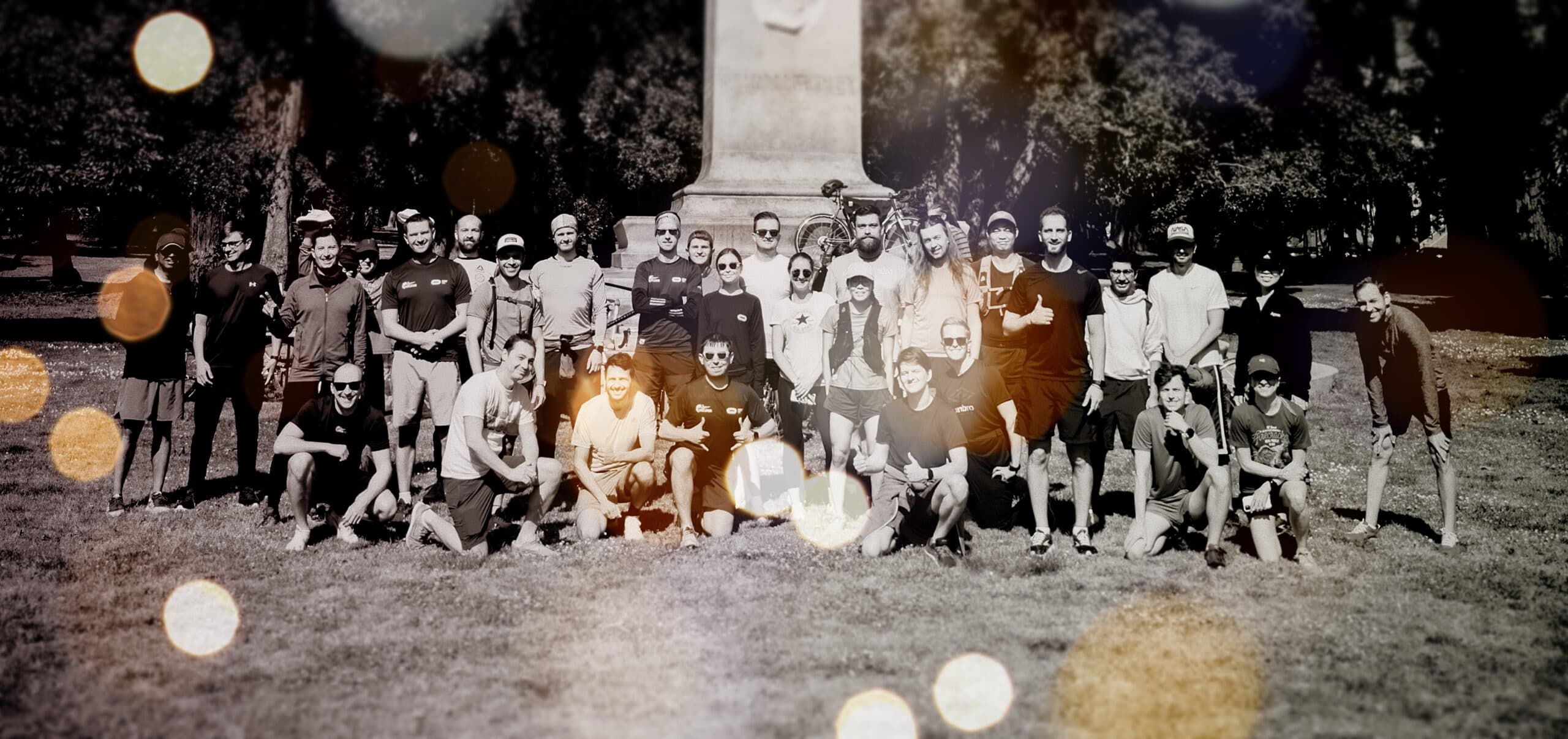
The weekly run happens every Thursday at 19:30, with Bislett Stadium as the meeting point. It is a simple arrangement, and that simplicity is part of its power. No app required, no booking, no waiting list. You show up, you run, you belong. On a typical Thursday, around 50 runners gather at the stadium. The group has grown to roughly 200 members since the crew's founding in January 2020, a number made all the more remarkable by the fact that the club launched just as the world was about to spend two years learning the word lockdown. Through the disruptions of the pandemic, Bislet Running Club kept building, kept showing up, and kept growing. The run itself traces a path through central Oslo, which means every session is also a tour of one of Europe's most liveable cities. Depending on the route, runners might pass the iconic Opera House, where the roof slopes down to meet the fjord and pedestrians walk across it as if it were a public square. They might cut through Grünerløkka, the east-side neighbourhood of independent coffee shops, record stores, and colourful murals that has become a kind of cultural heartbeat for younger Oslo. On longer routes, the Akerselva River trail becomes a guide, following the old industrial waterway that once powered the city's mills and now offers one of the most atmospheric running corridors in the capital. The city is always the backdrop, and it is never boring.An Open Door Policy
One of the founding principles of Bislet Running Club is a deliberately low threshold for entry. This was a considered decision, not a default. The founders had seen what happened when running communities set the bar too high, how pace requirements and implicit social codes kept people on the outside looking in. They wanted none of that. The club welcomes runners of all abilities, from those who are just finding their stride to those training seriously for races. The common denominator is not speed. It is the willingness to show up on a Thursday evening and move through the city with other people. This openness has shaped the atmosphere of the crew in ways that go beyond any written policy. New members describe feeling immediately comfortable, not because the welcome was performative, but because the group's energy genuinely reflects its values. There is no hierarchy based on pace, no invisible social ladder to climb. Regulars remember what it felt like to show up for the first time, and that memory informs how they treat the next person through the door. The result is a community that has retained its warmth even as it has scaled to around 200 members, which is not a given. Many crews that grow quickly lose the intimacy that made them worth joining in the first place. Bislet Running Club has managed to hold onto it.Oslo as a Running City
Part of what makes Bislet Running Club's urban focus so compelling is the quality of the city it runs through. Oslo is compact enough to feel familiar on foot but varied enough to keep offering new angles. The waterfront, the parklands, the old brick neighbourhoods, the modernist architecture of the city's newer districts, all of it becomes accessible at running pace in a way that walking or cycling simply does not replicate. Frognerparken, the sprawling park that hosts the Vigeland sculpture installation, gives runners a green corridor through the city's west side, with wide paths and enough space to open up the stride. The park is a reliable fixture for interval sessions and easy long runs alike. Oslo also has a serious running event calendar that gives the community a shared rhythm across the year. The Oslo Marathon draws participants from across the country and beyond, transforming the city's central streets into a course that passes landmarks familiar to anyone who has trained here. There is also the Midnight Run, held during the long summer evenings when the Nordic light barely fades, offering one of the stranger and more beautiful race experiences available anywhere in Scandinavia. For the members of Bislet Running Club, these events provide moments to test what the weekly Thursday sessions have built, to see the training made tangible in a timed result or simply in the ability to cover the distance.What the Founders Built
Five friends from Kristiansand looked at Oslo and decided it needed something it did not yet have. They named their crew after the stadium that had witnessed some of the greatest moments in Norwegian running history, and they started meeting on Thursday evenings and inviting people to join them. That was the whole plan. What grew from it, around 200 members, a recognisable presence in the Oslo running community, a weekly gathering that has outlasted a pandemic and kept its original spirit, was not the product of a marketing strategy. It was the product of people who genuinely wanted to run together and were willing to show up consistently to make that happen. Sondre, Jon, Sylli, Sonny, and Arash built something that reflects who they are: curious, social, grounded in the city they chose to call home, and unwilling to take running too seriously or not seriously enough. The crew exists in that productive space between athletic endeavour and social pleasure, between the physical discipline of lacing up twice a week and the simple human joy of moving through a city with people you like. That balance is harder to strike than it sounds, and Bislet Running Club has found it. Thursday at 19:30, Bislett Stadium. The streets of Oslo are waiting.Featured Crew

R
RunningCrews Editorial
RunningCrews.com