 RunningCrews
A Public Bath, a New Perspective on Running
There is something quietly radical about choosing a public bath as the home base for a running crew. In the Ikejiri neighbourhood, a short distance from the organized energy of Shibuya, the Bunka Yokusen sits as one of those Tokyo institutions that locals have been returning to for generations. Its warmth is literal and social. It is the kind of place where conversations flow easily and where the boundary between strangers and friends dissolves faster than expected. When Emi, the founder of ACT WOMEN'S RUNning, chose this spot as the meeting point for her crew, she was making a statement about what running could be: not a performance, not a competition, but a shared experience with a warm ending. That instinct has defined ACT WOMEN'S RUNning from the very beginning.The Idea That Started Everything
ACT WOMEN'S RUNning came together in January 2017, rooted in a frustration Emi recognized in many of the women around her. Running, as it is often portrayed, carries an image problem. It can seem punishing, repetitive, and frankly unappealing to anyone who doesn't already think of themselves as a runner. That image, Emi felt, was not just inaccurate but genuinely exclusionary. Many women she knew were curious about running, open to its benefits, but put off by the idea that it had to be hard, solitary, or relentlessly goal-oriented. She wanted to offer something different. Not a race training program. Not a pace group with strict targets. A crew where the run itself was the beginning of the experience, and everything that followed, the conversations, the laughter, the exploration of a new corner of the city, was just as much the point. ACT WOMEN'S RUNning was built on the belief that joy and movement belong together, and that a woman who has never thought of herself as a runner might find, given the right environment, that she always was one.Running Tokyo's Streets With Fresh Eyes
Tokyo is a city that reveals itself slowly. Its neighbourhoods are layered, each one carrying its own rhythm and character beneath the broader pulse of the metropolis. One of the things Emi built into ACT WOMEN'S RUNning from the start was a spirit of discovery, the idea that running is one of the finest ways to actually see a city rather than simply pass through it. The crew uses their routes as a way to encounter parts of Tokyo that might otherwise stay peripheral, tucked-away shopping streets, quieter residential blocks, parks that don't appear on tourist maps. Running through these places on foot, at a pace that allows you to notice things, turns an ordinary workout into something closer to exploration. For women who are newer to running especially, this reframing matters enormously. The run becomes a journey rather than a task, and the city itself becomes a reason to lace up.A Crew Built Around Conversation
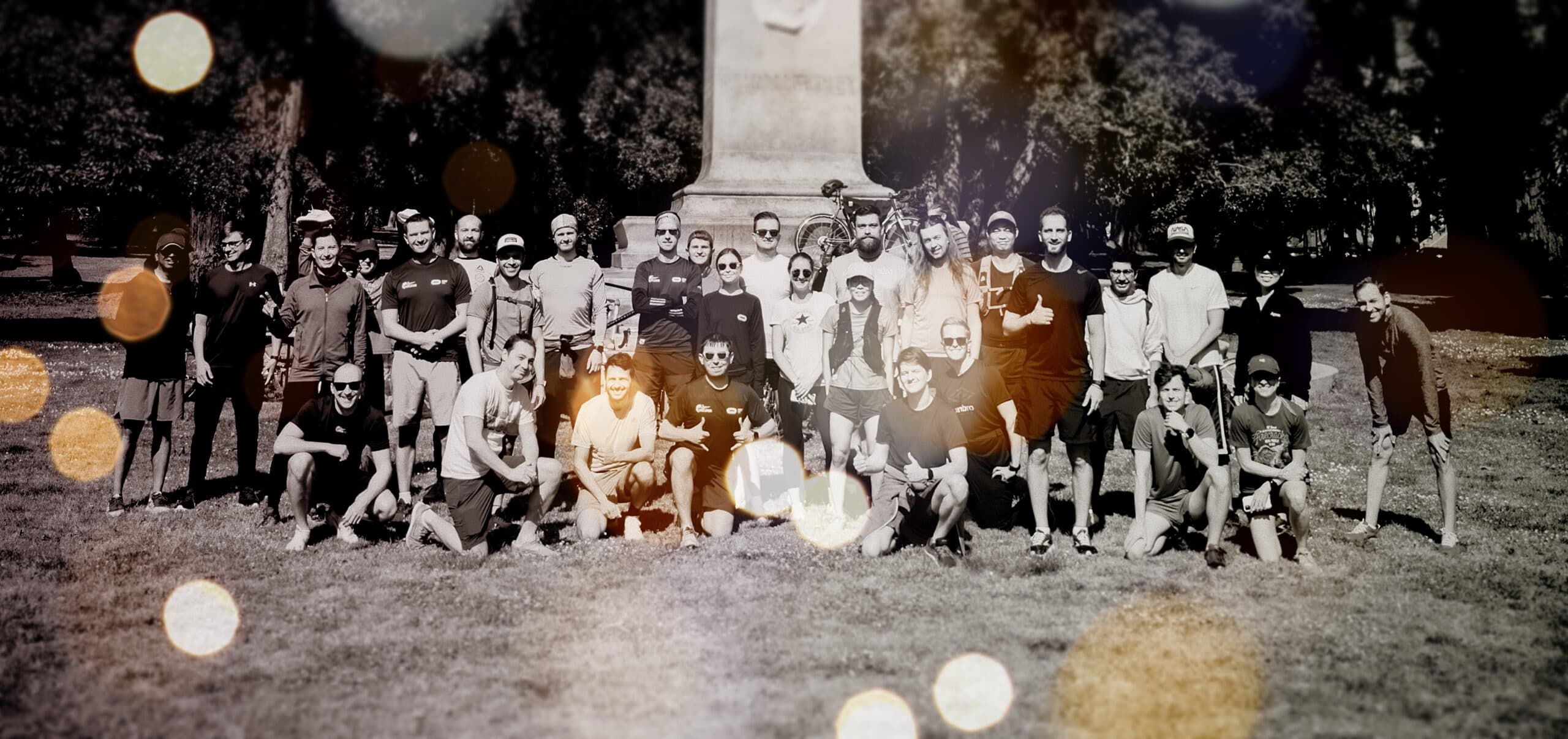
The women who run with ACT WOMEN'S RUNning, around twenty members strong, are not defined by any single type or background. What connects them is a shared appetite for movement that doesn't take itself too seriously, and for the kind of honest, wide-ranging conversations that seem to happen naturally when people are side by side, breathing a little harder than usual, with no screens in front of them. Emi has spoken about how the crew's runs open up space for discussions that go well beyond running itself, touching on health, daily life, habits, and the broader question of how to feel good in your own body and routine. This is the healthy lifestyle territory that ACT WOMEN'S RUNning moves through with ease, not as a brand talking point but as a genuine ongoing conversation among women who are figuring things out together. The run is the container; the community is what fills it.Twice a Month at Bunka Yokusen
The format is deliberately approachable. ACT WOMEN'S RUNning gathers twice a month, and every session begins and ends at the Bunka Yokusen public bath in Ikejiri, close to Shibuya. The choice of a sento as home base is one of the crew's most distinctive features. Public baths occupy a specific and beloved place in Tokyo life, spaces of collective unwinding that have been part of the city's social fabric for well over a century. Finishing a run there transforms the experience entirely. The effort of the run gives way to something restorative, and that transition, from movement to stillness, from the street to the water, creates a natural space for the crew to come together properly. There is nowhere to be in a hurry. The conversation picks up where it left off on the route, and for many members, this post-run ritual is as much a reason to show up as the run itself. To check current dates and get in touch, ACT WOMEN'S RUNning can be found on Instagram.An Invitation for Women Who Think Running Isn't for Them
The original intention behind ACT WOMEN'S RUNning has not faded. Emi started this crew specifically for women who are not particularly into running, and that welcome remains genuine and unchanged. There is no pressure around pace, distance, or experience level. The crew's energy is built around curiosity and companionship, not performance metrics. For women in Tokyo who have thought about running but found the barrier too high, too intimidating, or simply too joyless, ACT WOMEN'S RUNning offers a different entry point entirely. Come for the run. Stay for the conversation. Finish in a public bath that has been warming this neighbourhood for generations. It is a thoroughly Tokyo way to move through the world, and it is waiting for you twice a month in Ikejiri.Featured Crew
R
RunningCrews Editorial
RunningCrews.com