 RunningCrews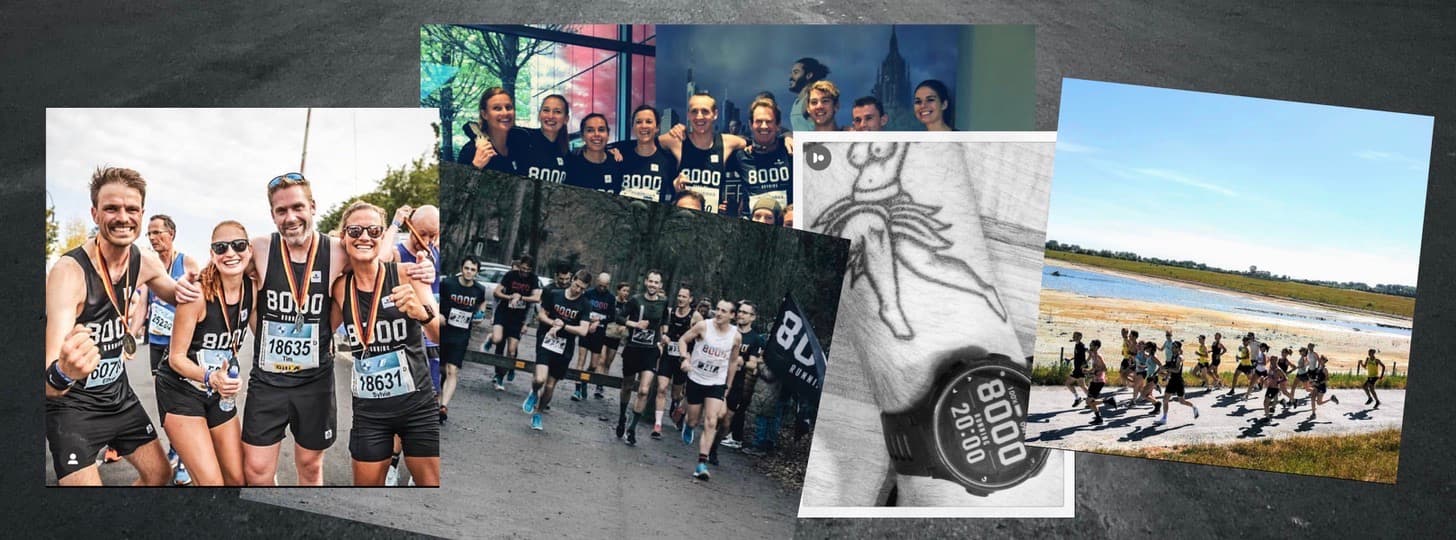
Two Colleagues, One Decision, and the Start of Something Real
It started with a simple frustration shared between two people at work. Dries and Yannick were colleagues who had been quietly pushing each other to run harder, run longer, and run better. The problem was that running alone, even with a training plan and good intentions, has a ceiling. There is only so much motivation you can manufacture in silence. So in January 2013, they stopped manufacturing it alone. They reached out to a few people they trusted, and the idea of building something more permanent took shape in the city they called home: Bruges, Belgium. The name they chose was straightforward and proudly local. 8000 Running takes its identity directly from the postal code of Bruges, a small typographic detail that carries a clear message about where this crew belongs and who it belongs to. It was not a branding exercise. It was a statement of place. Within a short time, three more founding members joined Dries and Yannick to formalize what had begun as a two-person pact. Elfver, Wim, and Stijn came on board, and together the five of them became the founding core of what would later be recognized as the first Belgian running crew. That distinction matters to them, though they wear it lightly. The pride is less about being first and more about having built something that has lasted, grown, and remained genuinely worth showing up for more than a decade later. The early days were simple in the best way: a group of friends meeting regularly, holding each other accountable, and discovering that running with others changes the experience entirely. The competition between them sharpened their times. The camaraderie made the hard sessions feel less brutal. The combination of both turned a habit into a community. From those first five runners, 8000 Running has grown into a crew of around thirty members, men and women who show up week after week and treat Thursday evenings as something close to sacred.Track, Street, Trail and Everything In Between
The five founders came from different corners of the running world, and that diversity shaped how 8000 Running would eventually define itself. This is not a crew that does one thing. They train on tracks, run through streets, venture onto trails, and generally go wherever good running takes them. The unifying thread is not a surface or a pace range but a shared willingness to push and a shared understanding that getting better requires discomfort. What makes the training culture at 8000 Running interesting is the tension it holds comfortably. Competition and friendship coexist here without awkwardness. Members race each other, chase personal bests, and take their times seriously, but none of that creates the kind of atmosphere where only fast runners feel welcome. The drive to improve is universal within the crew, even if the specific goals differ from person to person. Some are chasing sub-40 ten-kilometre times. Others are working toward their first half marathon. What they share is the willingness to work, and the understanding that having someone alongside you on a hard interval session changes what you are capable of. Yannick and Dries, who now captain the crew alongside their founding roles, have maintained this culture through the years with consistency rather than rules. The Thursday evening run at Bergh Sports in Bruges is the fixed point around which everything else orbits. Eight o'clock, every Thursday, regardless of weather or season. It is a commitment that has become ritual, and rituals are what hold communities together when motivation fluctuates. The sessions themselves vary in format and focus, keeping the training fresh and ensuring that no two Thursdays feel entirely the same. What does not vary is the energy. Around thirty people arriving with purpose, greeting each other, warming up, and then doing the work together, that consistency over more than ten years is the real story of 8000 Running.After the Run Is Where the Crew Really Lives
Any serious runner will tell you that the training is only half of what a running crew offers. The other half happens after you stop moving. At 8000 Running, the post-run culture is as developed and deliberately maintained as the training itself. Crew members go out together, eat together, and drink together with the same regularity and enthusiasm they bring to the Thursday evening sessions. Bruges is a generous backdrop for this. The city's dense concentration of excellent bars, local breweries, and restaurants means that the transition from running shoes to a table somewhere warm and convivial is never more than a few minutes away. The crew has built shared memories not just on the roads and tracks but in the city's corners where they have gathered to decompress, celebrate, and catch up on everything that running time does not allow. Beyond the social evenings in Bruges, 8000 Running has developed a culture of travelling together. Road trips to races in other cities, group entries in events across Belgium and beyond, the occasional adventure to a trail race in different terrain. These trips are where the bonds between crew members deepen from friendly acquaintances into something more durable. When you navigate a foreign city together, share a pre-race breakfast in a hotel lobby, and cheer each other through the final kilometres of a hard race, you are doing something that goes well beyond fitness. You are building the kind of trust and affection that the founders described, simply and accurately, as family. That word gets used loosely in running circles, but at 8000 Running it seems to reflect something real. The crew has grown and changed over a decade, welcomed new members, seen people move through different phases of life, and remained cohesive throughout. That cohesion does not happen by accident. It is the result of people actively choosing to show up, not just for the Thursday run, but for each other.Running Through the Medieval Heart of Bruges
Bruges rewards the runner who pays attention. The city is compact, historically dense, and threaded with waterways, cobblestones, and centuries-old architecture that make even a straightforward training run feel like something more interesting. The canals that earned Bruges its reputation as the Venice of the North are not just scenic decoration; they define the rhythm and geography of running here, offering long, flat stretches beside the water where pace work feels almost effortless, followed by abrupt turns onto narrower streets where the cobblestones demand a different kind of concentration. For 8000 Running, the city is not just a backdrop but a training partner. The routes that the crew has developed over the years thread through and around Bruges with the familiarity that comes from years of weekly runs on the same streets. Minnewater Park, tucked just outside the city centre, offers softer paths through trees and along a lake, a counterpoint to the harder surfaces of the city streets. The Koningin Astridpark near the centre provides another green breathing space, with wide paths suitable for tempo work or easy recovery miles. Beyond the parks, the flatlands surrounding Bruges open up longer routes that head out into the Flemish countryside, where the horizon stretches wide and the wind becomes a factor that no amount of track training fully prepares you for. These routes connect the crew to the broader landscape of West Flanders, to the villages and farmland and subtle changes in terrain that distinguish running in this part of Belgium from running anywhere else. Bruges also hosts a strong calendar of running events throughout the year, including the Bruges Marathon and Half Marathon, the Bruges Night Run, and the Bruges Urban Trail, which takes participants through some of the city's most architecturally significant interiors. For a crew that takes racing seriously, having a rich local event calendar within their home city is a genuine asset.Thursday at Eight an Open Invitation in Bruges
The address is Bergh Sports in Bruges. The time is eight o'clock on Thursday evening. Those two facts are everything a newcomer needs to know to walk into the world of 8000 Running. The crew has kept its regular session at this meeting point consistent since the early years, and that consistency is part of what makes the crew accessible to anyone who is curious. There is no complicated sign-up process or tryout. You show up, you run, and you see whether the group and its pace and its personality are a good fit. Given that the crew has grown to around thirty members over more than a decade by word of mouth and genuine enthusiasm rather than recruitment drives, the evidence suggests the fit tends to work out. Visitors to Bruges, whether for a weekend or a longer stay, are part of the open invitation. The crew runs in a city that attracts travellers from across Europe and beyond, and the Thursday session is an opportunity for anyone passing through to experience Bruges from the inside rather than from behind a camera. Running through a medieval city in the company of the people who live and train there every week is a very different experience from following a tourist map, and 8000 Running offers exactly that to anyone willing to lace up and join the group. For those based in or near Bruges who are looking for a crew to run with regularly, 8000 Running represents something that took years to build and remains genuinely rare: a community that has held together through more than a decade of early mornings, hard sessions, shared meals, and the kind of friendship that forms when people decide to take both their running and their time together seriously. The postal code in the name is not incidental. It is a reminder that this crew was built for this city, by people who love it, and that the invitation to join them is as open and as genuine as the streets of Bruges themselves.Featured Crew
R
RunningCrews Editorial
RunningCrews.com