 RunningCrews
Where Logan Square Laces Up
There is a phrase that circulates inside Three Run Two that says just about everything you need to know about the crew: "Us And You, Your Momma And Your Cousin Too." It is not a slogan cooked up in a marketing meeting. It is a genuine declaration of who belongs, and the answer, plainly, is everyone. In a neighborhood like Logan Square, where the sidewalks shift between languages and the flat Chicago grid opens up toward the boulevards and the park trails, that kind of radical openness feels less like a policy and more like a natural fact. Three Run Two did not arrive at that openness by accident. It was built into the crew from the very beginning, woven into the founding philosophy by Nicolas Bernal, who envisioned running not as a competitive ladder to climb but as a living, breathing expression of community and cultural awareness. The crew headquartered itself in Logan Square, and the neighborhood's character has shaped everything since. There is something in that blue-line hum, the California stop, the murals, the corner spots open late, that seems to understand what Three Run Two is trying to do. Chicago is a city of distinct neighborhoods that rarely blur into one another, and yet this crew has managed to gather people from across that mosaic under a single, unpretentious idea: run together, grow together, show up for each other.Self-Improvement as a Shared Project
The name Three Run Two has a rhythm to it, something almost like a cadence you might count out on a long Tuesday night. It also gestures at something the crew takes seriously, the idea that running is a practice, not a performance. The founding vision described by Nicolas Bernal frames the whole enterprise as a manifestation of passion for self-improvement, community, and cultural awareness. Those three pillars are worth sitting with, because they are doing real work in how the crew operates day to day. Self-improvement here is not the solitary, headphone-on, split-time-obsessed version that dominates so much running culture. It is something more collective and more honest. When someone shows up for the first time, nervous about pace, unsure if they belong, the crew's ethos is already working on their behalf before anyone says a word. The pace on any given night is set by whoever walks through the door, not by a rigid weekly prescription handed down from the top. That flexibility is intentional. It creates room for the first-timer who has never run more than a mile and for the ultra-marathoner who has covered a hundred. Both are real, both are present, and neither is treated as the default. Cultural awareness sits alongside self-improvement in that founding statement, and it matters. Logan Square is not a monoculture, and Three Run Two has never pretended it is. The crew reflects Chicago proper, which is to say it reflects something complicated, diverse, and alive. That reflection is something Three Run Two consciously cultivates rather than something that just happened by default.The Rhythm of Tuesday and Thursday
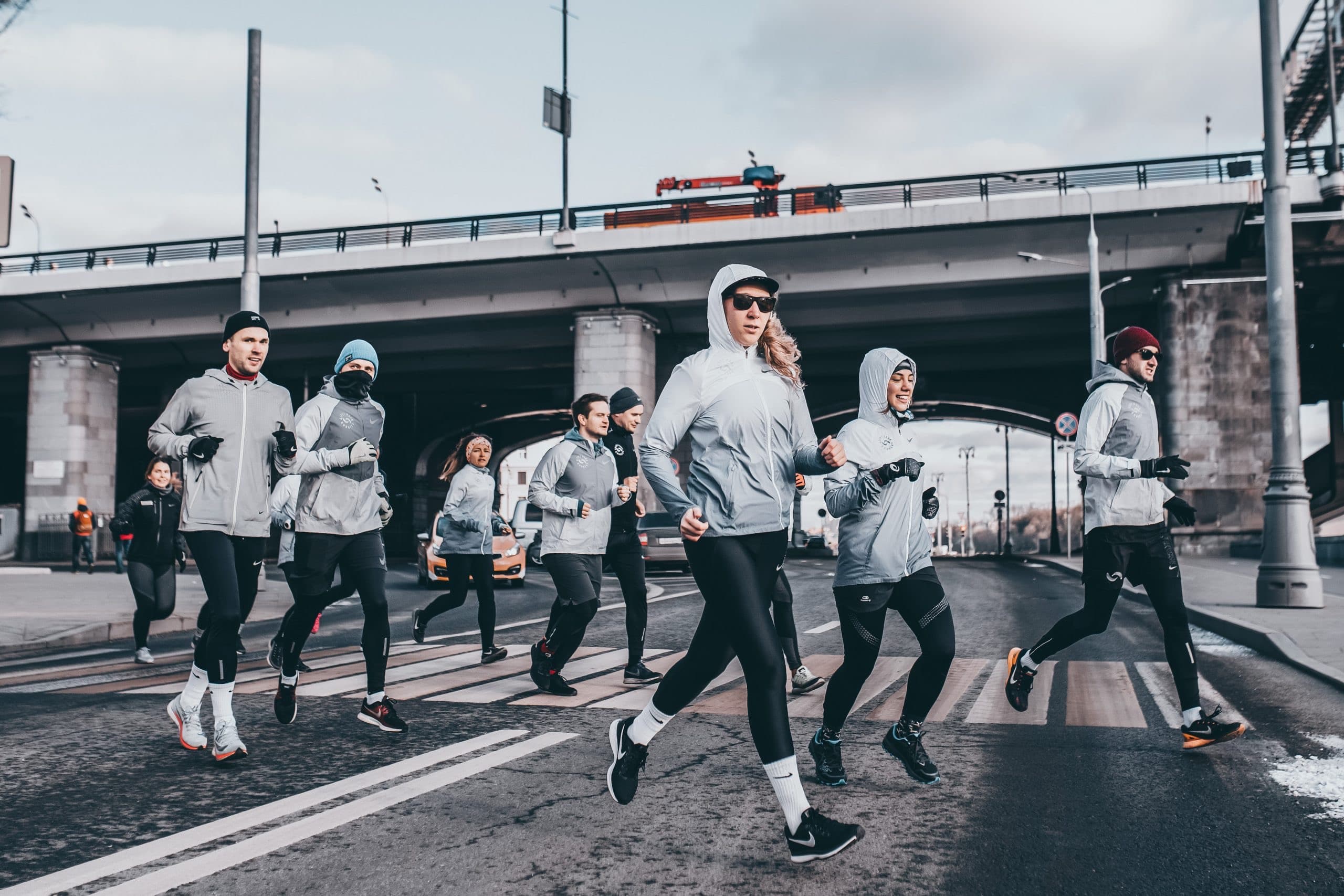
If you ask someone in the crew when to come, the answer most often points toward Tuesday and Thursday evenings. Those are the nights when the group tends to swell, when familiar faces fill the sidewalk outside the meeting point and new ones slot in without much ceremony. The runs have an organic quality that mirrors the crew's broader philosophy: paces emerge from the group rather than being assigned in advance. This means that showing up, especially for the first time, carries a certain pleasant uncertainty. You will find your people. You might be surprised by who they are. The crew does recommend bringing a friend for that inaugural run, less out of any concern about safety in an abstract sense and more because a familiar face can ease the threshold moment of joining something new. Once you are in, the Tuesday nights become a kind of reliable anchor in the week, a fixed point around which other things organize themselves. The streets of Logan Square, those wide Northwest Side boulevards that stretch toward Humboldt Park and Palmer Square, provide a natural canvas. Chicago running in the warmer months has a particular quality of generosity: the light stays long, the lakefront wind eases up west of the city, and the neighborhood's public spaces fill with people. Three Run Two moves through all of that, unhurried in spirit even when the pace picks up.Breaking Bread and Personal Records
One of the most telling lines in the crew's own description of itself is the pairing of "break bread and personal records." The order matters. Bread first, records second. It signals something about where the priorities actually sit. Running is real here, the training is genuine, and people do push themselves toward goals that matter to them. But the meal afterward, the table, the conversation, the act of eating together after exertion, is not a footnote to the run. It is part of the same experience. This is how community actually forms, not in the abstract but in the specific: the post-run plate of food, the catch-up that spills past the usual social-media version of connection, the moment when someone who ran in silence for four miles turns out to have a story worth hearing. Three Run Two takes that seriously. The crew describes itself as decidedly diverse, and that diversity is something it actively celebrates rather than simply tolerates. Differences of background, speed, experience, and perspective are treated as assets rather than complications. Being a "good sport both on and off the field" is the crew's language for what others might call character, and it applies to the full arc of the experience, not just the miles logged on Strava. That sensibility has a particular resonance in a city as layered and sometimes fractured as Chicago, where the distance between neighborhoods can feel much longer than a few miles on a map.A Crew That Belongs to Its City
Chicago running has its own culture, shaped by the lakefront path, the brutal winter months, the flat terrain that rewards volume over vertical gain, and the neighborhoods that each carry their own distinct energy. Three Run Two belongs to that culture while carving out something specifically its own. Logan Square is the crew's home turf, and the California Blue Line stop is a practical landmark that anchors where things begin. The neighborhood is walkable, transit-connected, and full of the kind of everyday street life that makes a post-run wander feel worthwhile. Nicolas Bernal founded the crew with an explicit commitment to community and cultural awareness, and Logan Square is as good a starting point as any for that project. The neighborhood has changed significantly over the past decade, and the crew's insistence on being "organic, relatable and reflective of Chicago proper" is, in its way, a small act of resistance against the flattening that tends to accompany rapid neighborhood change. Running through a place is one of the oldest ways of knowing it. You learn its grades and its gradients, its shortcuts and its dead ends, its rhythms at different hours. Three Run Two has been doing that learning in Logan Square and beyond, and the knowledge accumulates in the group's collective memory, in the routes people know by instinct, in the spots where the group tends to pause.Who Shows Up and Why It Matters
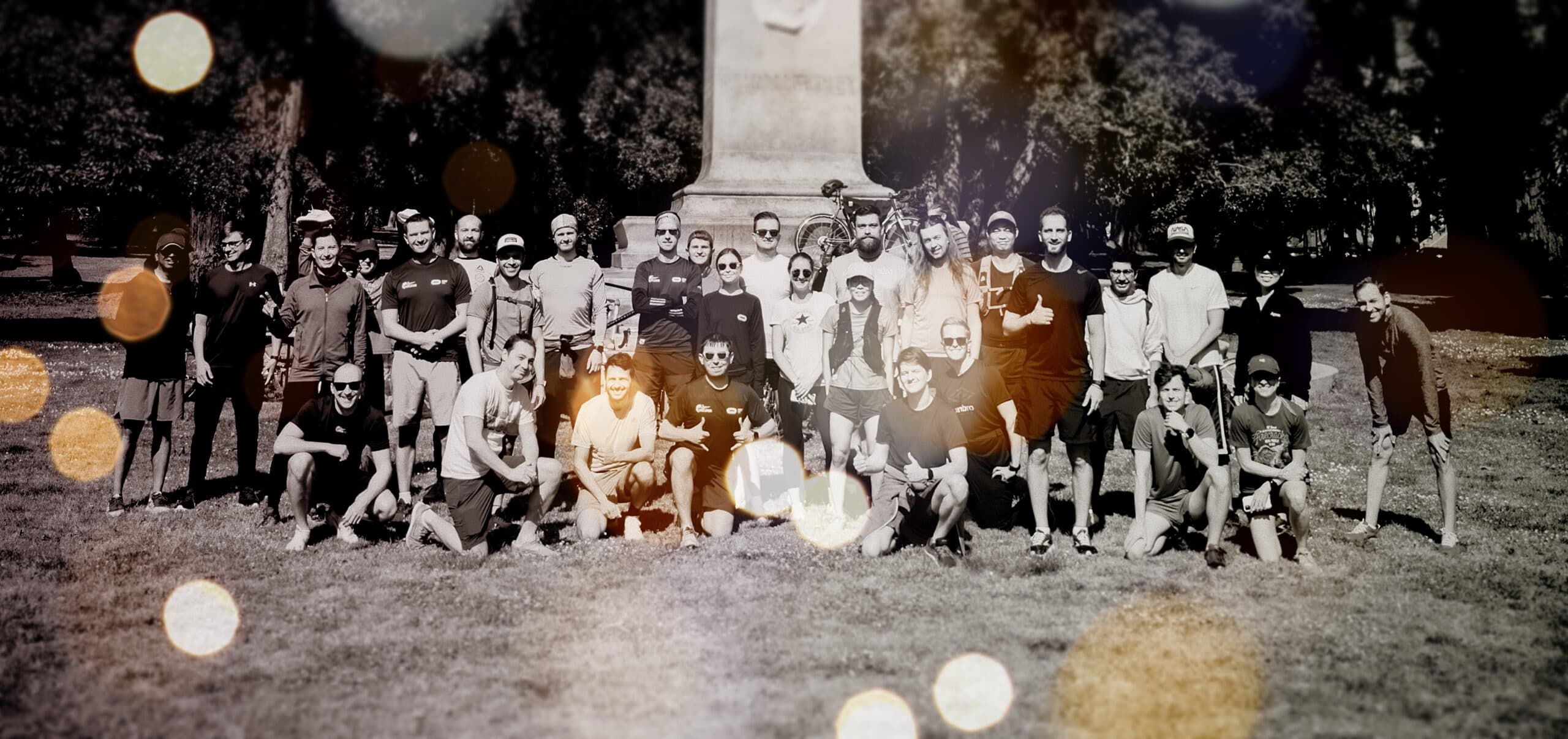
Three Run Two spans a remarkable range. The membership runs from people attempting their first consistent running habit to athletes who have covered hundred-mile ultras. On paper, those two populations seem like they belong in different rooms. In practice, at Three Run Two, they occupy the same starting point on Tuesday and Thursday evenings, and something useful happens in that proximity. The first-timer sees that running can scale, that it has a long arc worth committing to. The veteran remembers what it felt like to be uncertain, to not yet know whether this was something they could do. The crew's refusal to define itself solely by speed or distance is what makes that coexistence possible. Speed and distance are real, they matter, they are tracked and celebrated when someone achieves something significant. But they are not the price of admission and they are not the basis of status within the group. The website, threeruntwo.com, carries the crew's story in the crew's own voice, and that voice is consistent: direct, warm, a little bit funny, and entirely sincere. "Us And You, Your Momma And Your Cousin Too" is a line that could read as a joke, and it is delivered with some humor, but it is also simply true. Three Run Two means it. Show up to Logan Square on a Tuesday or Thursday evening and you will find out for yourself.Featured Crew
R
RunningCrews Editorial
RunningCrews.com