 RunningCrews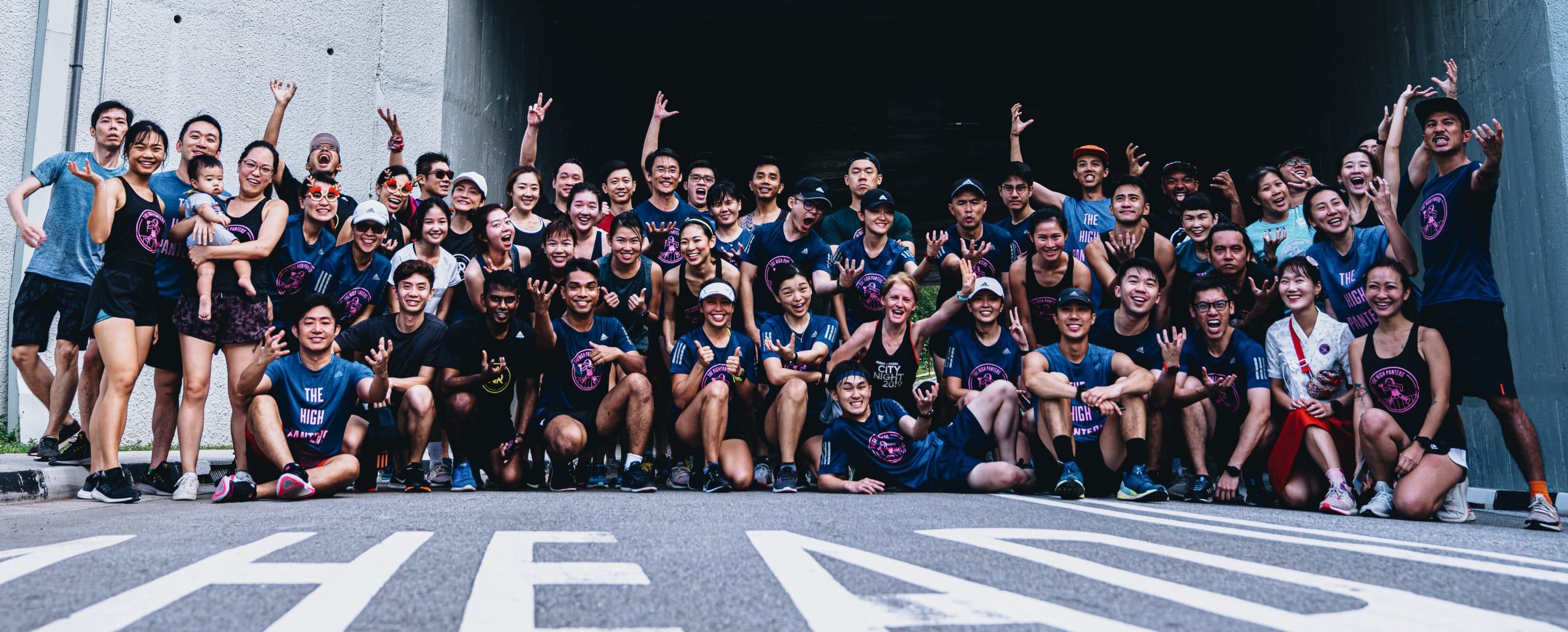
The story of The High Panters begins not on a running track but on a rugby pitch, with two school friends pulling their shorts up to their waists and performing the Haka after an evening training session. That absurd, joyful moment planted a name in the minds of Eugen and Kenneth, the two co-founders who would go on to build one of Singapore's most community-minded running crews. They took inspiration from New Zealand's professional rugby side, the Otago Highlanders, blended it with the image of those dramatically hoisted shorts, and arrived at The High Panters. It is a name that does not take itself too seriously, which turns out to be a pretty accurate reflection of the crew itself.
From an Obstacle Course to a Movement
The formal beginning came in January 2012, when Eugen and Kenneth signed up for an urban obstacle course race. Their motivation was not personal glory or a finish-line photo. They wanted to raise awareness and funds for lesser-privileged communities and saw running as the most accessible platform to do so. That founding intention, using physical activity as a vehicle for something larger than the individuals involved, has shaped everything The High Panters has done in the years since. What started as two former rugby players chasing a charitable goal has grown into a crew of around 70 members who show up, week after week, to run together and give back together.
The crew's approach to community is threefold, and each layer is treated with equal seriousness. The first is the internal community, the group itself, nurtured through consistency, openness, and a deliberate rejection of gatekeeping. The second is the broader local running scene, which The High Panters engages with generously, welcoming runners from any background or affiliation. The third is communities in need, supported not just through donations but through something the founders believe matters even more: education and awareness. These three pillars sit at the heart of how The High Panters operates, and they inform every decision the crew makes, from how a Sunday run is structured to how a charity partnership is chosen.
A Run Format Built Around Belonging
The most telling thing about The High Panters is not what they run, but how they run. The crew uses a time-based format that elegantly solves one of the most common sources of anxiety in group running: pace. Everyone starts together, then runs at whatever speed feels right for them that day. There is no pressure to keep up with the front of the pack, and no guilt about being further back. At the halfway point, wherever you happen to be, you turn around and head back. The result is that everyone arrives at the finish within roughly the same window, which means the group stays intact, and nobody spends the second half wondering whether they are holding someone else back.
It sounds simple, and in practice it is. But the simplicity is the point. By removing pace as a social barrier, The High Panters opens the door to a much wider range of people. You do not need to reach a certain fitness level before joining. You do not need to lose weight first, or train for a few weeks in private, or convince yourself you are ready. The crew is explicit about this: come as you are, and take the journey one step at a time alongside everyone else. After the run, the group goes for food together, which is perhaps the most Singaporean part of the whole operation. The post-run meal is not optional. It is part of the ritual.
Singapore's Green Spaces as a Running Canvas
The High Panters runs on Sundays, with two session options to suit different schedules. An early morning run kicks off at 7:30, for those who prefer to beat the heat, and an afternoon session starts at 17:30, catching the city as the day softens. Meeting points rotate and are shared through the crew's Instagram account, which keeps things flexible and gives members a reason to stay connected between sessions. A Wednesday run also exists in the crew's calendar, though it is currently paused, with details posted on Instagram when it resumes.
The locations themselves read like a love letter to Singapore's outdoor spaces. MacRitchie Reservoir, with its tree-lined trails and boardwalks cutting through secondary rainforest, is a regular haunt. The Botanic Gardens, a UNESCO World Heritage Site, offers a different kind of run entirely, slower in pace, denser in atmosphere, hemmed in by heritage trees and manicured lawns. The Sports Hub precinct adds an urban counterpoint, a gleaming complex of stadiums and waterfront paths that brings a different energy. Across all of these locations, the crew shows up with the same attitude: curious, unhurried, and together.
Charity as Education, Not Just Donation
The charitable dimension of The High Panters is worth understanding on its own terms, because it does not work the way most people expect. The conventional model of a charity run is a straightforward transaction: you run, you collect pledges, money is raised, good is done. The High Panters respects that model but believes it misses something important. Monetary funding matters, they will tell you, but awareness and education are the foundations on which lasting change is built. If people do not know who a charity is, what it does, or why it exists, then even the most generous donation is disconnected from any real understanding.
So the crew focuses its energy on telling stories. They adopt charities, learn about them in depth, and then use their platform and their runs to share that knowledge with the wider community. When The High Panters shows up at a race or a park session, they bring information with them. They talk about the organisations they support. They make introductions. They treat awareness as the first and most essential form of generosity. It is an approach that reflects the founders' original instinct back in 2012: that running could be a platform for something more than fitness, and that a crew of people willing to show up consistently could do meaningful work in the world.
The People Who Keep It Moving
Running the day-to-day life of The High Panters alongside the founders are three captains who bring their own energy to the crew. Sofie, Emily, and Eugene each carry a share of the crew's coordination and culture, keeping the community ticking between the weekly runs. In a crew built around the idea that everyone belongs, having multiple captains rather than a single figurehead is a natural arrangement. Decisions are shared, effort is distributed, and no single person's departure could derail what has been built.
Over more than a decade, The High Panters has grown to around 70 members, a size that feels intentional rather than accidental. Large enough to feel like a real community, small enough that you will actually learn people's names. The crew participates in races across Singapore and can be spotted at events throughout the year, always recognisable, always open to a conversation with runners from other clubs and crews. The door has never been closed. If you are a runner in Singapore, from any background and at any level, The High Panters has already made it clear that you are welcome. The only thing left to do is show up on a Sunday and find out what that welcome actually feels like.
Featured Crew
RunningCrews Editorial
RunningCrews.com