 RunningCrews
When the Kitchen Closes, the Run Begins
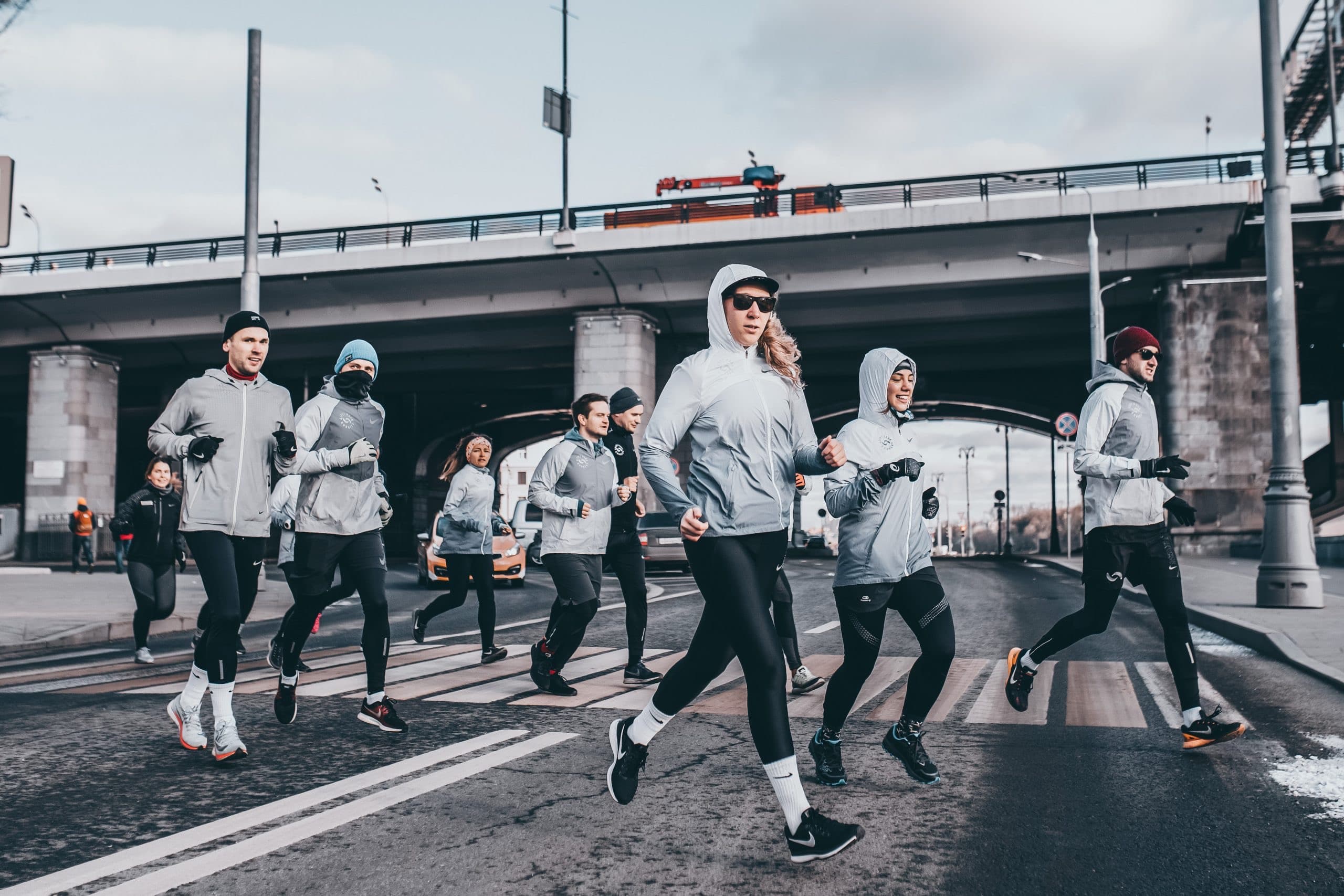
Most people who work in restaurants do not keep normal hours. They are awake when the city is winding down, and they are sleeping when the rest of Toronto is drinking its morning coffee. Their social lives orbit around late-night meals, shared staff tables, and the peculiar camaraderie that forms only between people who have survived a Saturday dinner rush together. It is inside that world, specific and demanding and unlike almost any other, that The Food Runners was born. Toronto's culinary community has always had its own language, its own rhythms, its own sense of solidarity. In 2014, someone decided it should also have its own run crew. The premise was simple but quietly radical. Chefs, line cooks, pastry professionals, sommeliers, servers, bartenders, and front-of-house staff spend their working lives on their feet, under pressure, feeding other people. They understand physical endurance in a visceral way. Running, with its discipline and its meditative quality, is not a difficult sell to someone who has stood on a kitchen floor for twelve hours and still found a way to plate something beautiful at the end of it. The Food Runners recognized that connection and built something around it.A Crew Rooted in Toronto's Restaurant World
Toronto is a food city in the truest sense. Its restaurant scene is dense, internationally influenced, and fiercely creative. Neighbourhoods like Kensington Market, Queen Street West, Ossington, and the Junction pulse with independent kitchens, wine bars, and dining rooms that draw national attention. The people staffing those rooms are a community unto themselves, and The Food Runners tapped directly into that community from the beginning. This was never a crew designed to recruit broadly across the city. Its identity was tied to an industry, and that specificity gave it a kind of clarity that most run clubs take years to develop. Running through a city you know intimately as a service worker is a different experience than running through it as a tourist or a commuter. You pass the loading docks where produce arrives before dawn. You run by the restaurant where you staged three years ago, or the bar where half your crew worked before moving on. Toronto becomes readable in a different way when you know its restaurants from the inside out, and The Food Runners move through it with exactly that kind of embedded knowledge.The Particular Logic of Running After a Shift
There is something honest about choosing to run when your body is already tired. Many members of The Food Runners understand that version of exhaustion intimately: the kind that comes from hours of heat and noise and constant movement, where the idea of lacing up should feel absurd but somehow does not. Running becomes a form of decompression. The rhythm of it, steady and self-directed, is the opposite of a dinner service in nearly every way. There is no ticket machine, no expo, no table waiting on a course. There is just the pavement and the pace and the company of people who understand why you needed this. That quality of release is part of what defines the culture of The Food Runners. It is not a crew built on performance anxiety or personal records, though people who care about those things are welcome. It is built on the understanding that movement, shared with people who live the same kind of life, is genuinely restorative. In an industry where burnout is common and mental health often goes unaddressed, that matters more than any finishing time.Toronto's Streets as a Second Dining Room
The city that The Food Runners run through is one of the most ethnically and culturally diverse urban environments in the world. Toronto's food scene reflects that diversity directly, and so does the community of people who work within it. Running through the city's neighbourhoods means passing through the same streets where those culinary influences are most visible: the spice shops and dumpling houses of Spadina, the Portuguese bakeries of Little Portugal, the Caribbean grocers along Eglinton West. For a crew whose identity is inseparable from food culture, those streets are not just a backdrop. They are familiar territory. There is also something fitting about a group of food industry workers using the city's public space in this way. Restaurants animate a city's nighttime economy, but the people who run them often experience the city's daytime life at an angle, sleeping through its mornings and working through its evenings. Running offers a chance to reclaim some of that, to be present in Toronto's parks and along its waterfront and through its residential grids at hours and in ways that a working kitchen schedule rarely permits.A Crew that Earns Its Appetite
It would be easy to lean into the obvious joke: that The Food Runners are really just running for the post-run meal. And look, nobody in the food industry is going to pretend they do not think about what they are eating. But the crew's appeal runs deeper than that. What it offers is belonging within a subculture that can feel isolating from the outside. Restaurant work is demanding in ways that are hard to explain to people who have not done it, and finding community with others who share that experience, outside of the professional context, creates a different kind of bond. The Food Runners give Toronto's culinary workers a space that is theirs, defined not by any single employer or kitchen or dining room but by a shared way of moving through the world. Since 2014, the crew has carried that identity through the city's streets, season after season. Follow them on Instagram at @thefoodrunners_ or visit their website at thefoodrunners.co to learn more about who they are and how to run with them.Featured Crew

R
RunningCrews Editorial
RunningCrews.com