 RunningCrews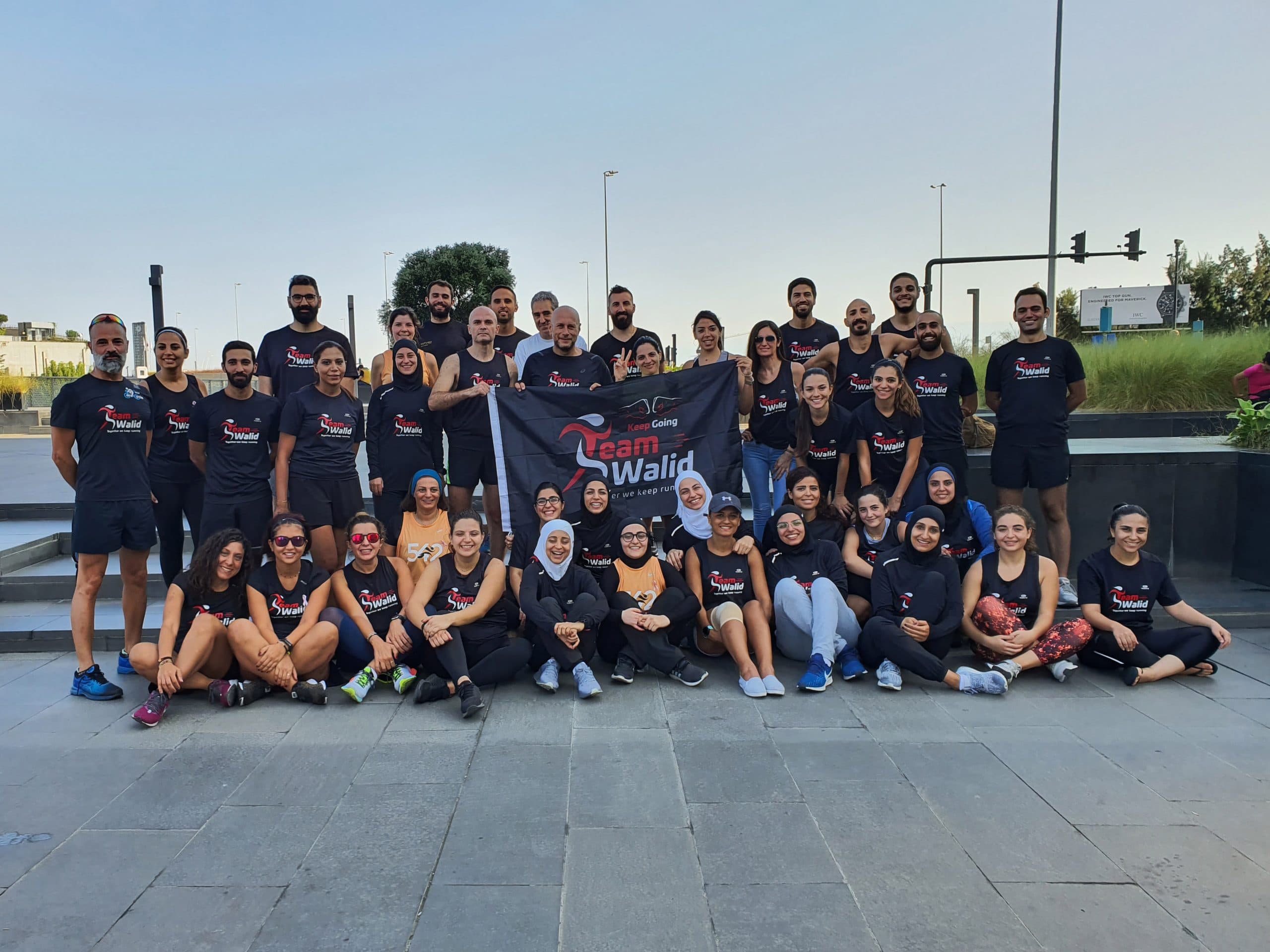
A Run That Started with One Invitation
There is a particular stretch of Beirut where the city exhales. Along the waterfront at Zaituna Bay, where the Mediterranean sits quietly at the edge of one of the Middle East's most layered, complicated, and endlessly compelling cities, a group of runners gathers three times a week. They arrive at different speeds, from different neighbourhoods, carrying different histories. What unites them is simple: they said yes to an invitation. That is how Team Walid has always worked, and that is how it began more than a decade ago, when a man named Walid simply started asking his friends to run with him. In 2014, the running culture in Lebanon was largely the domain of competitive athletes and a narrow social circle of enthusiasts. Community running, the kind that is open and messy and deliberately non-exclusive, barely existed as a concept. Walid saw that gap not as a problem to solve but as an opportunity to share something he loved. He began bringing friends along on his runs through the suburbs of Beirut. One came. Then another. Then someone brought their own friend. The numbers grew slowly, organically, through the kind of trust that only personal invitation can build. By the time they had a proper group, Walid registered them with the Beirut Marathon Association's 542 program, a training initiative designed to bring new runners to the finish line of the city's flagship marathon. The association named the team after Walid himself, a small but telling recognition of the fact that without his energy and vision, none of these people would have been there.From the Marathon to Something Bigger
The 542 season ended when the marathon crossed its finish line that year. Most training programs dissolve at that point. The goal is met, the medal is collected, and life resumes. Team Walid refused that logic. The members did not want to stop, and more importantly, they had stopped being a training group and had started being something else entirely. They were a community. They kept running together, kept inviting friends, kept showing up at the waterfront. The program ended but the team did not, and that distinction matters. It means that Team Walid was never really about the marathon. The marathon was simply the first door. What made that continuation possible was the texture of the group itself. Walid had gathered an uncommonly diverse collection of people. Beginners ran alongside athletes. People with no evident running background lined up next to those who had competed for years. Members came from different religious communities, different social classes, different cultural backgrounds. In a country where those divisions can feel permanent and load-bearing, the fact that they dissolved so naturally on a run together was not a small thing. Nobody demanded that anyone keep a certain pace. Nobody was told they did not belong. The single operating principle, repeated often and embodied daily, was that there were no rules. Fast or slow, you were welcome. That philosophy attracted people who had never imagined themselves as runners, and it kept them coming back.The People Who Changed Because They Showed Up
Over time, Team Walid became something its founder perhaps did not fully anticipate when he was simply inviting friends for a jog: a place of genuine transformation. Among the more than eighty active runners who now carry the team's identity, there are people who came to running after struggling with alcohol dependency, people who were managing serious depression, people dealing with obesity and its accompanying health complications, people whose self-esteem had been worn down by the accumulated weight of difficult years. Running gave them a structure and a physical outlet, yes. But the team gave them something harder to quantify and more difficult to replace: belonging. The crew does not advertise this about itself. There are no testimonials posted with before-and-after photographs, no language about transformation or wellness journeys. The stories exist in the relationships between members, in the way someone who has been running with the group for three years will slow down on a Wednesday evening to run alongside someone who just joined that week. That kind of quiet, habitual solidarity is what keeps people engaged long after the novelty of a new activity wears off. It is not a coincidence that members describe joining Team Walid as gaining a new family. The language is consistent because the experience is consistent.Three Times a Week at the Bay
The crew runs three times each week. Wednesday evenings at six o'clock draw those who can carve time out of the middle of the working week, while Friday and Sunday mornings at six bring out the group in its fuller numbers as the city is still waking up. All three sessions meet at Zaituna Bay, the marina-front stretch in central Beirut that has become inseparable from the team's identity. The bay offers what urban runners everywhere are looking for: a relatively flat surface, a sense of open space, and the psychological relief of running beside water. In Beirut, where the city's topography can be demanding and the traffic relentless, Zaituna Bay functions as a kind of running commons, accessible and neutral ground. Running along the Beirut waterfront carries its own specific weight. The city has been through cycles of destruction and reconstruction that few places on earth have matched. Running here, in this particular light, past buildings that carry visible histories, is not a neutral act. It is a choice to occupy the city with your body, to move through it at a pace slow enough to actually see it, and to do that in the company of others who are making the same choice. Team Walid has been doing exactly that since 2014, and the consistency of the meeting point is part of what makes the crew feel permanent and rooted rather than provisional.Walid the Coach and the Captains Who Carry It Forward
The crew's leadership structure has evolved as the team has grown. Walid, the founder, remains the animating spirit of the group, the person whose name the team bears and whose original instinct for openness shaped everything that followed. Day-to-day operations and the energy of group runs are now carried significantly by the captains who have grown within the team. Majed and Abed both serve as captains, part of a leadership layer that has developed organically from within the membership. The fact that the team's captains came up through the ranks rather than being appointed from outside is significant. They know what it felt like to be new, to be slower than they wanted to be, to wonder whether they belonged. That memory informs how they lead. This kind of organic leadership development is one of the more durable things a running crew can build. When the people guiding a group remember what it was like to be uncertain beginners, the culture of welcome tends to sustain itself. Team Walid has now been operating for more than a decade, which means it has outlasted the typical lifecycle of enthusiasm-driven projects. The reason it has endured is not difficult to locate. The team offers something that is genuinely hard to find in many parts of life: a space where the only requirement is effort, and where effort of any kind is met with respect.Running in Beirut After Everything
To understand Team Walid fully, it helps to understand something about Beirut, a city that has faced more than most cities are ever asked to face. Lebanon has experienced political instability, economic collapse, and catastrophic disasters, including the devastating port explosion of 2020, in the years since Team Walid was founded. Running crews in cities under sustained pressure do not operate in a vacuum. They absorb the city's mood, they lose members to emigration and hardship, and they make a daily argument, just by gathering, that ordinary life is worth continuing. Team Walid has continued. It has kept meeting at Zaituna Bay, kept running Wednesday evenings and early weekend mornings, kept inviting friends of friends. Around eighty active runners currently carry the crew's identity, a number that reflects both growth and the reality of a city from which many people have departed over the past few years. The core that remains is committed in a way that suggests the crew has become load-bearing for its members, part of the architecture of their weekly lives rather than an optional add-on. That is what a running crew becomes when it does its job well. It stops being something you do and starts being part of who you are.An Open Door on the Waterfront
Team Walid is not a competitive club and has never tried to be one. It carries none of the markers of exclusivity that characterized Beirut's running culture before 2014. There are no membership requirements, no pace thresholds, no application process. If you want to run, you show up at Zaituna Bay. You find the group, and you run. If you are slow, someone will run with you. If you are fast, you will find people who can push you. The diversity that Walid built into the team from its earliest days, by simply inviting everyone rather than only inviting the obvious runners, has become the crew's most distinctive feature and its most durable asset. After more than ten years of Wednesday evenings and early-morning starts, of marathons trained for and finished, of friendships formed through shared effort on the waterfront, Team Walid stands as one of Beirut's most genuine community running stories. It began with one person asking a friend to join him, and it has grown into something that has genuinely changed the lives of the people it has touched. That is not a small thing to build. Follow them on Instagram at team.walid.official and find out when the next run is happening.Featured Crew
R
RunningCrews Editorial
RunningCrews.com