 RunningCrews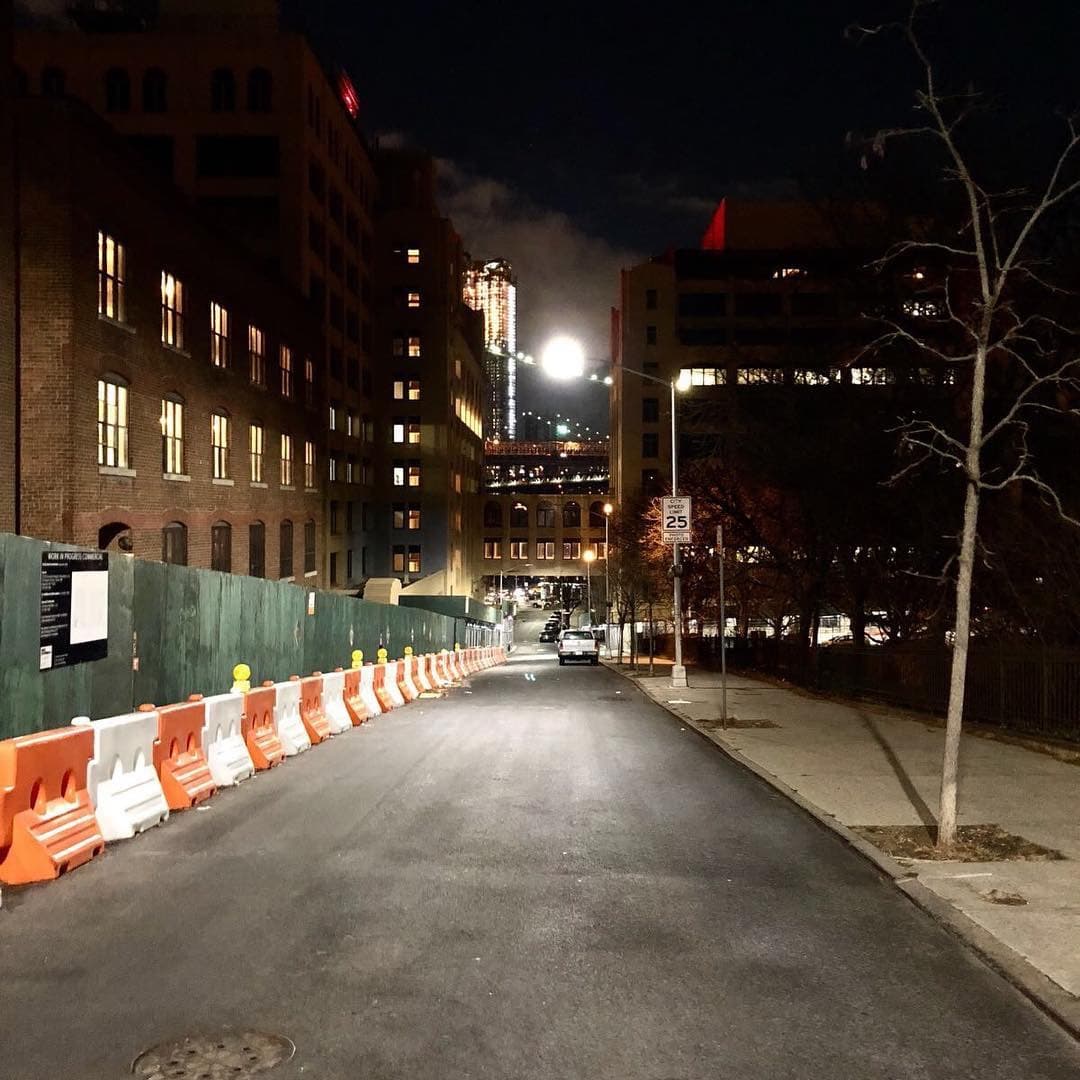
The Hill That Started Everything
There is a hill in Brooklyn that has a name most runners would rather forget after climbing it. Suicide Hill is not subtle in its warning. The name alone signals that what waits at the top is earned, not given. It was on this very slope, on a Monday evening sometime in the winter of 2012, that three friends made a decision that would quietly shape their running lives for years to come. Tony, Muriel, and Paul, all three veteran runners and longtime members of the Brooklyn-based group Bridgerunners, had been visiting this hill for years on group runs whenever the route swung through the neighborhood. They knew the hill well. They respected it. And then one evening, instead of just passing through, they decided to stay. The idea was practical, almost unglamorous. The New York City Marathon had just passed, the holidays were closing in, and the temptation to let fitness slide through winter was real. Rather than fight that drift with gym memberships or treadmill sessions, Tony, Muriel, and Paul chose something rawer. They would run up and down the hill. Repeatedly. And they would keep doing it until it stopped being hard, which, if you know Suicide Hill, is not something that happens quickly. What began as a handful of loose repeats gradually revealed itself to be something more structured, more demanding, and more rewarding than anyone had anticipated at the start.How a Simple Idea Became a Speed Workout
The transformation from casual hill repeats to a genuine training session happened organically, the way most good things do in running. A couple of easy efforts up the slope gave way to harder ones. The group started pushing the pace on certain repetitions, then focusing on breathing control, then dialing in their running form on both the ascent and the descent. Suddenly, what had been pitched as a low-key way to stay in shape during the off-season had turned into a threshold workout with unexpected surges, the kind of session that leaves your legs honest and your lungs humbled. Suicide Hill Racing Club describes its core workout as an unconventional speed workout centered around one main big hill. That description is accurate, and it is also something of an understatement. Hill repeats, when done with intention, are among the most effective tools a runner has. They build power, reinforce proper mechanics, demand engagement from the whole body, and develop the mental resilience that no flat tempo run can quite replicate. The crew understood this intuitively, even before they had a name, a logo, or a roster. The hill taught them, and they kept coming back.Three Founders and a Shared Foundation
Tony, Muriel, and Paul share more than a starting line. All three came up through Bridgerunners, the New York City crew that has long served as a home base for Brooklyn runners serious about community and craft. Their years within that group gave them something invaluable: a shared language around running, a mutual respect for the process, and an understanding of what a well-run workout actually feels like. When they decided to launch something of their own at Suicide Hill, they were not starting from scratch. They were distilling what they already knew into a specific, repeatable format built around a single location. That specificity is part of what gives Suicide Hill Racing Club its character. Many running crews in New York City cover the five boroughs, plot out new routes each week, and chase novelty as a feature. This crew does the opposite. It returns, again and again, to the same hill, the same surface, the same physical challenge. Progress, if you are paying attention, becomes visible not in the variety of terrain you cover but in how you handle the one piece of terrain you keep confronting. The founders understood that mastery comes from repetition, and they built their crew around that conviction.Around Thirty Runners and One Unapologetic Hill
Suicide Hill Racing Club has grown to around thirty members since those first Monday evening sessions in 2012. That is not a large number by the standards of some New York City running collectives, which can swell into the hundreds. But size has never been the point here. The crew that gathers at Suicide Hill is one that self-selects for a certain kind of commitment. You show up because you want the workout, because you respect the hill, and because you find something clarifying in the simplicity of running up and down the same slope with people who share your standards. The atmosphere at a Suicide Hill Racing Club session reflects that self-selection. It is focused without being joyless, competitive without being exclusionary. When you are all facing the same incline, the hierarchy flattens quickly. The hill is the great equalizer in the most literal sense. A fast road runner may find their edge disappearing on the gradient. A runner with strong mechanics and good breathing control may find themselves ascending with surprising ease. Every session reshapes what you thought you knew about your own fitness.What the Workout Actually Looks Like
A session at Suicide Hill does not follow a fixed script, and that is intentional. The workout builds on itself in real time, responding to the group's energy, the conditions, and the accumulated fatigue of earlier repetitions. It begins with repeats up the hill that are manageable enough to find a rhythm, then evolves as pace picks up unexpectedly, testing whether runners can maintain their form and breathing when the effort becomes uncomfortable. The focus throughout is on running mechanics and respiratory control, two elements that hill work stress-tests more effectively than almost any flat workout can. There is something almost meditative about the structure, even as it is physically demanding. The fixed location removes all decisions except the ones that matter: how hard to push, when to recover, how to hold form on the way up and stay controlled on the way down. Runners do not need to think about where they are going. They only need to think about how they are moving. In a city as stimulating and distracting as New York, that constraint is not a limitation. It is a relief.Brooklyn as the Right Setting for This Kind of Running
Suicide Hill sits in Brooklyn, which is fitting. Brooklyn has a long, layered relationship with the kind of running that does not need to announce itself. The borough has produced serious runners who train quietly, often overlooked in favor of the more visible running culture across the bridges in Manhattan. Bridgerunners, the crew that originally brought Tony, Muriel, and Paul into the same orbit, is itself a Brooklyn institution built on substance over spectacle. Suicide Hill Racing Club carries that lineage forward in its own compressed, hill-specific way. The geography of Brooklyn rewards runners who are willing to look past the flat, expected paths along the waterfront. There are slopes and gradients hidden within the borough's neighborhoods, and Suicide Hill is among the most honest of them. It does not pretend to be anything other than what it is: a steep incline that will expose whatever weaknesses you have and reward whatever strengths you bring. The crew that has chosen to make this hill its permanent home has, in a real sense, chosen to build their running around truth rather than comfort.An Open Invitation to the Hill
Suicide Hill Racing Club does not advertise loudly. With around thirty members and a founding ethos rooted in a quiet Monday evening decision between three friends, the crew has grown through the kind of word-of-mouth that running communities have always depended on. If you have run with Bridgerunners, you have likely heard the name. If you have pushed through a hard workout with someone who mentions training on the hill, you have probably already been invited. For runners in New York City who have grown tired of the same flat loops, who are looking for something that will genuinely challenge them and a group that means what it says about training hard, Suicide Hill Racing Club offers something straightforward and rare: one hill, one workout, and around thirty people who keep coming back because it works. Follow the crew on Instagram at Suicide Hill Racing Club to find out when they are next heading up the slope.R
RunningCrews Editorial
RunningCrews.com