 RunningCrews
One Founder, One Idea, One City
The streets of New York City do not wait for anyone. They push back. They test patience, pace, and resolve in equal measure, block after block, borough after borough. It was that friction, that constant negotiation between a runner and the city beneath their feet, that Greg, the founder of Streets 101, wanted to channel into something purposeful. In April 2018, he built a crew around a conviction that running in New York City should mean more than logging miles alone. It should mean showing up, committing fully, and bringing others along for the effort. That conviction has held ever since. What began as a single person's vision for how running communities could operate has grown into one of the city's more quietly dedicated collectives, built not on hype but on the unglamorous, satisfying work of consistent effort and genuine accountability. The name says it all, really. Streets 101. The fundamentals, learned on asphalt, repeated until they become second nature. There is nothing abstract about this crew. It is grounded in the city itself, in the particular demands of running through one of the most relentless environments on earth, and in the belief that those demands, met together, make every individual stronger. From its earliest days, Streets 101 has operated with a straightforward philosophy: the streets come alive when runners come together, and each person who shows up makes the whole thing more worthwhile. That founding idea has never been revised, only expanded.Effort Is the Only Membership Requirement
Streets 101 is built around a deceptively simple principle. Every runner who joins is given an individualized goal to chase. Not a generic target handed out to the group, but something specific to that person, calibrated to where they are right now and where they could realistically go if they stopped running inside their comfort zone. This approach sets the crew apart from collectives that treat members as a single, undifferentiated pack. Here, the expectation is that each runner is on their own trajectory, and the crew's job is to support that trajectory without letting anyone drift back into routine complacency. The language Streets 101 uses to describe itself is revealing: effort, commitment, drive, pushing the limits. These are not decorative words chosen for a social media bio. They reflect a culture that genuinely values the hard parts of training, the early Thursday alarm, the Tuesday evening run after a long workday, the Saturday morning when the legs are heavy but the group is waiting. Showing up for those moments is what defines membership here, more than any formal process or fee structure. There is an honesty to this approach that resonates with runners who have grown tired of crews that prioritize aesthetics over accountability. Streets 101 asks something of you. It asks that you take your own running seriously, that you set a goal that scares you slightly, and that you trust the people around you to help you reach it. That ask, repeated across around 130 members, creates a culture of shared ambition that is difficult to manufacture and impossible to fake.The Captains Who Keep the Crew Moving
A crew of this size and consistency does not run on founder energy alone. Streets 101 is held together by a deep bench of captains who collectively shape the character of every run. Stephen, Reuben, Matt, James, Tim, Andy, David, Jess, and Matt form a leadership group that brings both range and depth to the crew. Nine captains for roughly 130 members is a ratio that speaks to how seriously Streets 101 takes the individual runner experience. This is not a crew where leadership is ceremonial. Captains are the connective tissue between the crew's founding philosophy and its day-to-day reality. They are the ones who know which members are coming off an injury, who is building toward a goal race, who needs a push and who needs permission to ease off. That kind of attention requires people who are invested not just in their own running but in the progress of others. The breadth of this leadership team also means the crew has genuine diversity in perspective, something that matters when you are trying to create individualized pathways for a membership as varied as New York City itself. Each captain brings their own relationship with the city's streets, their own training history, their own sense of what it means to run hard and run well. Together, they maintain a crew culture that is demanding without being intimidating, and competitive without being exclusionary.Three Runs a Week on New York Time
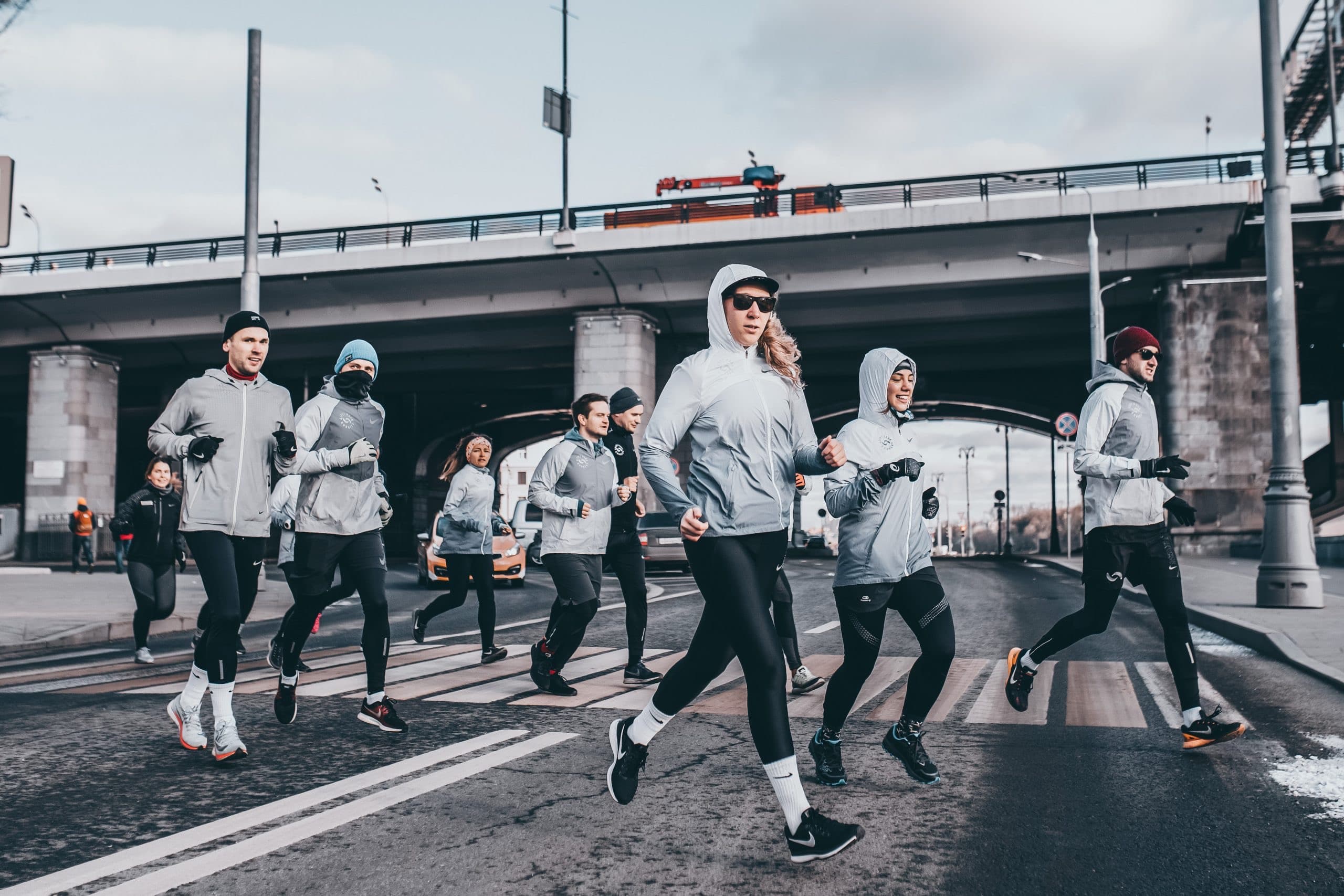
Streets 101 runs three times a week, and the schedule reflects the city's rhythms as much as it reflects the crew's ambitions. The week opens with a Tuesday evening run at 7:00 PM, a slot that requires genuine commitment from anyone navigating New York's work culture. Tuesday evenings in this city are not casual. The day has a way of expanding to fill whatever time you give it, and choosing to lace up and head out to Custom Performance instead of collapsing on a couch is, in its own way, an act of resistance. That choice, made consistently, is exactly what Streets 101 is built on. Thursday mornings bring a different kind of challenge. The 6:30 AM start asks runners to reorganize their entire morning, to set the alarm earlier, to move through the pre-dawn city with purpose. Early morning runs in New York have a quality that no other time of day can replicate. The streets are not quiet exactly, because this city is never fully quiet, but there is a particular clarity to the air and the sound and the light in those hours before the full weight of the day arrives. Running through it with a crew compounds that feeling. Saturday mornings round out the week at 9:00 AM, the most forgiving slot of the three and the one most likely to draw the full breadth of the membership. All three runs are anchored at Custom Performance, a meeting point that has become synonymous with the crew's identity and provides a consistent home base in a city defined by constant change.Running as One Means No One Gets Left Behind
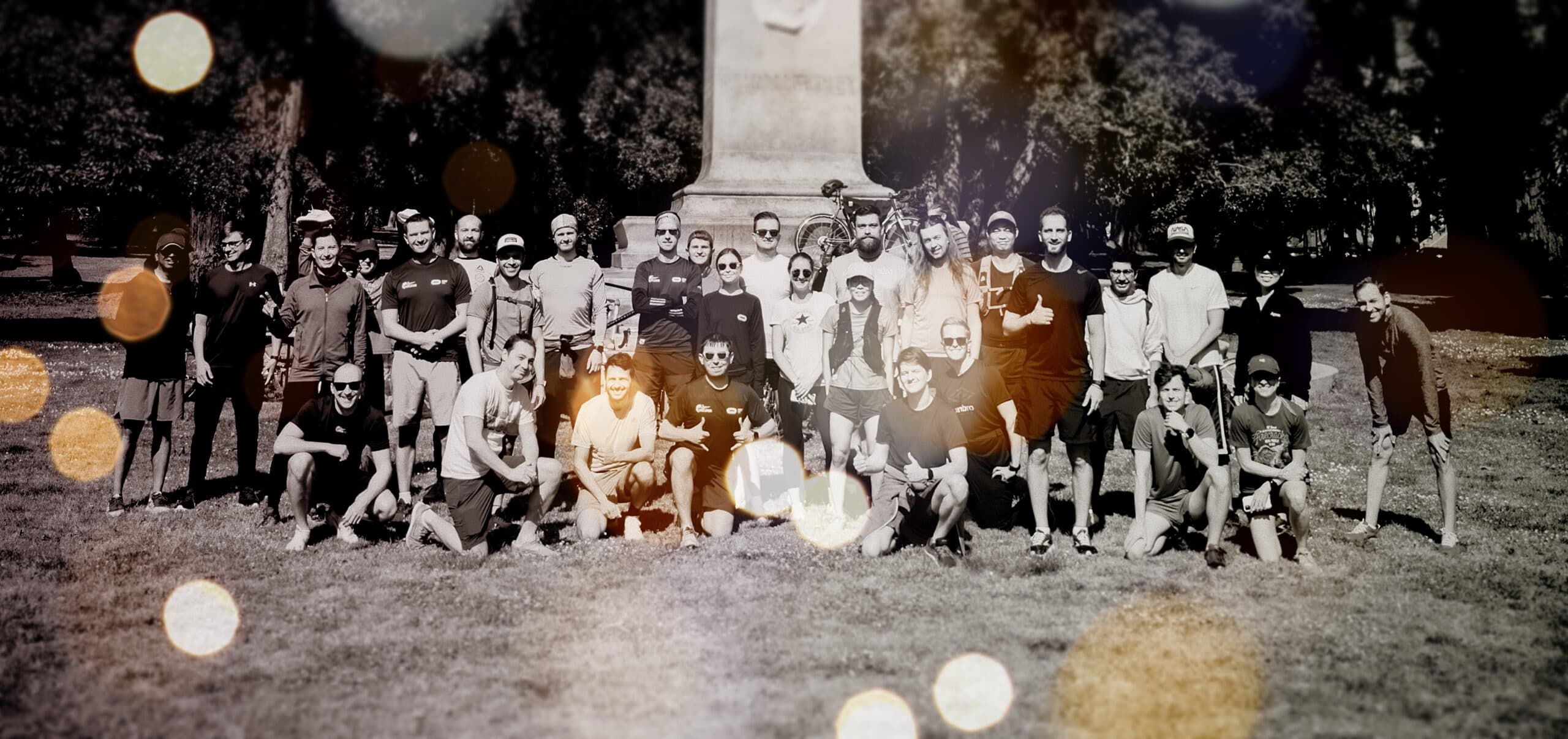
The phrase Streets 101 returns to again and again is "Running as One." It is worth taking seriously as a description of how the crew actually operates, not just as a motto but as a daily practice. In a city as atomized and competitive as New York, running as one is not the default. The default is everyone running for themselves, optimizing their own pace, their own route, their own metrics. Streets 101 deliberately disrupts that default. The individualized goal-setting model is part of it. When every member has a specific target to pursue, the crew's collective success becomes the sum of individual breakthroughs rather than the performance of a single fast pack. Celebrating one runner's first sub-two-hour half marathon carries the same weight as celebrating another's podium finish at a local race. Both are evidence of the philosophy working. The crew's emphasis on "sharing each other's successes" is not a soft sentiment. It is a structural feature of how Streets 101 builds its community. When you have been given a goal, and the crew has watched you chase it, your eventual success belongs in some small way to everyone who ran alongside you on a cold Thursday morning or pushed you through the final miles on a Saturday. That shared investment is what transforms a group of people who happen to run together into something more durable and more meaningful. Around 130 members have found that meaning on the streets of New York City since 2018, and the number continues to grow.The City as Classroom and Training Ground
New York City is not the most forgiving place to train. The grid is relentless, the traffic unpredictable, the weather capable of swinging from brutal humidity to bitter cold within the span of a single training block. Central Park offers respite, but much of the city's running happens on sidewalks and bridges, through intersections and around pedestrian traffic that does not yield for anyone. Streets 101 leans into all of that. The name is not incidental. Running the streets of this city, with all of their difficulty and stimulation and noise, is the training. Learning to hold pace when the lights change and the block ahead is blocked, learning to stay mentally sharp when the environment is chaotic, learning to find rhythm in a place that seems designed to disrupt it, these are the skills that Streets 101's schedule and philosophy quietly develop over months and years of consistent work. New York also offers something that few training environments can match: an unending supply of runners at every level, pursuing every kind of goal, on every kind of timeline. The city's running culture is deep and varied, and Streets 101 has found its distinct place within it by committing to the things that larger, more loosely organized groups often cannot sustain, namely real accountability, real personalization, and a leadership structure built to support both. For runners who want to do more than log miles, who want a crew that will hold them to a standard and celebrate them when they meet it, Streets 101 offers exactly that, three mornings and evenings a week, on the streets that made it.Featured Crew

R
RunningCrews Editorial
RunningCrews.com