 RunningCrews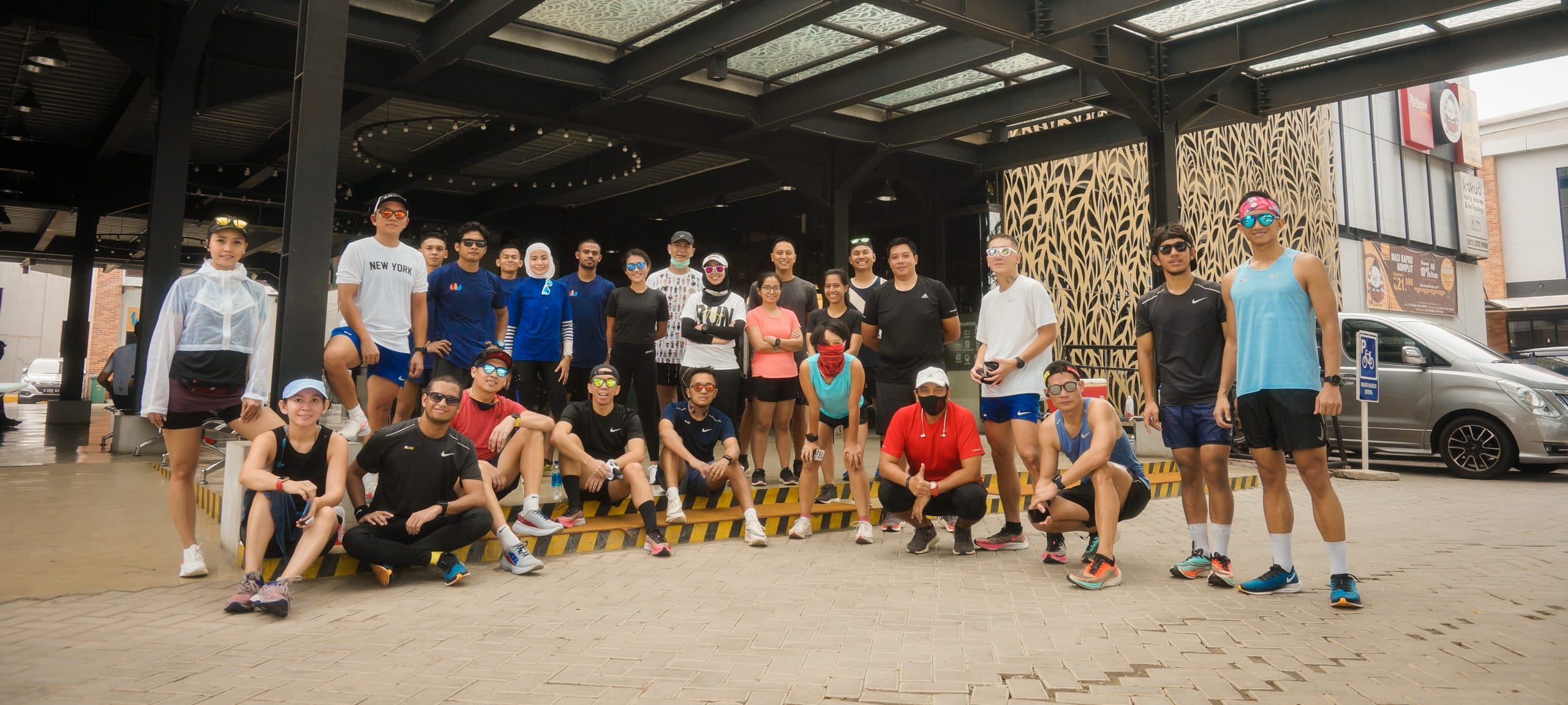
From Saddles to Sneakers in South Jakarta
There is something quietly radical about a group of cyclists deciding, almost on a whim, that they want to run. Not replace cycling entirely, just add something to it. Find a new rhythm, a different kind of effort, a fresh way to move through the city they already knew from the saddle. That was the impulse behind Selari, a running crew that came together in Jakarta in March 2020, founded by a tight circle of race bike friends who were simply looking for an alternative. What began as a side experiment has grown into something far more deliberate: a community of around 25 runners who show up together, week after week, with purpose and consistency. The name they chose tells you everything about the intention. Selari, in Indonesian, means running repeatedly. Not once. Not occasionally. Again and again, every single week.A Name That Holds the Whole Philosophy
Most running crews pick a name that nods to a place, an attitude, or an aesthetic. Selari picked a verb. A repeated action. And that choice reflects how the founders think about what they have built. Running is not a goal to be checked off or a race to be finished. It is something you come back to, something that has value precisely because of its repetition. The ritual of lacing up on a Wednesday morning, of finding your pace beside the same familiar faces on a Sunday, of sharing the particular silence that settles over a group mid-run: these are the things that make a crew real. The founders understood from the beginning that consistency is the foundation of community, and they baked that understanding directly into the crew's identity. Selari does not promise transformation or personal records. It promises presence, regularity, and the kind of momentum that only builds when people keep returning to the same practice together.Eight Founders and One Shared Instinct
The crew was brought to life by a group of eight founders, all of whom came from the same cycling circle and shared a curiosity about what running could offer. Bimo was among the first to push the idea forward. Erwin joined in shaping the crew's early character, alongside Echa, Arwan, and Lucky. Yogi, Deddy, and Dodi rounded out the founding group. Together, they brought the instincts of athletes who already understood training discipline, team dynamics, and the quiet satisfaction of moving through a city at pace. What they were building on top of that foundation was something softer: a culture of positive energy, mutual encouragement, and the straightforward pleasure of running with people you genuinely like. Today, the crew is captained by Stevano, who keeps that original spirit intact while helping the group grow.The Energy Building as a Starting Line
Selari gathers at The Energy Building, a commercial complex in the South Jakarta business district that serves as the crew's anchor point and meeting place. There is something fitting about the name. Running crews run on energy, the kind that is generated collectively, that hums quietly in the minutes before a run starts when people are stretching and catching up and shaking out their legs. The Energy Building has become Selari's regular starting line, the place where the transition happens from ordinary morning to something more deliberate. From there, the crew takes to Jakarta's streets, moving through a city that is never quite the same run to run. Jakarta's urban landscape offers a constantly shifting backdrop: the early light cutting between towers, the particular stillness of roads not yet claimed by traffic, the texture of a city waking up around a group of people who chose to be awake already.Wednesday and Sunday Morning on the Streets of Jakarta
The crew runs twice a week. Sunday mornings are the classic crew run, the kind that draws the full group and has a social weight to it. Wednesdays add a midweek rhythm that separates Selari from the once-a-week model many crews settle for. Two runs a week is a commitment, and the fact that Selari has maintained that cadence speaks to the seriousness with which the founders approached their idea. Running is not a weekend activity here. It is woven into the week, present on ordinary days, available as a regular counterweight to the demands of work and city life. The 6 a.m. start time on Sundays means the crew is out early, before the heat builds and before Jakarta's traffic reaches its full intensity. That early hour has its own texture: the air is cooler, the light is different, and there is a sense of having claimed something from the day before most people have started theirs.Positive Vibes as a Design Principle
The founders were explicit about one goal from the very beginning: positive vibes on every run. That phrase could sound like a slogan, but in the context of how Selari operates, it reads more like a design principle. A crew that sets positivity as a conscious intention has to make choices that support it: who they welcome, how they communicate, how they handle runs when conditions are difficult or attendance is low. Around 25 members is a size that still allows for genuine connection. You know the people you are running with. You notice when someone is missing. You remember the runs that were hard and the ones that felt effortless. At this scale, the community is not abstract. It is a specific group of specific people who have chosen to spend their Wednesday and Sunday mornings moving through Jakarta together, and that specificity is what gives Selari its warmth.Running Culture with Something to Say
The founders arrived at running from cycling, and that crossover background gives Selari a slightly different perspective on what running culture can be. Cyclists already understand training as a long-term practice, the importance of showing up consistently, and the particular bond that forms between people who share physical effort over time. Bringing that sensibility into a running crew context means Selari was never going to be casual about what it was building. The ambition, stated plainly by the founders, is to make a difference in running culture. Not to dominate it or define it, but to contribute something: a model of community that is consistent, welcoming, and grounded in the simple repeated act of running together. In a city as large and complex as Jakarta, where running crews are finding their footing alongside a growing culture of urban fitness, Selari's approach, two runs a week, a clear philosophy, a name that means coming back again, offers something steady and real. The streets of Jakarta are wide enough for many kinds of runners. Selari is simply the crew that keeps showing up on them.Featured Crew
R
RunningCrews Editorial
RunningCrews.com