 RunningCrews
There is a particular kind of shorthand that runs through Korean culture, one that connects strangers through birth year and zodiac in a single word: DDI. When two friends born in 2003 decided to build a running crew around that shared identity, the result was Runnersheep, one of Seoul's youngest and most energetically growing crews. The sheep is the DDI of 2003, and in that symbol the founders found both a name and a purpose.
A Friendship, a Zodiac, and a Crew Name
Seowoohyun did not arrive at running through a race result or a fitness goal. He found it the way many people find the things that matter most: through other people. During his freshman year at Kyunghee University, he joined a campus crew called Running with Kyunghee and felt something click. Not just the rhythm of feet on pavement, but the rhythm of a group moving together, the way running strips away pretense and leaves people simply present. That early experience led him to a full-course marathon training project called Challenge the Impossible, where he crossed paths with individuals who showed him what running culture could actually look like at its best.
The idea for Runnersheep came from a conversation between Seowoohyun and co-founder Paikhaeyohg. Both born in 2003, both sheep DDI, both drawn to the question of what it would mean to build something from the ground up with people their own age. They launched the crew in January 2022, and the name they chose carries two layers of meaning. The first is literal: Runnersheep are runners born in the year of the sheep, a generation stepping into the running world fresh, with their own ideas about what a crew should feel and look like. The second is linguistic: buried inside the word "Runnersheep" is a riff on "leadership," with "sheep" substituting for the syllable that connects running to something larger than exercise. It is a name that rewards a second look, much like the crew itself.
Meeting at the Gate of Jongmyo Shrine
The crew gathers every Tuesday evening at seven o'clock at the front gate of Jongmyo Shrine, the UNESCO World Heritage site in central Seoul that houses the royal ancestral tablets of the Joseon dynasty. It is a striking meeting point, ancient stone walls and towering trees at the edge of a city that never seems to slow down. There is something quietly meaningful about a group of twenty-one-year-olds starting their runs from one of the most historically charged addresses in Korea. Whether that symbolism is intentional or simply a matter of geography, it gives the Runnersheep's weekly ritual a texture that few other crews can claim.
From Jongmyo, the routes move through the streets and spaces of central Seoul. The area sits within reach of Cheonggyecheon Stream, the restored urban waterway that threads through downtown, and the broad pedestrian corridors that connect the old city to its newer layers. Running here means moving through history and modernity in the same stride, past traditional market stalls and glass towers, along pathways where the city's past and present refuse to stay neatly separated. For a crew defined by generational identity, it is a fitting stage.
Forty Runners, One Generation
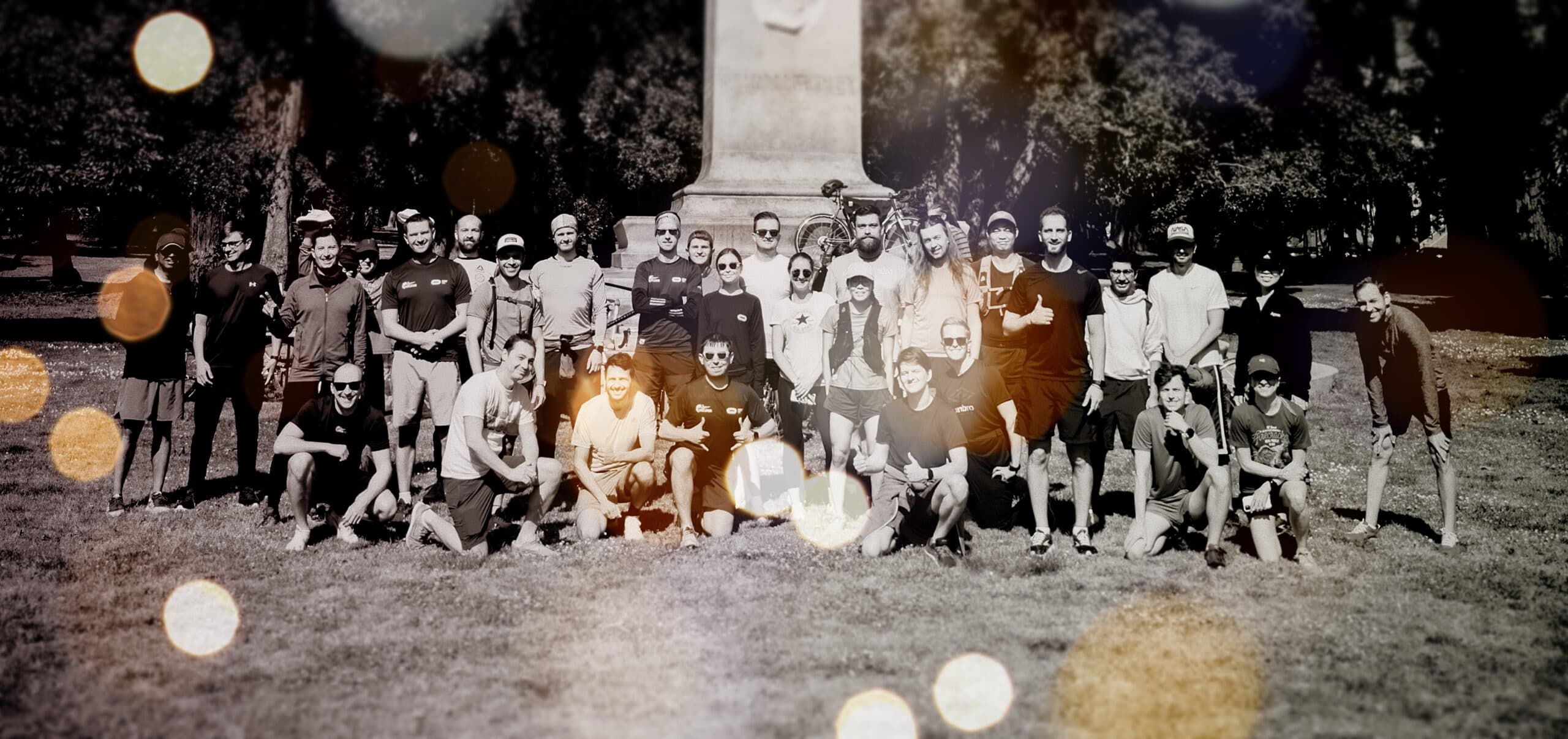
Runnersheep has grown to around forty members since its founding, and the pace of that growth says something about the appetite for exactly what the crew is offering. The membership is intentional and specific: the crew is built around a shared birth year, which means every person who joins arrives with a certain baseline of common reference. The same pop culture touchstones, the same school schedules, the same social pressures of growing up in Seoul in the early 2000s. That shared context does not make conversation easier so much as it makes silence more comfortable, which is often more valuable on a run.
The crew charges a membership fee, kept deliberately practical and directed toward shared equipment and storage. The goal was never to be exclusive for its own sake but to create the infrastructure for something that lasts. A locker, a jersey, a bag of cones for a drill session, these are small things, but they are the material foundation of a crew that intends to be around for years. Seowoohyun and Paikhaeyohg were not building a casual group chat. They were building a community with a physical presence in the city, a place where people show up on a Tuesday evening not because they have to but because they genuinely want to.
What the Crew Is Actually Building
The stated vision of Runnersheep is to create a space where friends of the same age can run, play, learn, and grow together. That formulation is worth sitting with for a moment, because the four verbs are doing different kinds of work. Running and playing are about the body and the present moment. Learning and growing are about time, about the idea that this crew is not just a weekly event but a context in which people develop. Seoul's running scene has many crews, from the long-established Wausan30 in Hongdae to the community-driven Modu Running Crew, from the nighttime runs of N1RC to the fashion-forward sensibility of Ucon Seoul. What Runnersheep is carving out is a generational niche, a home crew for the 2003 cohort as they move through their twenties together.
Tuesday sessions cover somewhere between five and seven kilometres, settled into a pace that sits around five and a half to six minutes per kilometre. That range is deliberate. Fast enough to feel like running, comfortable enough to talk. The conversations that happen at that pace, slightly breathless but not gasping, tend to be honest in ways that conversations sitting still are not. Questions about direction and ambition, about the city and what it asks of young people, find their way into the air between footfalls. The route and the pace create a container for something harder to plan.
Seoul as a Running City
Seoul rewards runners who are willing to engage with it on its own terms. The city is layered, hilly in unexpected places, and threaded with rivers and streams that offer long, flat stretches when the legs need them. The Han River parks stretch along both banks with bike paths and promenades that fill up on weekend mornings with every kind of runner. Namsan, the mountain that rises at the city's centre, offers a climb with a view that makes the effort feel justified. The Olympic Park in Songpa, built for the 1988 Games and now a sprawling green space, gives runners trails and paths well away from traffic.
Seoul also has a running calendar that draws people out across the year. The Seoul International Marathon in March is the city's flagship race, a full course that brings thousands of local and international runners together each spring. Smaller events and crew-organized races fill the months around it, keeping the scene active well beyond any single date on the calendar. For a crew like Runnersheep, which is still in its early years, that calendar represents a progression of milestones, races to target together, finish lines to cross as a group, stories to carry forward into the next year of Tuesday evenings at the gate of Jongmyo Shrine.
A Crew That Knows Exactly Who It Is
The clarity of Runnersheep's identity is, in the end, what makes it interesting. Many running crews define themselves by pace, by neighbourhood, by aesthetic. Runnersheep defines itself by year of birth and the cultural weight that comes with it. The DDI is not just a gimmick or a naming device. It is an organizing principle, a way of saying that what we share before we even lace up our shoes matters, that running together is more meaningful when the people around you already understand a certain part of who you are. In a city as vast and fast as Seoul, that specificity is not a limitation. It is a foundation.
Featured Crew

RunningCrews Editorial
RunningCrews.com