 RunningCrews
A Gap on the Map and the Will to Fill It
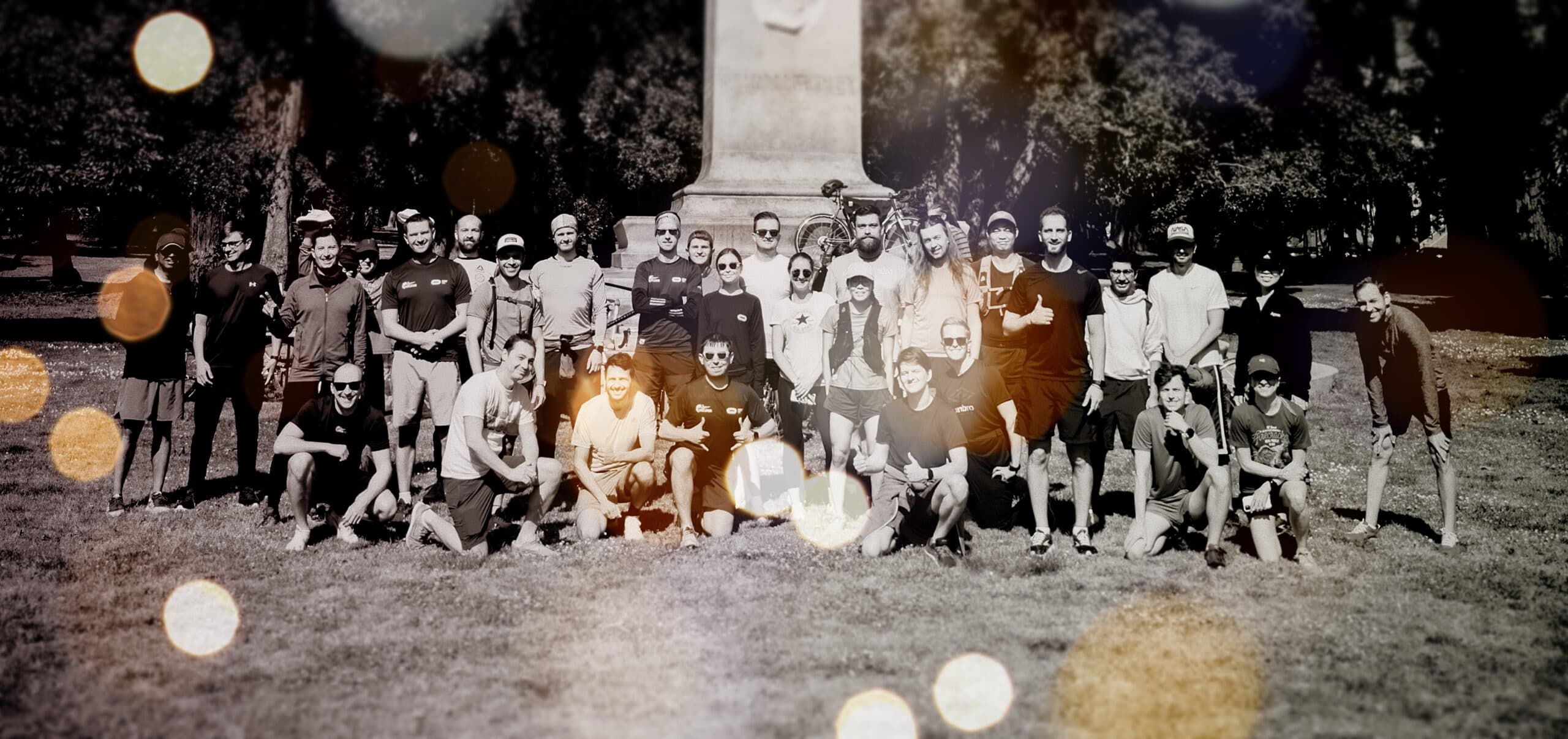
There is a ridge that separates the Zurich lowlands from the Freiamt, a gentle swell of farmland and forest roads known as the Mutschellen. Commuters cross it daily, cyclists climb it on weekends, and for a long time, runners navigated it entirely alone. That was the simple observation that set everything in motion. Sara, a resident of Widen with a long history in organized sport, looked at the hills around her and noticed something missing: a proper place for local runners to meet, move, and come back next week. In March 2026, she did something about it. She founded RunMutsch, a social run club rooted in the community of Widen and the landscape of the Mutschellen. Within a short time, around 40 runners had gathered around the idea, showing up on Monday evenings to see what this new thing might become. The answer, it turned out, was exactly what the region had needed. The name says a great deal. RunMutsch is not named after a sponsor, a shoe brand, or an abstract ideal. It takes its identity directly from the terrain it runs through, the Mutschellen, the ridgeline that gives this corner of Aargau its particular character. There is something grounding in that choice. It signals from the very beginning that this crew belongs to a place, that it is rooted in a specific geography rather than floating free of any location. For Sara, this kind of rootedness was never incidental. Having spent years participating in sports clubs across different disciplines, she understood that the best community groups are the ones that feel native to where they exist, that grow out of real local conditions rather than being imported wholesale from somewhere else. RunMutsch was conceived as something genuinely local, and the name carries that intention in every letter.The Founder Who Knew How to Build Community
Sara came to running not as a first sport but as one thread in a longer involvement with organized athletics. Her background spans multiple clubs and disciplines, and along the way she accumulated something that many passionate runners lack: practical knowledge of how group activities actually function. How you communicate a schedule. How you make a new person feel welcome at the first session. How you keep energy alive across a whole year rather than just in the honeymoon weeks of a new project. These are not glamorous skills, but they are the ones that determine whether a run club becomes a genuine institution or quietly dissolves after a promising start. When Sara describes her decision to launch RunMutsch, she is clear that it was not a spontaneous impulse. She had been turning the idea over for a long time, watching the run clubs she had joined in other contexts, absorbing what worked and what did not, and waiting until she felt ready to do it properly. The founding in March 2026 was the result of sustained thought, not a weekend whim. What makes her motivation particularly vivid is the absence of a rival to compete with. Sara was not trying to do something better than an existing Widen run club. She was filling a blank space. The Mutschellen region had no equivalent, no Monday evening gathering point for local runners, no regular route through the fields and forests that anyone could simply show up to. That absence made the founding both easier and more urgent. Easier, because there was no comparison to manage and no territory to defend. More urgent, because the need was real and unmet, and the right person to address it happened to be standing right there.Monday Evenings at the Bistro Burkertsmatt
The weekly rhythm of RunMutsch is built around a single fixed point: Monday at 19:00, Bistro Burkertsmatt. The choice of meeting place matters. Burkertsmatt sits at a natural gathering spot on the Mutschellen, and the bistro provides the kind of informal, welcoming anchor that a social run club benefits from. There is somewhere to arrive at, somewhere to return to, and somewhere to linger after the run is done. That last part, the return and the pause, is not a footnote to the run itself. It is often where the community is actually built, in the small conversations that happen when people are cooling down and no longer focused on pace or distance. The run itself covers a medium distance at a moderate pace, which means it is genuinely accessible without being so easy that it offers no satisfaction. The Mutschellen landscape rewards this kind of running. The terrain is varied enough to keep things interesting, with open agricultural land giving way to stretches of forest path and occasional views across the surrounding plateau. There is nothing extreme about it, no summit ambitions or trail racing pretensions, but there is a quiet pleasure in moving through country that feels genuinely rural even within easy reach of Switzerland's most densely populated corridor. RunMutsch runs through this landscape every week, in every season, which is itself a kind of commitment. A crew that keeps the schedule through winter evenings and wet spring nights is a crew that means what it says.Running Year Round Through the Mutschellen Hills
The decision to run the whole year is not incidental to what RunMutsch is about. Many casual running groups exist only in the comfortable months, fading in November and reappearing when the evenings warm up again. RunMutsch made no such seasonal bargain. The schedule runs from January through December, Monday after Monday, which changes the nature of the commitment on both sides. For members, it means the group becomes a genuine fixture rather than a fair-weather habit. For Sara as organizer, it means the work of keeping the club alive continues regardless of conditions. It also means that the community deepens in a way that seasonally active groups never quite manage. The runners who show up in February, when the ground is cold and the light is gone by the time they meet, are the ones who have genuinely decided that this matters to them. Around 40 people have now made that decision. For a crew in its first year of existence, in a village-scale community on a Swiss ridge that most people only know as a line on a map, that figure represents real traction. It suggests that Sara's instinct was correct: the need was there, the appetite existed, and the right structure was all that was missing. What RunMutsch provided was not a revolutionary concept but a reliable one, a known time, a known place, a consistent welcome, and a route worth running. In the Mutschellen, that turned out to be enough to draw forty people out on a Monday evening and keep them coming back.What a Social Run Club Actually Means
RunMutsch describes itself as a social run club, and that framing carries real weight. The word social is not decorative. It points to a set of priorities that distinguish this kind of crew from a training group, a race team, or a performance collective. The run matters, but so does what surrounds it. The conversation on the way out. The moment when a new runner finds their stride alongside someone who has been showing up for months. The shared experience of navigating the same hill in the rain and finding it funny rather than grim. These are the textures of a social run club, and they require a different kind of attention than a purely athletic setup does. Sara's background in multiple sports clubs gave her a sensitivity to this. She knew that the social dimension does not take care of itself. It requires that the organizer thinks about more than logistics, that there is some genuine attention paid to how people feel when they arrive, whether they feel known, whether they want to return. A crew of around 40 people in a relatively small community is also a crew where those dynamics are visible and personal. In a group of that scale, you notice when someone is new. You notice when someone has not been for a few weeks. That intimacy is a feature, not a limitation, and it is one of the things that distinguishes a local run club from a larger, more anonymous fitness organization.A Region Finding Its Running Identity
The Mutschellen is not a place that tends to appear in running literature. It does not have the dramatic scenery of the Alps or the urban energy of Zurich, which is close but a world away in character. What it has is something quieter and arguably more durable: good running country, accessible to ordinary people who live there, without the need for a car journey or a special occasion. The fields around Widen, the farm tracks, the forest sections that appear and disappear, the long views across to the Jura on a clear day: these are the ingredients of a weekly run that does not need to justify itself through superlatives. RunMutsch is helping this region find a running identity it did not previously have. By naming itself after the landscape and by committing to a year-round schedule, it is doing the slow work of making running a normal, expected part of life in Widen. That is less dramatic than founding a race or organizing a festival, but it may be more significant. The things that last in community sport are usually the ordinary ones, the Tuesday five-kilometre, the Saturday parkrun, the Monday evening group that meets at the bistro regardless of what the weather is doing. RunMutsch is building that kind of ordinary. In a region that had none of it before March 2026, that is not a small thing. If you live on or near the Mutschellen and you have been thinking about running with others, the invitation is already there. Monday evenings, 19:00, Bistro Burkertsmatt. Find RunMutsch on Instagram for updates and to connect with the community before your first run.R
RunningCrews Editorial
RunningCrews.com