 RunningCrews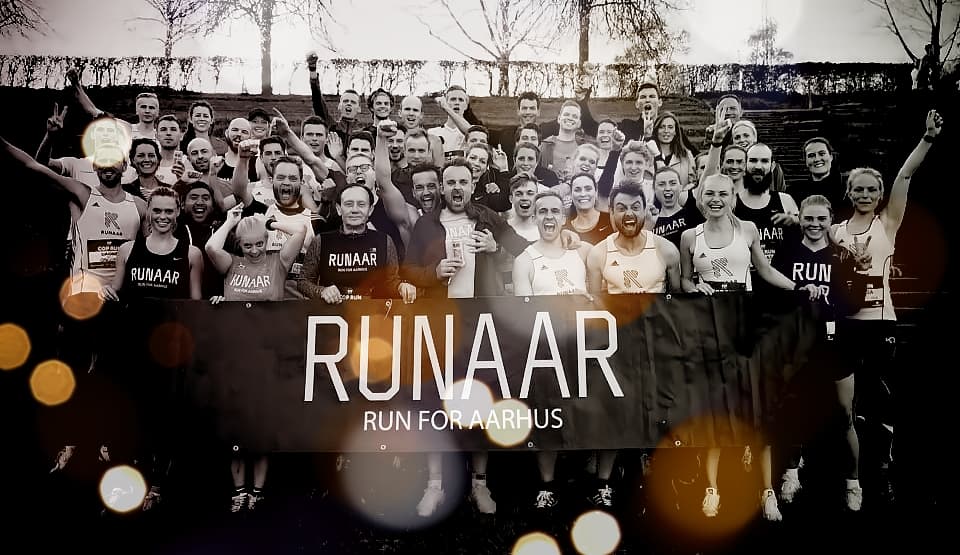
There is a particular stretch of Aarhus where the city reveals itself slowly, block by block, if you are willing to move through it on foot and at pace. That is the kind of discovery Jacob had in mind when he founded RUNAAR in February 2014. The idea was not complicated: gather people who wanted to run through their city together, remove the intimidation that formal clubs can carry, and build something that felt genuinely open. A decade on, that founding instinct remains the clearest thing about the crew. Aarhus is Denmark's second-largest city and a place that carries its culture lightly, mixing a deep artistic heritage with a young, energetic population. RUNAAR grew into that environment naturally, finding its place not by declaring itself different but by simply showing up, week after week, and welcoming whoever turned up alongside them. The result is a running community that feels less like an organisation and more like a long-standing agreement between people who enjoy each other's company and happen to lace up together.
A System Built Around Every Runner
One of the practical things that has made RUNAAR work over the years is the way the crew structures its runs. Rather than setting a single pace and asking everyone to keep up or fall behind, the crew splits into teams when it heads out. Each team is guided by an experienced runner who calibrates the distance and the tempo to suit the people in that group on that particular day. It sounds simple, and in execution it is, but the effect on a new runner or someone returning after time away is significant. There is no moment of watching the group disappear into the distance, no quiet embarrassment about being the slowest person. The run belongs to everyone who showed up. This approach reflects something Jacob understood from the beginning: the barrier to joining a running crew is rarely physical fitness. It is the fear of not being enough. By designing the run format so that no one is left behind, RUNAAR removes that fear before it has a chance to take hold. Over the years, the crew has led countless runners through their first kilometre in a group setting, and then their fifth, and then their twentieth.The Streets and Trails of Aarhus
RUNAAR uses Aarhus the way a good running crew should, as a route rather than a backdrop. The city offers a remarkable variety of terrain within a compact geography, and the crew has mapped it thoroughly across its years of weekly runs. The dense network of streets in the city centre gives way quickly to parks and waterfronts, and further out to the forests that ring the southern edges of the urban area. The Marselisborg Forests are a particular draw for runners who want to leave the pavement behind. The trails through those woods are long and varied, cutting through dense greenery along paths that reward both effort and patience. Running there on a weekday evening, when the light comes through the canopy at low angles, is one of the quieter pleasures of being part of a crew with deep local knowledge. Equally, the runs that stay in the city carry their own character. Aarhus is a place where cultural landmarks sit unexpectedly close to one another. The ARoS Aarhus Art Museum with its famous rainbow panorama is part of the city's running landscape as much as it is part of its cultural one. Moving past it on an early run, when the building is quiet and the light catches its geometry, is a reminder that the city itself is the reward.Beyond the Kilometres
Running together is the foundation, but RUNAAR has always understood that the relationships built on a run need somewhere to continue off it. The crew organises joint events that extend the community into other parts of life: post-run brunches, social evenings, and occasional weekend trips that take the group out of Aarhus entirely. These gatherings are not incidental. They are part of the same intention that shaped the crew from the start, creating a network of people who share something real and want to deepen it. The friendships that form in a running crew tend to have a particular quality, forged in early mornings, physical discomfort, and the kind of unguarded conversation that happens when people are moving and not facing each other across a table. RUNAAR has given those friendships both the catalyst and the space to grow. Over time, the social fabric of the crew has become as important to its members as the running itself, which is exactly how Jacob envisioned it.Aarhus as a Running City
It is worth spending a moment on Aarhus itself, because the city shapes what RUNAAR is in ways that are not incidental. Aarhus sits on Denmark's eastern Jutland coast, a city that punches well above its size in cultural ambition and civic energy. It is a university city, which means it has a constant influx of new people looking for community and connection. It is also a city with serious running infrastructure: well-maintained paths, accessible green spaces, and a calendar of events that reflects how embedded running has become in the local culture. The Aarhus City Run is the most prominent of these, an annual race that draws participants from across the region and turns the city centre into a festival of movement. For RUNAAR, events like this are not the point of the crew, but they are a natural expression of the running culture it has helped build. Members who joined the crew as hesitant joggers have crossed finish lines at the City Run with the confidence that comes from months of group training. The city provided the event; the crew provided the preparation and the company.Running in RUNAAR
If you are in Aarhus and you have been thinking about running with other people, RUNAAR is the place to start. The crew's website at runaar.dk carries information about upcoming runs and events, and the crew's Instagram account runforaarhus keeps the community updated between runs. The format is welcoming by design, and the split-team structure means that wherever you are in your running right now, there is a group that fits. The crew has been doing this since February 2014, which means it has seen every kind of runner come through its doors: complete beginners, seasoned competitors, people returning from injury, people who moved to Aarhus and needed a way into the city's social life, people who simply wanted to run somewhere new with someone who knew the streets. All of them found a place. That consistency, the same welcome extended across a decade of weekly runs, is what RUNAAR has built. It is not a small thing. Showing up reliably, in all weather, with the same open spirit, is harder than it looks. The crew has made it look easy.Featured Crew
R
RunningCrews Editorial
RunningCrews.com