 RunningCrews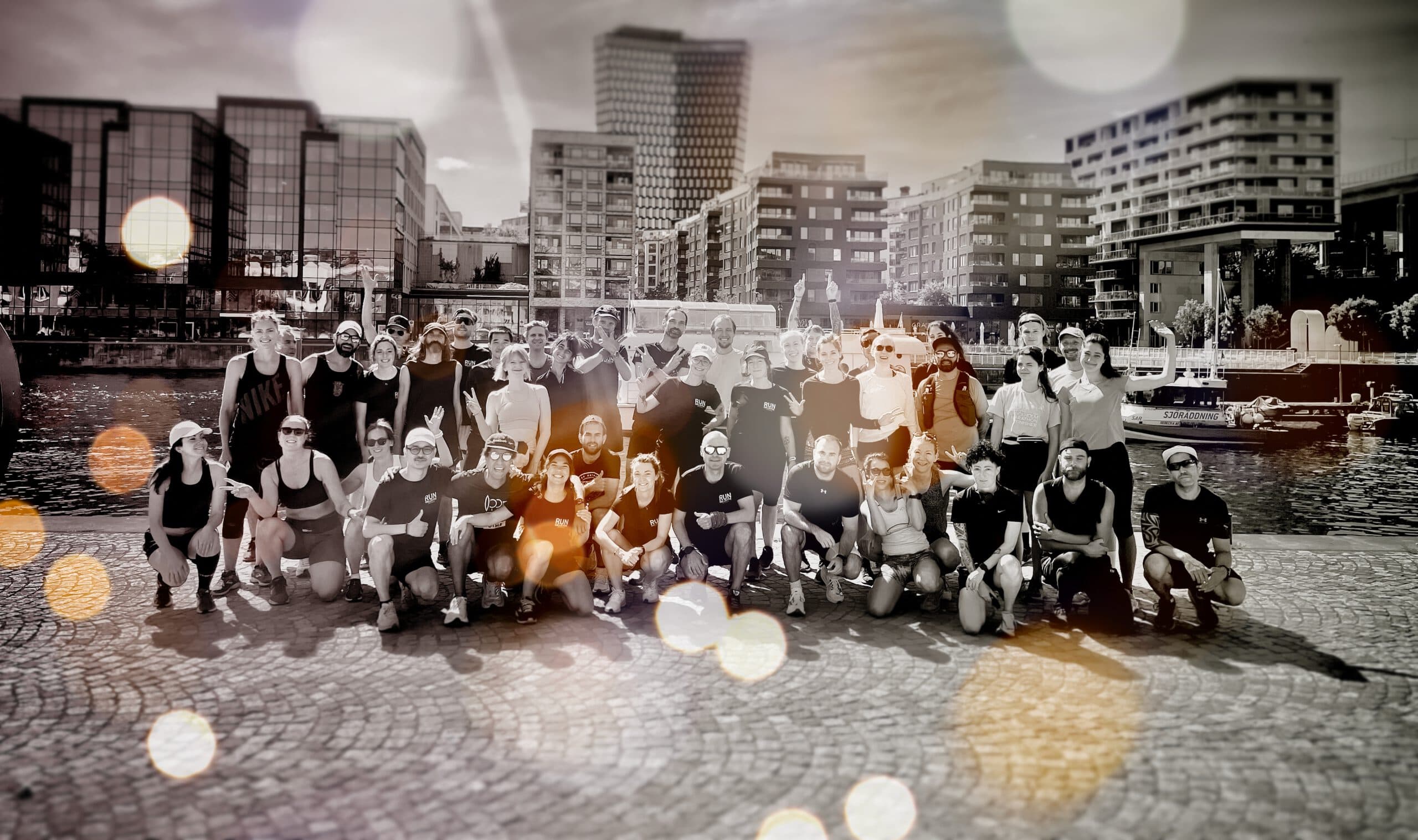
There is a Tuesday evening ritual playing out near the water in Stockholm. Somewhere around Bacchi Syre, a loose gathering of people in running gear begins to take shape, not because a captain called them there, but because they chose to show up for each other. That is the quiet revolution at the heart of Run Collective Stockholm: a running community that decided from the very beginning that nobody would be in charge, and that this would be a strength rather than a flaw.
Founded in November 2022, the crew has grown to around 70 members and found its home base at Hotel C Stockholm. In a city that already has a strong running culture, Run Collective Stockholm carved out its own distinct space not through speed records or branded gear, but through the way it chose to organize itself. The model is deliberately flat, deliberately democratic, and deliberately Swedish in its sensibility. Every member holds an equal vote. The crew's name was chosen collectively. Major decisions are made the same way. There are no captains, no hierarchy, no single voice that speaks for the group. What exists instead is a shared sense of ownership that makes the whole thing feel genuinely different from most running clubs.
A Structure Built on Shared Ownership
The democratic foundation of Run Collective Stockholm is not just a philosophical stance. It shapes the texture of daily life within the crew. When a new route gets proposed, members weigh in. When the crew faces a decision about events or partnerships, everyone has a say. This approach demands a certain kind of trust and patience, but it also produces something rare: a group of people who feel genuinely invested in what they have built together. Nobody is a passive member. Nobody is simply following someone else's plan. The collective nature of the project means that each person's presence actually matters to the shape of the whole. This structure also removes a particular kind of pressure that can make running clubs feel intimidating. Without a figurehead to impress or a gatekeeping hierarchy to navigate, newcomers arrive into a space that is genuinely open. The crew is explicit about welcoming everyone, not as a marketing slogan, but as an operational reality baked into how decisions get made and how runs get organized.Two Runs That Anchor the Week
The crew gathers twice a week, and each session has its own rhythm. Tuesday evenings start at 18:15 at Bacchi Syre, a meeting point that has become familiar enough to feel like a neighbourhood ritual. Saturday mornings shift the mood entirely, with a 10:15 meetup at Biscuit Konditoriet, a detail that says something about the crew's priorities. A konditori is a Swedish bakery and café, and choosing one as a Saturday gathering point signals that the run and what comes after it are equally part of the plan. These two sessions reflect the dual nature of what Run Collective Stockholm offers. The Tuesday run carries the energy of a midweek release, a way to cut through the workweek and reconnect with the city on foot. Saturday mornings bring a more relaxed, exploratory pace, with longer distances on offer and the kind of unhurried conversation that only happens when nobody is rushing back to a desk. Together, the two sessions create a weekly structure that members can build their routines around, showing up for one or both depending on what the week allows.Stockholm as a Running Canvas
Stockholm rewards runners. The city is built on fourteen islands, threaded together by bridges and bordered by water on nearly every side, which means that almost any route produces a view worth stopping for, though few actually stop. The historic streets of Gamla Stan, the cobblestones worn smooth by centuries of foot traffic, offer a particular kind of atmosphere that few cities can match. Djurgården, the island park that sits just east of the city centre, provides a quieter alternative, with trails winding through old-growth trees and meadows that feel surprisingly remote for somewhere so central. For waterfront running, Norr Mälarstrand follows the southern shore of Lake Mälaren with open views across the water to the city's skyline. The Royal National City Park, one of the few national parks located within a capital city anywhere in the world, stretches across multiple neighbourhoods and offers genuine trail running within reach of the urban core. These are the landscapes that Run Collective Stockholm moves through each week, and the variety keeps the experience from ever feeling routine.A Mix of People That Enriches Every Run
One of the most distinctive qualities of Run Collective Stockholm is the composition of its membership. The crew draws both native Swedes and expats who have arrived in Stockholm from all over the world, and this mix produces something that neither group could generate on its own. For internationals navigating a new city, the crew offers instant connection and a sense of belonging that can take years to build otherwise. For locals, it provides a window into other perspectives and a reminder that their city is seen afresh through every set of new eyes that arrives in it. The post-run culture reinforces this. Gathering after a run at Biscuit Konditoriet on a Saturday morning, or lingering near Bacchi Syre on a Tuesday evening, the conversations range widely. People swap stories about races they have entered, neighbourhoods they have discovered, and plans for the weekend. These are the moments that transform a running schedule into something closer to a social fabric, the kind that holds people in a city and gives them a reason to keep showing up.Running Stockholm's Biggest Races Together
Stockholm's racing calendar provides a natural backdrop for the crew's year. The Stockholm Marathon, held each June, is one of the city's defining sporting events, routing participants through neighbourhoods that are spectacular precisely because they were not designed with racing in mind. The ASICS Stockholm Half Marathon offers another major collective experience, a shorter distance but no less charged with the particular electricity that comes from running through a city that has turned out to watch. Members of Run Collective Stockholm participate in these events as individuals and as a crew, using races as milestones in a shared year rather than purely personal challenges. The crew's approach to racing mirrors its approach to everything else: participation over competition, showing up for each other over chasing personal bests, though personal bests happen too. The point is that no single motivation is required. The crew holds space for the competitive runner and the person who simply wants to finish, for the veteran who has run twenty marathons and the newcomer who is quietly terrified of their first 5K.What It Means to Join a Collective
Run Collective Stockholm is built on a premise that sounds simple but proves surprisingly hard to execute: that a group of people can run together, make decisions together, and build something meaningful together, without anyone having to be in charge. After more than two years, the crew's continued growth to around 70 members suggests the premise holds. People keep showing up. New members arrive and quickly find their place, not because they were assigned one, but because the structure invites them to take it. If you are in Stockholm, or arriving soon, the entry point is straightforward. Tuesday evenings at Bacchi Syre, 18:15. Saturday mornings at Biscuit Konditoriet, 10:15. Show up, run, stay for the conversation. The rest follows naturally from there. Find them at runcollective.se or follow their runs on Instagram.Featured Crew
R
RunningCrews Editorial
RunningCrews.com