 RunningCrews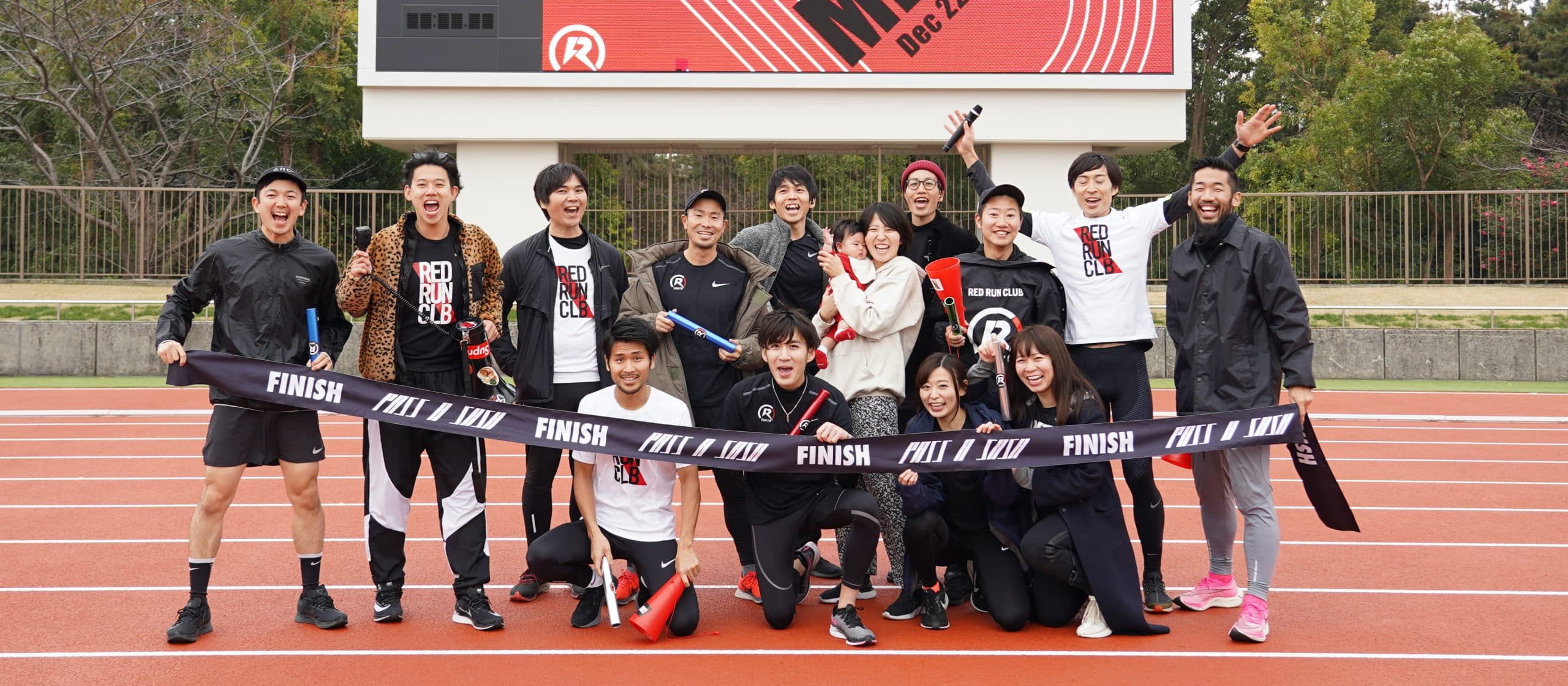
A Gap in Tokyo's Running Scene
There is a phrase that sits at the heart of Red Run Club Tokyo, one that doubles as both a provocation and a permission slip: life is too short to live at your 100%. It sounds like a contradiction for a running crew, the kind of group you might expect to be all stopwatches and split times. But spend any time with this crew and the meaning sharpens. It is not about running less hard. It is about running with more. More intention, more style, more of the human texture that can get squeezed out when a running group treats every session like a time trial and nothing else. That philosophy has quietly shaped one of Tokyo's most distinctive crews since Jun founded the club in October 2014, in a moment when the city's running culture was crowded with groups but short on inspiration. When Red Run Club Tokyo came together, Japan had a well-established run club scene. Tracks were full, group sessions were easy to find, and serious training was available to anyone willing to show up. What was harder to find was a crew that treated running as something more culturally alive, something that could sit alongside the music, fashion, and community energy that younger generations in Tokyo were gravitating toward. Jun looked at what existed and saw the gap clearly. The clubs of that era, with a handful of exceptions, were focused almost entirely on the mechanics of running: the splits, the mileage, the training cycles. The social dimension was thin. The inspiration, thinner still.Speed and Style as a Single Idea
The founding vision was specific: bring together people who take their running seriously enough to chase personal bests, but who also understand that how you show up matters. Speed and style were never meant to be in tension at Red Run Club Tokyo. They were always meant to reinforce each other. A crew that looks good together tends to feel good together. A crew that feels good together tends to push each other harder. That feedback loop was baked into the club's identity from the beginning, and it remains the thread that connects everything the crew does today. In those early years, the format was almost entirely speed-focused. Track sessions and interval work formed the backbone of what Red Run Club Tokyo offered. Members came to get faster, and the competitive edge of the group provided the kind of accountability that solo training rarely can. But over time, the crew evolved. Group runs entered the schedule, bringing with them longer stretches of side-by-side conversation, slower kilometres where friendship could actually develop, and the kind of shared experience that turns a collection of individuals into something that feels like a genuine community. The addition of group runs did not dilute the crew's competitive spirit. It gave that spirit somewhere fuller to live.The Crew That Leads Red Run Club Tokyo
The crew today runs under the guidance of two captains who have helped carry Jun's founding vision forward. Miki and Hide each serve as captain, and their presence gives Red Run Club Tokyo the kind of leadership that keeps a small crew cohesive over time. With around 25 members, this is a crew that operates at a scale where everyone knows everyone. There are no strangers at the back of the pack, no regulars who go unacknowledged. The size is part of what makes the atmosphere work. It is tight enough to feel personal, open enough to keep evolving. That intimacy is something worth paying attention to in a city the size of Tokyo, where it is entirely possible to join a running group of hundreds and still feel anonymous. Red Run Club Tokyo made a different choice, consciously or not, by staying compact. The energy at any given session reflects that choice. People show up knowing they will be seen, knowing their effort will register, knowing that the person next to them is genuinely aware of how they are running on any given day. That kind of presence is harder to manufacture than pace charts or training plans.Twice a Month Across the City
Red Run Club Tokyo gathers twice a month, a rhythm that keeps the crew connected without overwhelming the schedules of members who are managing careers, families, and the full complexity of life in one of the world's busiest cities. The sessions bring together the twin threads of the crew's identity: the competitive instinct that has always driven the group, and the social warmth that has grown more prominent as the crew has matured. Whether the session leans toward speed work or a longer group run through the city, the expectation is the same. You bring your best, and you bring yourself. Tokyo, as a backdrop for running, offers a specific kind of beauty. The city rewards the runner who pays attention. Early morning light on the Sumida River, the long straight paths of Yoyogi Park at quiet hours, the way certain neighbourhoods shift in character block by block. Red Run Club Tokyo's members run through all of it, accumulating the kind of intimate knowledge of the city that only regular running can produce. The crew's routes are not formally documented here, but the experience of running Tokyo with people who know it well is its own form of education.Part of Something Larger in Japan
When Jun founded Red Run Club Tokyo in 2014, he was working in a landscape that had very few crews in the sense that the word carries today. He has named the scene as it was then: perhaps just one or two crews in Japan doing what crews do, combining running with culture, identity, and community in a way that went beyond simple training. AFE was one of the names he mentioned as a peer from those early days, a sign that the Tokyo crew scene was just beginning to find its shape. In the years since, Japan's running crew culture has grown considerably, and Red Run Club Tokyo has been part of that growth, not as a loud presence, but as a consistent one. The crew has never needed to shout about what it is. The work of staying together, meeting twice a month, chasing times, and building genuine friendships over years speaks more clearly than any campaign could. What Jun started in the autumn of 2014 has outlasted trends, survived the disruptions that affect every community over a decade, and continued to gather people who believe that running should be fast and meaningful and, above all, lived fully. That belief, worn lightly but held firmly, is what makes Red Run Club Tokyo worth knowing about.Featured Crew
R
RunningCrews Editorial
RunningCrews.com