 RunningCrews
A Commission That Became a Culture
There was a moment, sometime in early 2008, when Nike handed a brief to a young Parisian named Jay that amounted to something genuinely unusual: go out into Paris, find people who do not run, and make them runners. Not just any runners, but runners who would carry a new kind of urban energy into the streets of one of the world's most style-conscious cities. The assignment was deceptively simple on paper. In practice, it meant convincing artists, designers, musicians, and bloggers, people who had built their lives around creativity and culture rather than split times and training blocks, that running had a place in their world. Jay did not pitch them a fitness plan. He pitched them a lifestyle. That proposition, fragile and improbable as it seemed at the start, became Paris Running Club. The founding group was small and deliberately eclectic. Eight people, most of them with little to no running background, trained together with a single shared goal: finish a 10k race. The fact that they were non-runners was the point. Paris Running Club was never going to be built around the people who already owned a drawer full of race bibs. It was going to be built around the people who had never once considered that running might belong to them too. That first race, and the training that led up to it, proved something important. You do not need a runner's identity to become someone who runs. You just need a reason that feels like your own.Run Hard, Party Harder
The philosophy of Paris Running Club is laid out in four words that have followed the crew since its earliest days: run hard, party harder. It is a declaration that takes running seriously without taking itself too seriously. Performance matters, effort matters, but neither is the whole story. The crew operates on the conviction that swag and style are at least as important as pace. That the way you show up to a run, the energy you bring, the clothes you wear, the music in your head, is part of what running actually is. Paris Running Club asked a simple question of the city's running culture: why should any of this feel like suffering? The answer the crew gave was the dancefloor. In Paris, those two worlds, the street and the club, have always been closer than outsiders might imagine. The crew burned through Parisian streets and Parisian dancefloors with equal commitment, treating both as arenas where identity is expressed and community is formed. Running was not positioned as a replacement for the rest of life. It was positioned as the thing that made the rest of life better, a counterweight, a ritual, a way of earning the night that follows. That balance, physical discipline alongside genuine pleasure, is what the crew has carried through every iteration of its growth.From Eight People to a Movement
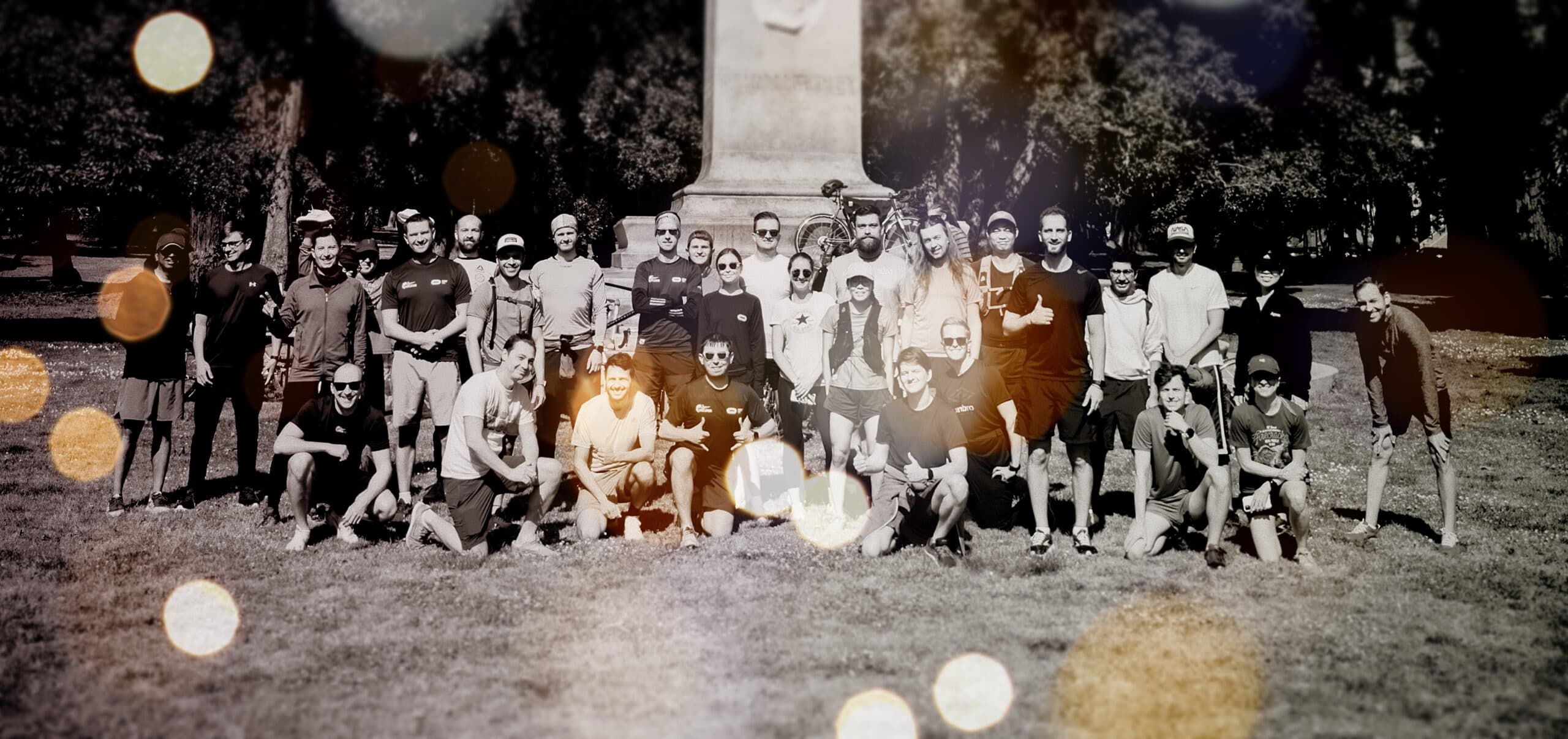
By 2018, Paris Running Club had grown from that original group of eight to more than a hundred members, a number that had exceeded every reasonable expectation anyone might have set in 2008. The growth was not the result of aggressive recruiting or social media campaigns engineered for reach. It happened because the crew was genuinely different from what already existed in Paris, and because the people who found it recognised something in it that spoke directly to their lives. The membership today reads like a cross-section of Paris's creative economy. Artists, bloggers, designers, musicians, models, art directors, graphic designers: the kind of people whose work exists at the intersection of culture and aesthetics, who bring that sensibility to everything they do, including the way they move through a city. Around 130 members now call Paris Running Club home, and the collective atmosphere that results from that particular mix of people is one that is hard to replicate. These are not people who stumbled into running as a default form of exercise. They chose it deliberately, on their own terms, shaped by a crew that told them from the beginning that they could do it their way.Paris as the Stage
To run in Paris is to run through layers of history, architecture, and neighbourhood character that few cities can match. The Seine curves through the city like a spine, flanked by boulevards that change character block by block. Haussman's grand avenues give way to the narrow streets of older quartiers, each with its own tempo and texture. Paris Running Club has always understood this. The city is not simply where the crew runs; it is what the crew runs through and with. The streets are the stage, and every run is a performance of sorts, a moving through space with intention and presence. The crew is headquartered at BlackRainbow Paris, a location that anchors the crew in a specific corner of the city and gives its gatherings a fixed point of return. From there, routes fan out into the urban fabric of Paris, through neighbourhoods that reflect the crew's creative character. Running here is not about finding the quietest path or the most efficient loop. It is about being inside the city, visible in it, part of its daily life while also slightly apart from it, a group moving together through space that most people only move through alone.Tuesday Runs and the Weekly Ritual
For a period, the weekly rhythm of Paris Running Club was anchored by Tuesday runs, a recurring gathering that gave members a fixed point in the week around which to organise their training and their social lives simultaneously. The Tuesday run became the kind of appointment that people built their schedules around, not just because of the running itself, but because of everything that surrounded it: the conversation before, the decompression after, the particular energy of a group of people who have just moved together through a city at night or in the early evening. That run has been paused for now, but the impulse behind it remains intact. Paris Running Club has always understood that the run itself is only one part of what a crew provides. The ritual of showing up, of being part of something consistent and recurring, of knowing that other people are expecting you and you are expecting them, is what transforms a group of individuals into something that functions more like a community. The Tuesday run, whenever it returns, will carry all of that weight with it.Taking the Crew Beyond Paris
What began as a local response to a Nike brief has since grown into something with a genuinely international footprint. Paris Running Club has travelled to promote the lifestyle and the passion for running that the crew embodies, reaching major cities around the world and finding, consistently, that the message translates. The particular combination of style, community, creativity, and movement that defines the crew in Paris resonates in cities that share Paris's cultural ambitions, places where young creative communities are building their own versions of urban life. The crew has also begun extending its reach beyond running itself, into other sports and physical disciplines, following the logic that the lifestyle it represents is broader than any single activity. Paris Running Club is, at its most essential, about a way of being in the world: active, stylish, communal, and unafraid of pleasure. Running was the entry point. It remains central. But the crew has never been willing to let itself be defined too narrowly, and that openness is part of what has kept it vital across more than fifteen years of existence.An Invitation Written in Asphalt
Paris Running Club does not advertise itself to the already converted. Its invitation has always been directed at people who have not yet found their way into running, or who tried it once and found the world around it too serious, too performance-obsessed, too indifferent to the things that actually make life worth living. The crew's founding premise, that non-runners could become runners without abandoning who they are, has not changed. If anything, it has become more relevant as running culture has expanded globally and the question of what kind of runner you are has become more complicated and more interesting. Jay's original commission from Nike asked him to change the way people were running in Paris. What he actually built was something that changed what running could mean to a person: not a sport to be optimised, not a habit to be logged, but a genuine expression of the life you want to live. Paris Running Club, now more than fifteen years old and carrying around 130 members through the streets of one of the world's great cities, is the ongoing answer to that question. The dancefloor is still out there. The streets are still waiting. The crew is still moving.Featured Crew

R
RunningCrews Editorial
RunningCrews.com