 RunningCrews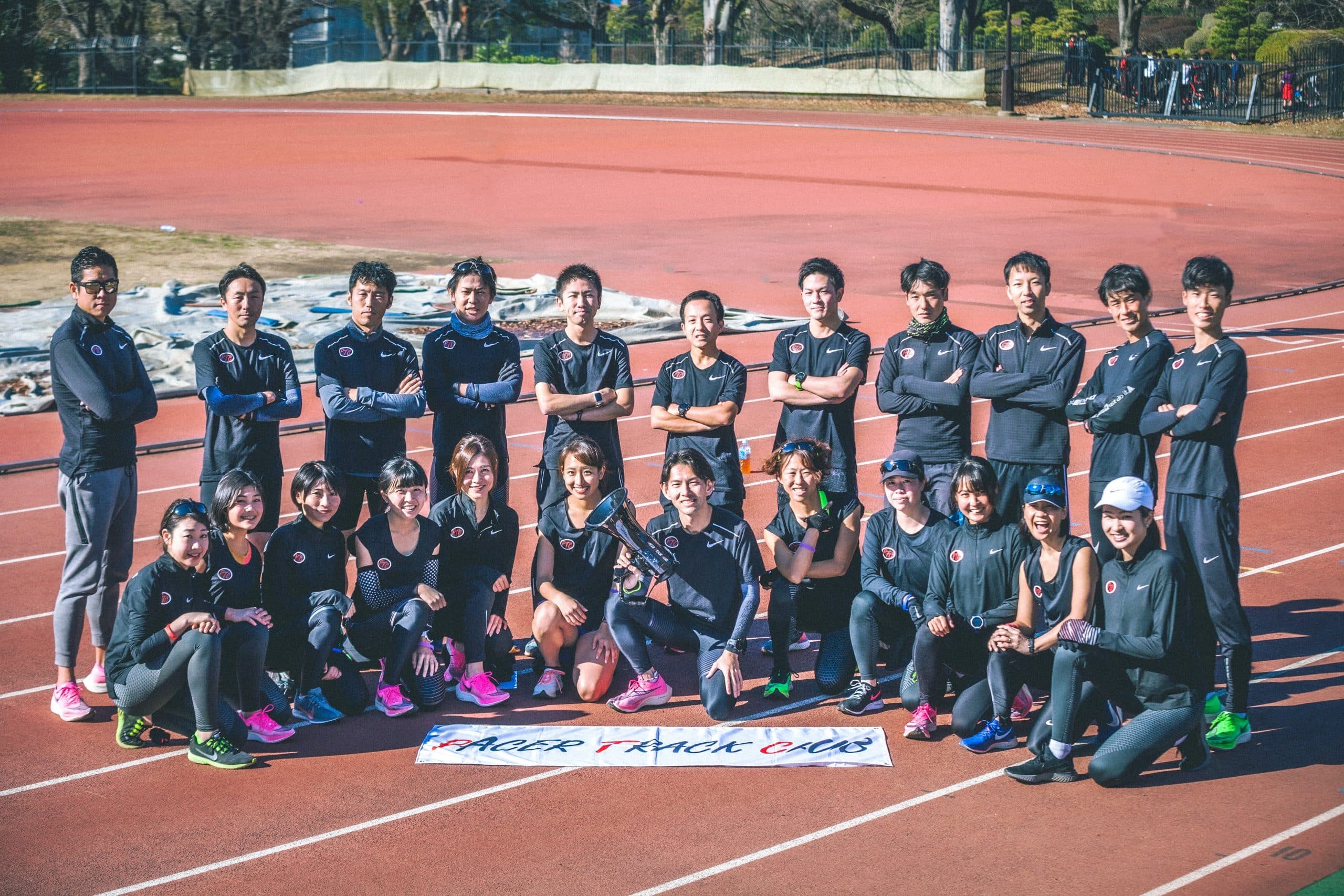
The track at Oda Field inside Yoyogi Park has a particular pull on a certain kind of Tokyo runner. It is one of the rare purpose-built athletic tracks inside the city's green belt, tucked beneath trees and surrounded by the gentle noise of the park, and on any given training day it is where Pacer Track Club shows up to do the work. Laps, intervals, pacing drills, the shared silence of concentration followed by the shared relief of a hard effort done. This is where the crew belongs, and it has been this way since April 2017.
A Community That Refused to Stop Running
Pacer Track Club did not begin from scratch. It grew, almost organically, from an existing group of runners who had been training together under the banner of Nike Run Club in Tokyo. When Nike withdrew its support for that project, the runners faced a choice: scatter, or stay together. For Hideaki, the founder, stopping was never really an option. He had seen what running together could do for people, how it sharpened a session and softened a difficult week, and he was not prepared to let that disappear simply because an institutional backer had moved on. So he built something new. He called it Pacer Track Club, and in April 2017, the group reconvened on the track and kept going.
That founding moment matters because it shaped everything that followed. Pacer Track Club is not a crew assembled around a brand or a sponsor or a marketing campaign. It was assembled around a simple, stubborn desire to keep running and to keep doing it with good people. The members who showed up at the beginning already knew each other, already trusted each other's rhythms and recovery times, already understood the unspoken etiquette of sharing a track lane. That foundation of existing trust gave the crew an unusual solidity from its very first session. There was no awkward getting-to-know-you phase, no figuring out who was fast and who needed patience. The community arrived essentially pre-formed, and Hideaki's job was simply to give it a name and a direction.
What the Track Teaches About Running Together
Training on a proper athletic track changes how a running crew operates. A road run allows for a certain looseness: people can fan out, conversations drift, the pace drifts with them. A track demands accountability. Every lap is measured, every interval is honest. You know exactly how fast you are going and exactly how that compares to last week, and so does everyone else. For Pacer Track Club, this transparency is not a pressure but a gift. It means that progress is visible, that encouragement is specific rather than general, and that the gap between where a runner is and where they want to be can be mapped and, over time, closed.
Hideaki built the crew around two ideas that sit together naturally: fun and speed. They are often treated as opposites in running culture, where serious training is solemn and enjoyment is reserved for easy social joggers. Pacer Track Club rejects that divide. The goal, as the crew describes it, is to provide a running experience that is both more fun and faster, with each session designed to inspire and encourage. That combination asks something of the coaching and the culture alike. It means sessions have to be well-structured enough to produce real improvement, but warm enough that a runner who is struggling does not feel abandoned or embarrassed. Getting that balance right is harder than it sounds, and the fact that the crew has maintained it across several years and around forty members says something about the consistency of Hideaki's vision.
Oda Field and the Geography of Commitment
Yoyogi Park is one of Tokyo's most beloved public spaces, a vast green expanse in Shibuya that on weekends fills with picnickers, musicians, and families. Most visitors wander its broad paths without ever finding the Oda Field athletic track, which sits toward the park's interior and carries a certain quiet prestige. The track is named after Mikio Oda, Japan's first Olympic gold medalist in track and field, who won the triple jump at the 1928 Amsterdam Games. Running on a surface that carries his name is not a detail that goes unnoticed by people who take their athletics seriously. There is something grounding about it, a sense of lineage, of belonging to a longer story of Japanese running.
For Pacer Track Club, Oda Field is not just a convenient location but a genuine home base. The track provides the crew with a stable, familiar environment where members can build on previous sessions without having to relearn the terrain. Regular attendees know the surface, the sight lines, the wind patterns on open days, the particular way the light falls in the late afternoon. That familiarity accumulates into comfort, and comfort allows a runner to push harder, to test a faster pace without the cognitive overhead of navigating an unfamiliar route. It is, in short, the ideal place for the kind of structured, improvement-focused training that Pacer Track Club is built around.
A Crew of Around Forty and Growing
Pacer Track Club has grown to a community of around forty members since its founding, a size that feels deliberate even if it was not strictly planned. Groups of this scale have a character that larger collectives often lose. Forty people is enough to create genuine variety, to ensure that on any given training day there will be runners at different stages of development, different bodies managing different goals. But it is also small enough that no one is anonymous. Members know each other's names, know roughly what each person is training for, can notice when someone has been absent for a few weeks and ask about it. That quality of mutual attention is harder to manufacture than it is to lose, and Pacer Track Club holds onto it carefully.
The crew's invitation is simple and open. Hideaki and the members of Pacer Track Club want to grow the community further, to bring more runners onto the track at Oda Field and into the rhythm that has made these sessions worth showing up for, week after week. Tokyo has no shortage of runners. The city's parks and riverside paths are full of people logging kilometers at all hours, and the culture of group running is well established. What Pacer Track Club offers is something more focused than a casual run and more welcoming than a competitive club: a middle ground where ambition and good humor occupy the same lane, where getting faster and enjoying the process are treated as the same project rather than competing ones.
Tokyo Running and the Spirit of Oda Field
Running in Tokyo asks for a certain adaptability. The city is vast and layered, its neighborhoods each with a distinct texture, its streets alternately narrow and wide, its pace relentless. Runners here learn to find their pockets of space and time, the early morning windows before the commuter crowds fill the streets, the parks and riverbanks that offer relief from traffic and noise. Yoyogi Park is one of those pockets, and Oda Field within it is a pocket within a pocket, a place set apart from the ambient bustle where the focus can be purely on running. Pacer Track Club has made that focus its founding value.
The crew's story, from the dissolution of a Nike-backed group to the founding of something independent and self-sustaining, mirrors a wider pattern in the global running crew movement. Some of the most durable crews came into being not because conditions were ideal but because a group of people cared enough to keep going when the formal structure around them collapsed. Hideaki's decision in April 2017 to build rather than quit has produced a community that belongs to its members in a way that sponsored projects rarely do. Pacer Track Club does not run because it is organized. It is organized because it runs, and because the people on that track in Yoyogi Park have decided, collectively, that this is worth doing. That is a different kind of foundation, and it tends to last. The track at Oda Field is waiting. Come and run.
Featured Crew
RunningCrews Editorial
RunningCrews.com