 RunningCrews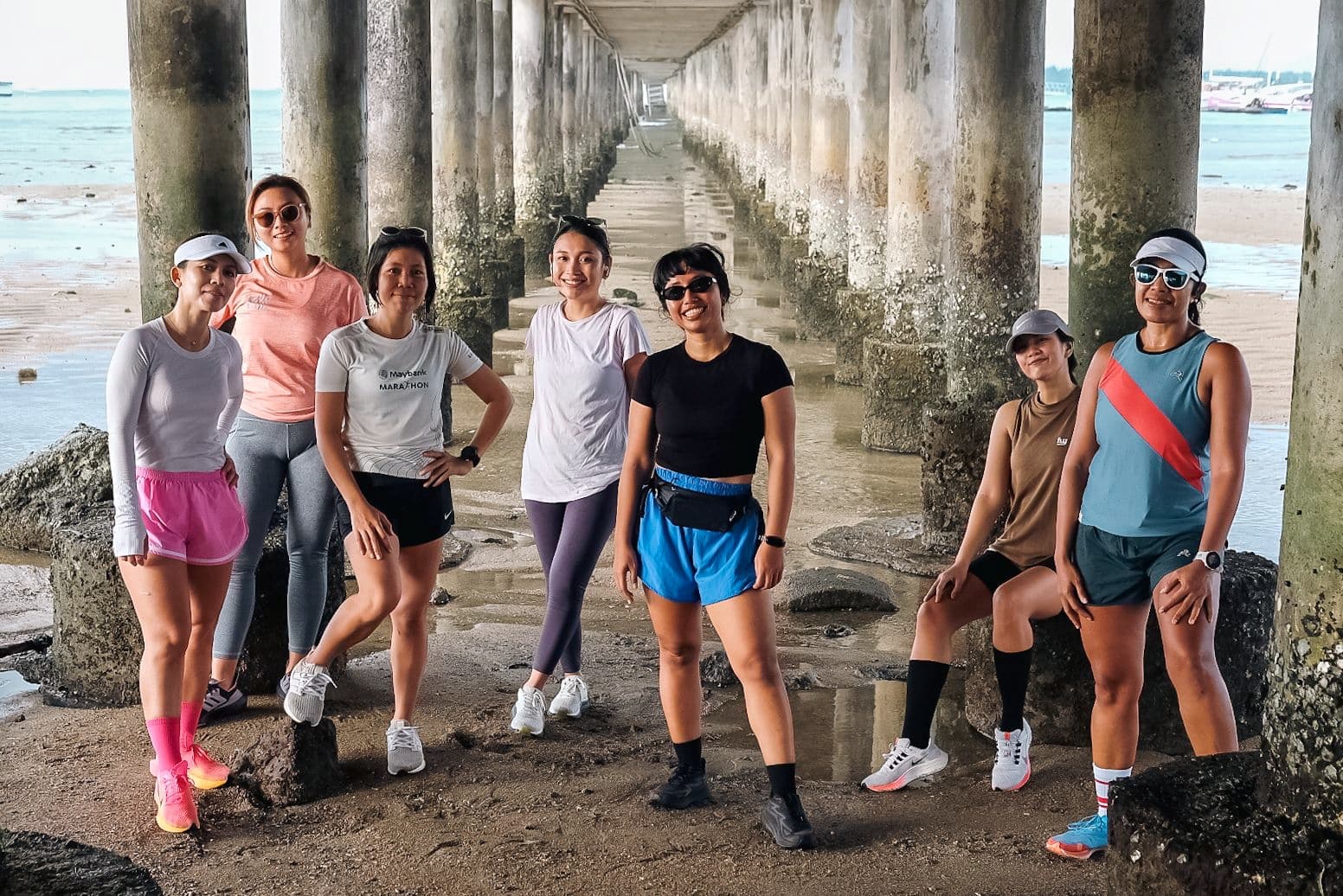
A Name Born from an Open Road
Picture a stretch of road in Bali with no traffic, no barriers, no closed lanes. Just open asphalt and the possibility of moving forward at whatever pace feels right. That image sat in Kania's mind when she was looking for a name for the running crew she wanted to build, and it stuck. Open Mile Bali was founded in June 2023 with a simple but deliberate idea: create a space where women on the island could run freely, without the weight of expectation or the quiet intimidation that can come with joining a fitness community as a beginner. The name is not just a geographic marker. It is a declaration of intent. An open mile is a mile that belongs to everyone who chooses to run it, and that philosophy has shaped everything about how this crew operates. Kania, the founder of Open Mile Bali, did not set out to build something large or highly organized. She wanted something honest. Having seen how running culture can sometimes close itself off behind pace requirements, competitive hierarchies, and the subtle pressure to already know what you are doing, she chose the opposite direction. The crew she imagined would welcome the woman lacing up running shoes for the very first time with the same ease it welcomed someone chasing a faster time. Every mile run, no matter the speed, would count. That conviction became the foundation on which the community was built, and it is still the reason new members feel comfortable showing up on a Saturday morning without knowing anyone.Saturday Mornings in Sanur and Denpasar
The week finds its best beginning early on Saturday. At 6:15 a.m., members of Open Mile Bali gather in either Sanur or Denpasar to move through the island before the heat builds and the streets fill up. There is a particular logic to running in Bali at that hour. The light is soft, the air carries the scent of frangipani and salt, and the roads that will later hum with scooters belong almost entirely to those willing to be up before the rest of the world. For the roughly 20 women who make up the crew, this early start is not a hardship. It is one of the quiet rewards of membership. The run itself becomes inseparable from the setting, and the setting makes the run feel like something worth getting out of bed for. The routes vary between Sanur and Denpasar depending on the week, which means the crew benefits from two genuinely different running environments. Sanur offers the promenade along the coast, a route that puts the Indian Ocean on one side and the low canopy of the beachfront on the other, with the horizon brightening as the group moves. Denpasar, the island's capital, offers something more urban: the energy of a working Balinese city, the geometry of streets that connect temples, markets, and neighbourhoods that most tourists never reach. Together, these two locations give the crew a range of experiences that keeps the Saturday routine from ever feeling routine.The Freedom of Running Without a Membership Fee
One of the most deliberate choices Kania made when founding Open Mile Bali was to keep the crew free to join. There are no membership fees, no sign-up forms, no commitments required beyond showing up. That decision reflects a specific understanding of what prevents women from trying something new. Cost is a real barrier. So is the sense of obligation that comes with paying for something and then feeling judged if you cannot keep up, or if life gets in the way one weekend. By removing the financial element entirely, Open Mile Bali signals clearly that the focus is on participation rather than transaction. Running is the point. The community is the reward. The open door is structural, not just rhetorical. This approach also shapes the atmosphere during runs. When nobody has paid for a premium experience, nobody expects one. What develops instead is a group dynamic built on genuine mutual support rather than customer satisfaction. Members cheer each other on not because it is part of a brand promise but because they have chosen to be there alongside one another, early on a Saturday morning, doing something that asks something of them. That shared willingness creates a kind of solidarity that is difficult to manufacture and easy to feel the first time you join the group.Mutuality as a Running Practice
The word Kania returns to most often when describing what she wanted Open Mile Bali to be is mutuality. It is a word that carries more weight than the more common alternatives. Inclusivity has become so widely used that it risks meaning very little. Community is broad. But mutuality implies something reciprocal, a relationship in which each person both gives and receives. In the context of a running crew, it means the faster runners do not simply tolerate the slower ones. It means the more experienced members genuinely benefit from the energy of beginners rediscovering movement. It means the group is better because of its range, not despite it. That ethos shows up in small, observable ways during the Saturday runs. Members wait at corners. They call out encouragement that is specific rather than generic. They celebrate milestones that might seem modest from the outside but are significant to the person achieving them. A first 5K completed. A Saturday attended after a week of second-guessing. A personal best on a stretch of Sanur promenade that someone ran for the first time the month before. Open Mile Bali measures progress in human terms, not just in splits and distances, and that makes it a place where progress feels worth measuring.Running in One of the World's Most Remarkable Landscapes
To run in Bali is to do so against a backdrop that few places on earth can match. The island sits at a geographic and cultural crossroads that produces extraordinary visual variety within short distances. A Saturday morning in Sanur can begin with the calm of the coast, the flat water of the bay reflecting the early sky, and end a few kilometres later near a temple courtyard where the smell of incense drifts across the path. In Denpasar, runs pass through streets lined with offerings left outside doorways at dawn, the city already stirring with the particular rhythm of Balinese daily life. For women who live on the island, these details become part of the fabric of the run. For those visiting, they are revelations. Bali's running community more broadly has grown significantly in recent years, with the island now home to a range of crews, events, and routes that draw both local and international runners. The annual Bali Marathon, which winds through Gianyar and the villages of central Bali, is among the most scenic races in Southeast Asia. The trails around Ubud, including the Campuhan Ridge Walk, offer a more contemplative alternative to road running, threading through rice terraces and forest where the noise of traffic disappears entirely. Open Mile Bali sits within this wider culture but occupies its own distinct space within it: focused, women-led, free of charge, and grounded in a commitment to making running accessible to anyone who wants to try.A Crew Built for the Long Run
What Open Mile Bali has managed to build in a relatively short time is not a large organization. It is something more durable than that. Around 20 women showing up consistently, week after week, before the island wakes up, choosing each other's company and the act of running over the alternative of staying home. That kind of regularity is its own form of commitment, and it speaks to something that Kania understood when she started the crew: that what most people are looking for is not a program or a product. They are looking for a reason to show up, and a group of people worth showing up for. The crew connects with its members and the wider Bali running community through its Instagram account, openmilerunning, where run details, updates, and a sense of the crew's personality come through clearly. Anyone interested in joining can reach out directly through the account to find out where the next Saturday morning begins. The door is open, the mile is open, and the only requirement is the willingness to take the first step.Featured Crew
R
RunningCrews Editorial
RunningCrews.com