 RunningCrews
A Message in a Chat Room That Changed Everything
It was a single line of text in an online chat group, casual and almost offhand, that set the whole thing in motion. Someone named Julia was asking in an Oldenburg community channel on Discord whether anyone wanted to start a running crew in the city. The co-founder who would partner with her read the message the moment it appeared and felt, with immediate clarity, that this was something he had been wanting to do for a long time. Not someday. Now. Within days, the two of them were out on a run together, talking through what they wanted this thing to be, what it should feel like, who it should be for. That first run was less a training session and more a conversation about possibility. Two people who had never met before, connected by a chat message, mapping out a vision on foot. That origin story, improbable and entirely digital in its first chapter, is central to understanding what the Oldenburg Run Club has grown into since October 2022.A Vision Built Around Radical Openness
Julia and her co-founder agreed on one thing above all else from the very beginning: the crew had to be open to everyone. Not open in the vague, aspirational way that many organisations claim, but genuinely, structurally open. No pace requirement. No age bracket. No expectation about athletic background, nationality, profession, or identity. The two founders had both experienced the way running communities can, even without intending to, send signals about who belongs and who might be out of place. They wanted to build something that actively refused those signals. Running, in their view, is not a performance to be evaluated or a standard to be met. It is something people do together, at whatever speed they happen to be moving, for the shared experience of moving at all. This philosophy was not written into a manifesto or posted as a set of rules. It was simply the way the crew behaved from the first group run onward, and it has shaped every new member's experience since. When you show up to an Oldenburg Run Club session, no one asks your pace. They ask your name.How the Crew Found Its First Runners
With a clear vision in place, Julia and her co-founder needed runners. Their first move was practical and community-rooted: they posted in a local student portal, knowing that students are often new to a city, eager to find connection, and open to trying something unfamiliar. The response was modest at first, but it was real. A few students showed up. Those students brought a neighbor, a friend from a sports club, a colleague from a shared seminar. And those people brought others in turn. There were no paid advertisements, no promotional campaigns, no influencer partnerships. The Oldenburg Run Club grew the way most durable communities grow, through personal recommendation and the simple fact that being part of it felt good. Each new member became, almost without realising it, a small ambassador for what the crew represented. The organic nature of that growth also meant that the community was self-selecting in a meaningful way. The people who joined were not drawn in by a slick brand identity. They came because someone they trusted told them it was worth showing up for.Thirty to Forty Runners Every Wednesday
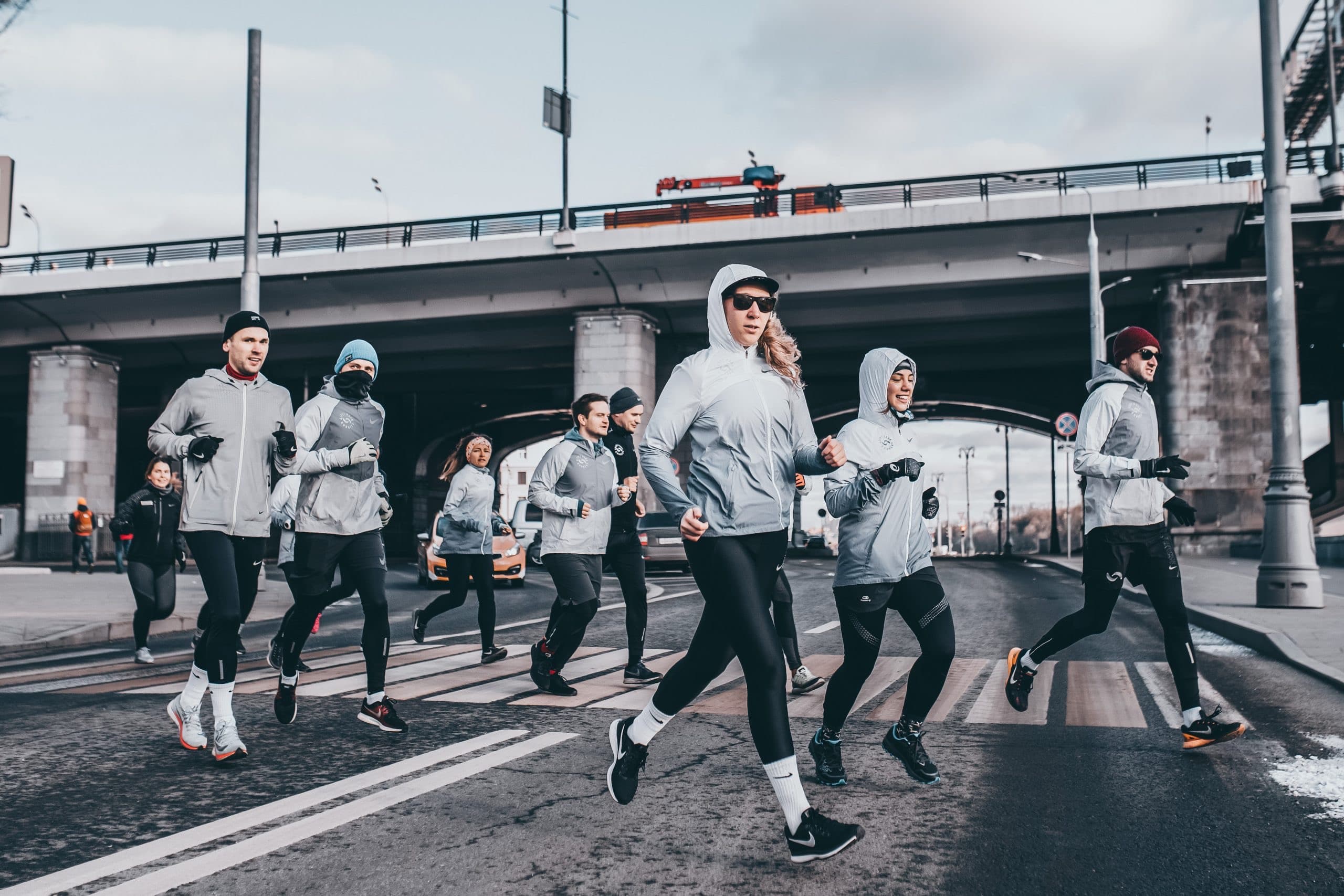
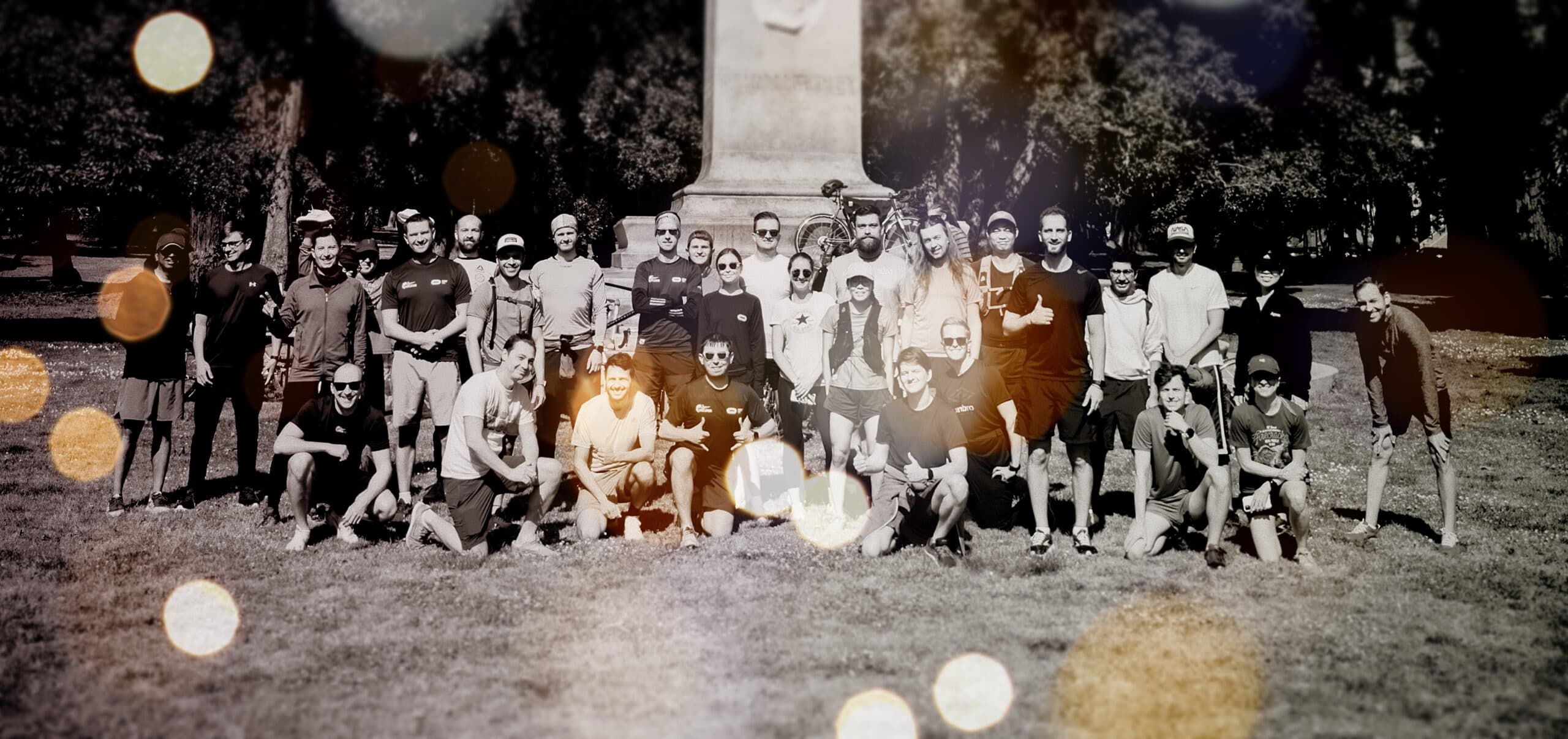
By its third year, the Oldenburg Run Club had settled into a rhythm that speaks to its consistency and appeal. Around thirty to forty runners gather at the track session every Wednesday, a number that would be impressive for any city and is particularly striking in a place the size of Oldenburg. The city is smaller than many German urban centers, and that smallness is something the founders have always been conscious of. It would have been easy, in those early months, to assume that a place like Oldenburg simply could not sustain a thriving running community, that the population base was too limited, the running culture too thin. The founders never believed that. They believed, and have since demonstrated, that open-minded, dedicated people exist in small cities just as surely as they exist in larger ones. Those people simply need a space and an invitation. The Wednesday track session is both of those things at once: a consistent, reliable gathering point and an open door that anyone can walk through for the first time.Marathon Day and the Power of Cheering
One of the most distinctive traditions the Oldenburg Run Club has built is its presence at the annual Oldenburg marathon each October. The crew shows up not to race but to cheer, and they do it with genuine, sustained energy for runners they have often never met. This is not a passive activity. Standing on the side of a race course for hours, shouting encouragement at strangers digging deep in the final kilometers, is its own kind of athletic and emotional commitment. And the effect is measurable. Every year, some of the marathon runners who pass through the Oldenburg Run Club's cheering section feel something shift. They feel seen and supported by a group that has no personal stake in their race result, no obligation to be there, and yet clearly cares. A number of those runners have gone on to contact the crew afterward and eventually join the Wednesday sessions. The marathon thus functions as a kind of indirect recruitment, not through marketing but through the lived experience of being welcomed by a community that asks nothing in return.Small City, Large Ambition
There is a quiet but firm statement embedded in the existence of the Oldenburg Run Club, one that the founders have articulated directly and that the community embodies with every session: small cities deserve running culture too. The assumption that vibrant, inclusive, community-driven run crews are the exclusive property of major metropolitan areas is one that the Oldenburg Run Club is actively dismantling. Oldenburg is not Berlin. It is not Hamburg or Munich. But the desire to move together, to find belonging through shared effort, to build something open and warm and real in the space between two people's footsteps, is not a desire that scales with population density. It is a human desire, and it exists in Oldenburg with the same intensity it exists anywhere. The crew's growth from a Discord message to a community of thirty to forty regular runners in three years is proof of that. And it is the kind of proof that cannot be argued with, because it shows up, in running shoes, every Wednesday.Finding the Oldenburg Run Club
For anyone already in Oldenburg or planning to visit, the Oldenburg Run Club is trackable through its active Instagram community and its Strava club, where routes, sessions, and updates are shared. The crew does not ask for credentials or commitments. It asks only that you show up. Whether you are a student new to the city, a longtime Oldenburg resident who has been meaning to get out and run, or a marathon finisher who once felt the crew's energy from the other side of the barrier, there is a place for you in this community. Julia and her co-founder built it that way on purpose, on a run they took together after a single chat message, before any of this had a name or a shape. Three years later, the shape is clear: around forty people moving together, in a small city proving that running belongs to everyone.Featured Crew

R
RunningCrews Editorial
RunningCrews.com