 RunningCrews
When Running Becomes the Answer
There is a hormone called leptin. It is released from fatty tissue, travels to the brain, and signals satiety, energy levels, and the readiness to move. Research has shown that lower levels of this protein are linked to a greater need for physical exercise, and that people with higher leptin sensitivity tend to run faster and endure longer. It is a quiet, biological argument for lacing up your shoes. Adrian, the founder of Leptina Runners, did not need a scientific paper to convince him. He needed a way out of the dark. Adrian built Leptina Runners in January 2019 not because he loved running in the abstract, or because he wanted to build a brand, but because running had genuinely helped him navigate anxiety, depression, and deep insecurity. He had lived through those experiences, found something that worked, and decided the most honest thing he could do was share it. The crew takes its name directly from that hormone, a small act of meaning-making that tells you everything about how seriously this organization takes the connection between the body and the mind. The name is not decorative. It is the thesis.An Organization Built Around Mental Health
What makes Leptina Runners different from most running collectives in Mexico City is not the pace, the aesthetic, or the route. It is the intention. From the beginning, Adrian designed Leptina Runners as an organization that fights anxiety, depression, and insecurity through running. Those three words, anxiety, depression, and insecurity, appear in how the crew describes itself not as a footnote or a soft mention, but as the central mission. This is a crew that names the difficult things directly and then offers a practical, structured response. That response takes two forms. The first is a training plan built specifically for beginners. Many running crews in large cities cater primarily to people who are already runners, people who know what a tempo run is, who have done a 10K before, who simply need other people to train with. Leptina Runners starts earlier than that. The training plan is designed for people who may never have run consistently, who may be starting from a place of physical inactivity or low energy, and who need structure and accountability, not just company. Running, as Adrian understands it, is a practice that has to be learned and supported before it becomes a source of strength.Psychological Counseling as Part of the Program
The second pillar is perhaps the more unusual one. Leptina Runners offers psychological counseling for young people through monthly plans. This is not a casual addition, something tucked into the footer of a webpage. It is a core part of what the crew provides. The idea is straightforward and, on reflection, obvious: if the goal is to address anxiety, depression, and insecurity, then running alone may not be enough. The physical act of running changes brain chemistry, builds routine, creates social bonds, and generates the kind of low-level confidence that comes from doing something hard repeatedly. But it does not replace the work of understanding why you feel the way you feel, or how to build new mental habits alongside new physical ones. By combining structured training with access to psychological support, Leptina Runners is doing something genuinely rare in the running world. Most crews operate in the space of physical performance or social community. Leptina Runners operates in both of those spaces and extends into mental health support in a way that reflects Adrian's own experience. He did not just run his way out of a difficult period. He thought about it, worked through it, and built a framework that others could follow.Mexico City as the Backdrop
Mexico City is one of the largest urban environments on earth. It is loud, dense, complex, and beautiful in ways that take time to see. It is also a city with enormous social pressures, a demanding pace of life, and the kind of sprawling anonymity that can make people feel invisible. For young people especially, navigating Mexico City without a strong sense of community or personal grounding can be genuinely difficult. Anxiety and depression are not niche experiences here. They are widespread, and they are often still quietly stigmatized. Leptina Runners exists inside that context. The crew's mission lands differently when you understand the city it was built in. Bringing young people together to run, to train, and to access mental health support in Mexico City is not a small act. It is a response to a real and present need. The streets of the city, its parks, its wide avenues and quieter neighborhoods, become the terrain where the crew does its work. The route is secondary to the reason for running it.A Community That Runs With Purpose
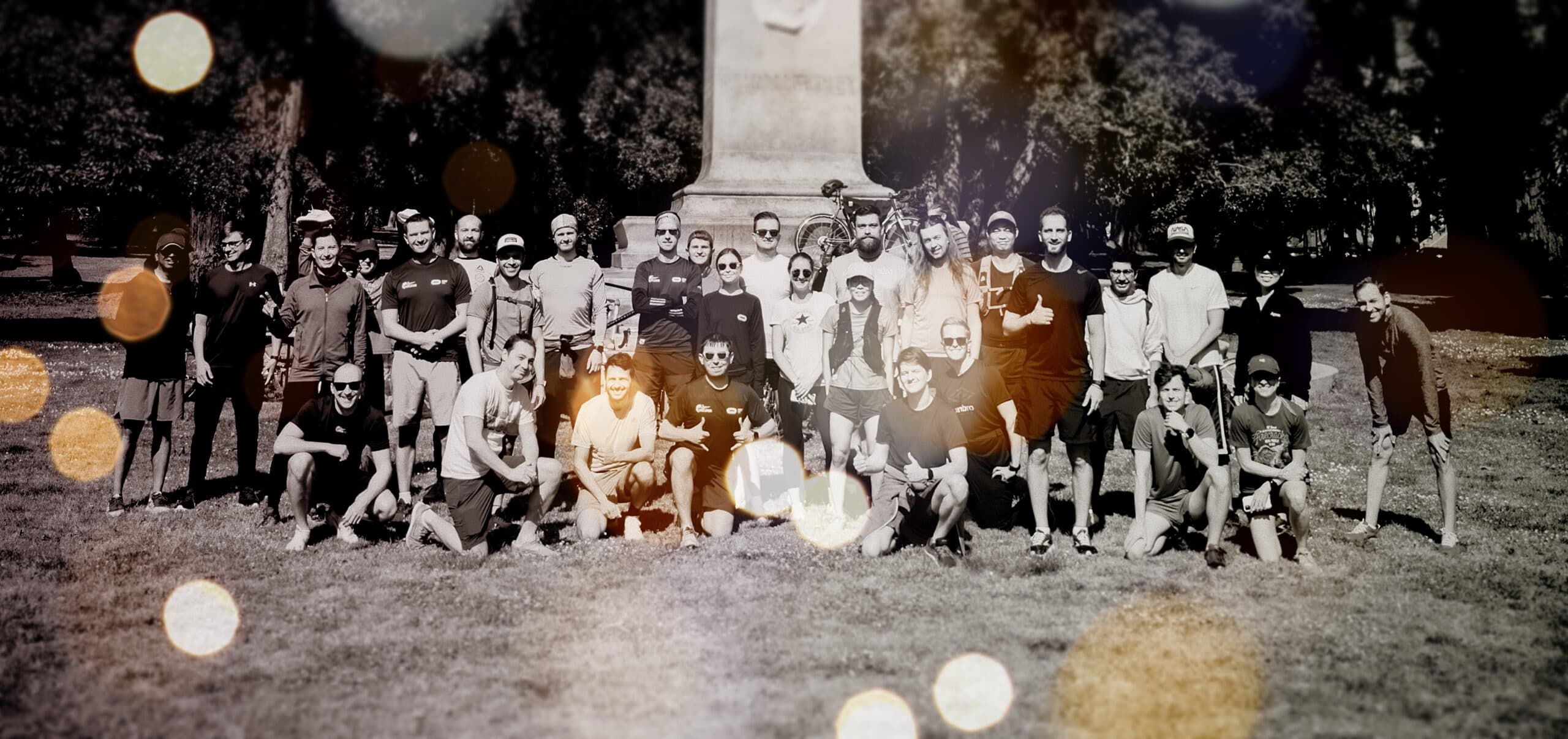
The people who find their way to Leptina Runners tend to arrive because something led them there. Maybe they have been struggling and heard about the crew through a friend. Maybe they searched for something that felt more meaningful than a standard running club. Maybe they are beginners who want structure but also want to belong somewhere. Whatever the path in, the community they find is one where the reason you run is never embarrassing to talk about. Adrian created a culture where vulnerability is the starting point, not something to be overcome before you show up. Training plans give people something to follow. Counseling gives people somewhere to go with the harder questions. The runs themselves give people a shared experience and a weekly reason to keep showing up. These three elements reinforce each other in a way that is simple to describe and genuinely difficult to replicate. Leptina Runners is not trying to produce elite athletes. It is trying to produce people who feel better, who trust themselves more, and who have found a community that holds them as they do the work of getting there.Running as a Daily Practice of Recovery
The science of leptin, that quiet hormonal signal connecting fatty tissue to the brain's energy centers, points toward something important about how human bodies are designed. Movement is not optional. The research linking low leptin levels to the need for physical exercise, and to greater endurance and speed once that movement becomes regular, suggests that the body itself pushes toward running when conditions are right. Adrian understood this not just as biology but as lived truth. His own experience of anxiety and depression was also an experience of the body calling for something it was not getting. Building a crew around that insight required courage. It means talking openly about mental health in spaces where physical performance is usually the main subject. It means telling potential members that it is fine to be a beginner, fine to be struggling, fine to show up not because you are already well but because you are trying to get there. Since January 2019, Leptina Runners has held that space in Mexico City. Every run is, in some small way, an act of recovery. Every person who joins is, in some small way, proving that Adrian's original idea was right.R
RunningCrews Editorial
RunningCrews.com