 RunningCrews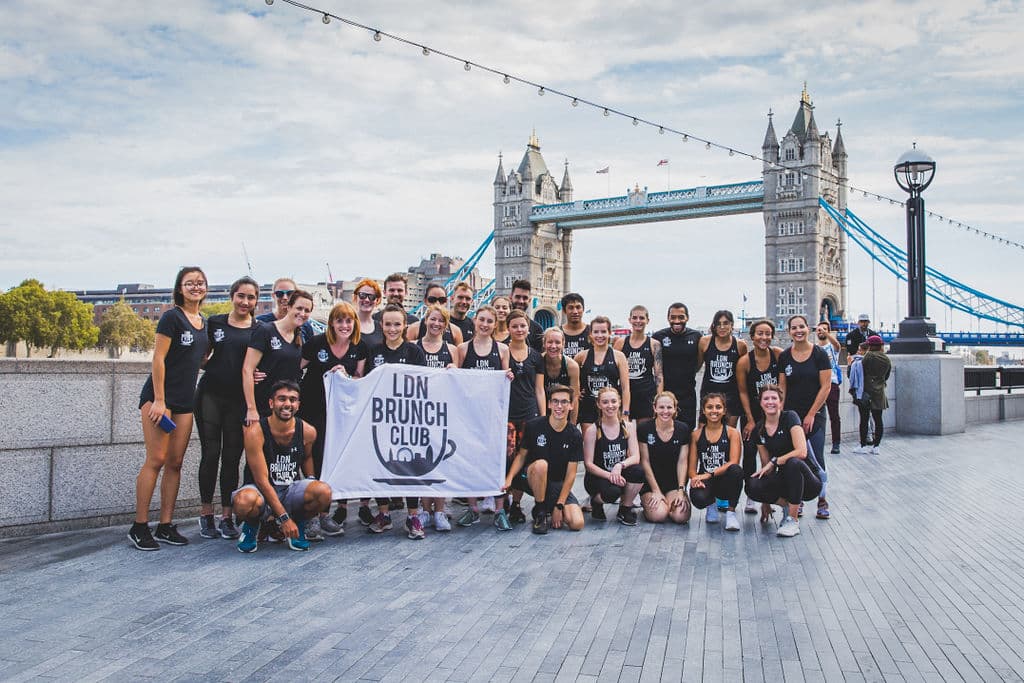
The Run Ends at the Table
Picture this: a group of runners finishes a twelve-kilometre loop through East London on a Sunday morning, legs warm and lungs clear, and instead of dispersing into the Tube or scattering to their respective flats, they pull chairs around a table at a local café and order eggs, coffee, and whatever else the kitchen recommends. That specific ritual, the run followed by the sit-down meal at a place nobody has tried before, is the founding idea behind LDN Brunch Club. It sounds deceptively simple. In practice, it has built one of London's most consistent and genuinely warm running communities over the course of a decade. The brunch is not a gimmick or a marketing hook. It is the point. It is the informal hour when people who spent ninety minutes running side by side actually get to know each other, share the race they are training for, complain about the hill they just climbed, and make plans to do it all again next week. Many running groups gather and disperse. LDN Brunch Club lingers, and that lingering makes all the difference.How Stephen Built Something That Stuck
The crew was founded in the summer of 2014 by Stephen, who serves as both founder and captain. He had a clear vision from the beginning: create a space in London where runners could find support, structure, and a social life that did not require abandoning their training. For more than five years he has led members across the city on Sunday long runs, organised crew trips abroad, developed seasonal training plans, and steadily grown a community that now numbers around eighty members. Stephen is not just the organiser. He is an active, experienced runner himself, with more than thirty half marathons, eleven marathons, and several Ironman 70.3 triathlons completed across races in the United States, Africa, Asia, and Europe. His ongoing personal challenge is qualifying for the Boston Marathon, which would complete his World Marathon Majors set and earn him the Six Star Finisher medal. That ambition is not incidental. It shapes the way he coaches. He understands what it takes to train through a London winter, to push through a bad training block, to keep showing up. That understanding translates directly into how he supports the people around him.Coaching, Structure, and Real Training Plans
LDN Brunch Club is not a casual joggers' collective. It operates with a structured approach that reflects Stephen's background as a qualified run coach. The crew's team includes run coaches, run leaders, and volunteer pacers who work together to plan each session, set routes, and keep the group both safe and motivated. Training plans are developed for specific upcoming races, which means members are not just running for the sake of it but building toward something measurable. Four pace groups run each week, covering a range from around five minutes per kilometre to six minutes thirty seconds per kilometre. That spread is wide enough to accommodate a runner preparing for their first half marathon alongside someone chasing a personal best at a major city marathon. The structure exists not to intimidate but to make sure nobody is running alone in a group too fast or too slow for where they currently are. Alongside the Sunday runs, the crew offers regular yoga and strength and conditioning sessions, rounding out the physical preparation that longer-distance training demands. The approach reflects a broader philosophy: that running well over time requires more than just miles.Routes That Show You the City
Meeting at Old Spitalfields Market in East London, the crew's Sunday runs cover an extraordinary range of London's geography over the course of a year. Some routes are deliberately tourist-facing, threading past landmarks like the Tower of London, the Houses of Parliament, and the Queen Elizabeth Olympic Park in Stratford. These are the runs that remind long-time Londoners why people travel from across the world to walk these streets, seen at pace and at dawn when the crowds have not yet arrived. Other weeks the crew heads to Hampstead Heath, where the paths wind through woodland and the city drops away behind the treeline. And then there are the Richmond Park mornings, where the deer graze at the edge of the track and the distance between East London and open countryside feels genuinely surprising. The variety is intentional. Stephen and the team plot routes that keep the experience fresh for members who have been coming for years while also giving newer runners a constantly evolving introduction to the city they live in. London is enormous and sometimes impenetrable, and running it in good company with a map and a destination is one of the better ways to understand it.Who Turns Up on Sunday Morning
Around eighty members make up the LDN Brunch Club community, and the range of backgrounds, professions, nationalities, and running histories within that group is part of what gives it its particular character. The crew draws from across London, not just the neighbourhoods surrounding its East London base, which means Sunday mornings bring together people who might never otherwise cross paths during the working week. The stated aim of the crew is to be all-inclusive and to cater for all running abilities, with a specific focus on supporting people training for longer distances, the half marathon and marathon being the primary targets. In practice, that focus means the people who show up on Sunday are generally those who have committed to something. They have a race on the calendar, a time in mind, a goal they are working toward. That shared seriousness of purpose, combined with the relaxed social atmosphere of the post-run brunch, creates a particular mix of accountability and warmth that tends to be self-reinforcing. People stay because the runs help them improve. They keep coming because the group makes them want to. Anna, who serves as co-captain alongside Stephen, helps hold the community together and ensures the welcoming, encouraging atmosphere that defines the crew's culture extends to every new face that shows up on a Sunday morning.Open Sessions and a Wider Community
While the core membership forms the backbone of LDN Brunch Club's weekly runs, the crew regularly hosts open sessions that invite the wider London running community to join them. This outward-facing approach reflects a genuine belief that running communities grow stronger when they connect with each other rather than operating in isolation. For runners who are curious about the crew but not ready to commit to full membership, an open session is a low-pressure way to experience a Sunday run and see whether the group feels like a good fit. For existing members, the open sessions bring fresh energy and new faces into a community that might otherwise risk becoming too familiar with itself. Stephen has also organised crew trips that have taken members beyond London entirely, extending the community into shared experiences in other cities and countries. Those trips, like the brunch tradition, are about deepening connections that start on the pavement and extend into something more durable.A Decade of Sundays in East London
Ten years is a long time for any running crew to sustain its momentum. Many groups form around a burst of enthusiasm and fade when the founding energy dissipates. LDN Brunch Club has not faded. The combination of genuine coaching expertise, a clear focus on longer-distance training, a specific and repeatable social ritual, and routes that make London feel perpetually worth exploring has kept the community alive and growing since 2014. The brunch changes every week. The café is always different, the menu is always new, and the conversation at the table reflects wherever the run has just taken everyone. But the Sunday morning itself, the gathering at Old Spitalfields Market, the warm-up, the pace groups finding their rhythm, the routes through parks and along the river and past monuments that Londoners mostly ignore, that remains constant. For the runners who have made LDN Brunch Club part of their weekly life, that constancy is exactly the point. London changes around them constantly. The Sunday run does not.Featured Crew
R
RunningCrews Editorial
RunningCrews.com