 RunningCrews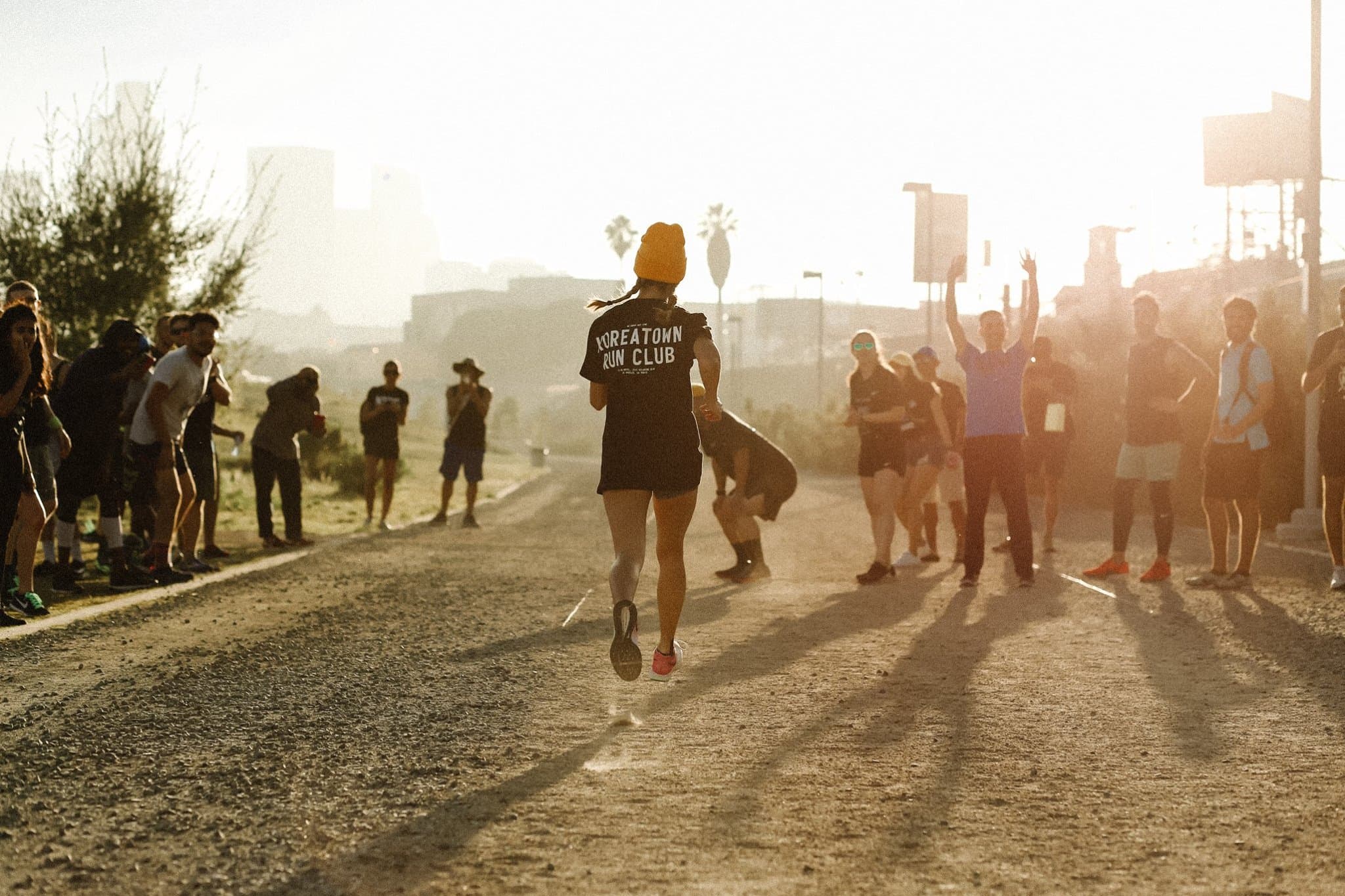
There is a corner in central Los Angeles where Wilshire Boulevard meets Oxford Avenue, and on any given Tuesday or Thursday evening, a gathering takes place that has little to do with pace charts or personal records. It starts quietly, the way most meaningful things do: a few people showing up, lacing up, and choosing to run together. That corner, and the neighbourhood surrounding it, is the heartbeat of the Koreatown Run Club, a community that grew from a single shared observation into one of the most active running collectives in Los Angeles.
A Trip to Haiti and a Vision for Koreatown
The origin of the Koreatown Run Club is rooted in something unexpected: a work trip to Haiti. One of the club's founders returned to Los Angeles having witnessed runners in Port-au-Prince bond over their shared movement through city streets, building genuine connection through nothing more than the act of running together. That image stayed with him. Back in Los Angeles, in a neighbourhood dense with culture and energy but short on diverse running spaces, he saw the same possibility. Koreatown, with its tight-knit Korean American community, its restaurants and markets and late-night streets, deserved exactly that kind of gathering. So in April 2017, Michael, a former DJ and music producer, and Duy, a former professional poker player, formalized what had been an idea into an invitation. They had met at a running event in the city and recognized in each other the same instinct: that running could do more than improve fitness. It could build something lasting.Roots in a Neighbourhood Like No Other
Koreatown sits at the geographic and cultural centre of Los Angeles, a neighbourhood that never quite sleeps and never quite fits a single description. It is dense, multilingual, and layered with generations of immigrant history. For Korean Americans in the city, it carries a particular weight of identity and belonging. Michael and Duy understood this. As Korean Americans themselves, they wanted to create a space where runners who shared their cultural heritage could show up not just to log miles, but to feel genuinely at home. The club was never intended to be exclusive. The founders were deliberate about building something open to everyone. But the cultural grounding of Koreatown Run Club, its roots in a specific place and a specific community, gave it a character that purely generic running groups rarely achieve. Members could share food, language, and memory alongside their training runs, and that combination proved to be something people wanted badly enough to come back for, week after week.From a Small Group to Four Hundred Strong
Growth came steadily and organically. Michael and Duy began with weekly runs and social media outreach, building momentum through consistency rather than spectacle. Word spread the way it does in tight communities: one person told another, a runner brought a friend, a regular became a captain. Today, the Koreatown Run Club numbers around 400 members drawn from across the city, from Koreatown itself and well beyond it. The club runs on Tuesday and Thursday evenings, with a weekly gathering at the LOVE HOUR meeting point at 8:00 PM, and additional sessions at the LACC Rainbow Track Parking Lot 3, where members can work on speed and endurance in a more structured setting. Saturday mornings round out the weekly rhythm. The variety matters. Not every runner is chasing a marathon finish line. Some come for the track workout, others for the social run, others simply for the company that shows up reliably at Wilshire and Oxford. The schedule is designed to hold space for all of them.What the Runs Actually Feel Like
There is a texture to running with the Koreatown Run Club that numbers alone do not capture. The distances and paces across sessions vary deliberately, which means a first-timer and a seasoned marathoner can find their footing in the same group without either feeling out of place. The runs move through streets that have their own character: the wide commercial corridors, the quieter residential blocks, the stretches where the smell of Korean barbecue drifts from restaurant ventilation at 8 PM on a weeknight. Running in Koreatown is not like running on a trail or through a park. It is urban in the full sense of the word, and the club embraces that. The city is not a backdrop; it is part of the experience. Captains lead the sessions and photographers often come along, documenting the runs in a way that gives members something to hold onto beyond the miles themselves.Beyond Miles: Social Life and Giving Back
The social calendar of the Koreatown Run Club reflects the founders' conviction that running is a vehicle for connection, not an end in itself. Happy hours, potlucks, group outings, holiday parties, picnics, and game nights fill the spaces between training runs, giving members reasons to know each other as people rather than just familiar faces on a route. Races, from 5Ks to marathons in Los Angeles and in other cities, appear on the club's calendar as collective endeavours, with members showing up to cheer each other through finish lines. The club has also organized charity runs and fundraising events, including a 5K in 2019 that raised thousands of dollars for the Koreatown Youth and Community Center, which serves low-income and at-risk youth and families in the neighbourhood. Many members carry their community ethic beyond the club itself, volunteering with mentoring programmes, food banks, and local organizations. The thread connecting all of it is the same one that brought Michael and Duy to that first run together: the belief that people who move through the world alongside each other, literally and figuratively, take better care of it.A Code That Holds the Community Together
The Koreatown Run Club operates with a clear code of conduct, and the founders have been straightforward about why it matters. A community of around 400 people, meeting regularly in public spaces, on social media, and at events, needs shared expectations to remain genuinely welcoming. The club asks members to support one another at all times, to maintain a respectful atmosphere free from harassment and intimidation, and to look out for each other's safety on runs and beyond. Volunteers, including photographers and run captains, are acknowledged as contributors whose work makes the weekly experience possible. Open communication is encouraged; members are asked to bring concerns to their peers or captains rather than let them fester. None of this is bureaucratic for its own sake. It is practical idealism, the understanding that a space only stays as good as the norms that protect it. The diversity of the Koreatown Run Club, runners from different backgrounds, ages, speeds, and languages, is its greatest asset, and the code of conduct is what allows that diversity to function as strength rather than friction.Finding the Koreatown Run Club
The Koreatown Run Club meets at Wilshire and Oxford, and the door is open. The club's website and Instagram carry current schedules and announcements, and the community is active enough that showing up once is usually enough to feel the pull of coming back. What Michael and Duy built from a Haiti-inspired idea and a gap they noticed in their own neighbourhood has become something that several hundred people now call their running home. The miles accumulate, the friendships deepen, and on those Tuesday and Thursday evenings at the corner of Wilshire and Oxford, the city of Los Angeles keeps getting a little smaller in the best possible way.Featured Crew
R
RunningCrews Editorial
RunningCrews.com