 RunningCrews
There is a particular energy that moves across a university campus when an idea catches on among friends. At Institut Pertanian Bogor, one of Indonesia's most respected agricultural universities, that energy took the shape of running shoes hitting the pavement on a Sunday morning. It began simply: a student named Mufti and a small group of friends who shared a campus, a curiosity about running, and enough enthusiasm to drag each other out of bed before the Bogor heat set in. Nobody was chasing race times. Nobody had a grand plan. They just wanted to run together, and that turned out to be enough.
Bogor is the kind of city that rewards early risers. Nestled in the hills of West Java, roughly sixty kilometres south of Jakarta, it earns its nickname as the Rain City, with afternoon downpours that arrive with reliable predictability. But in the early morning hours, before the clouds gather and the streets fill with the rumble of motorbikes and angkot minibuses, the city offers something genuinely beautiful. The air is cooler than the lowlands, the roads that wind through the city's green corridors carry the faint scent of rain from the night before, and the famous Bogor Botanical Gardens, a sprawling colonial-era park at the city's heart, provides a canopy of trees that makes running feel like something between exercise and sanctuary. It was into this landscape that IPB Runners was born, in November 2017, with four friends setting the pace for what would come next.
From Four Friends to Fifty Runners
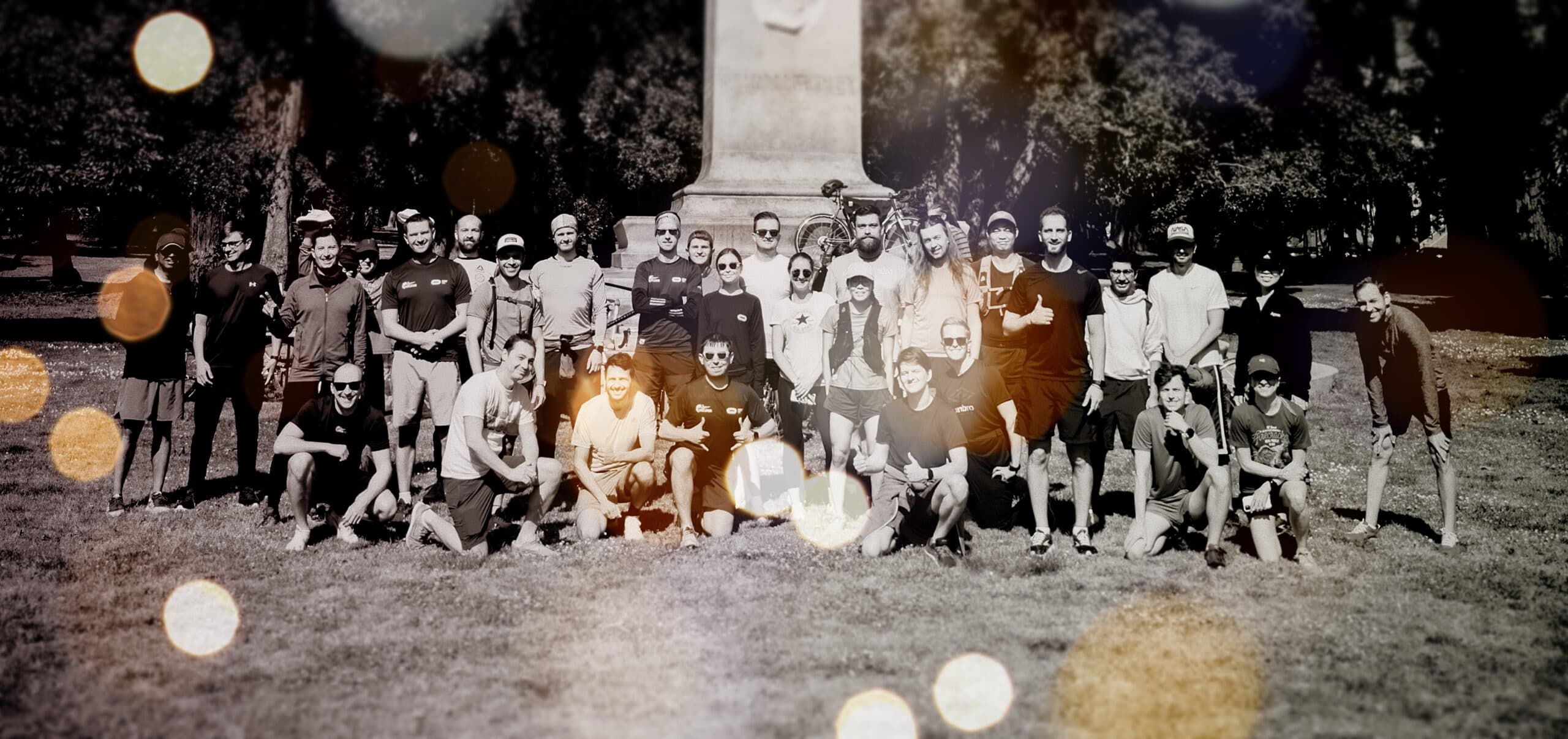
Word spread the way it tends to among students sharing lecture halls, dormitory corridors, and campus canteens. One friend told another, another brought a roommate, and before long the Sunday run had grown from a handful of people into a weekly gathering that felt less like a workout and more like a standing appointment with friends. There was no hard recruitment drive, no campus-wide campaign. The idea simply proved itself. People showed up, felt good, and came back. By the time the crew had settled into its identity, more than fifty members had joined what Mufti and his founding friends had started almost by accident. The name they chose, IPB Runners, honoured the institution that had brought them all together, Institut Pertanian Bogor, and it gave the crew a sense of place and belonging that has stayed with it ever since.
Today, the crew gathers every Sunday morning at 7:00 at IPB University, the same campus where it all began. There is something deliberate in that continuity. The meeting point is not a random corner or a commercial square; it is the ground that gave the crew its name and its first members. For newcomers, arriving at the university gates on a Sunday morning to find a group of runners warming up and laughing is an immediate signal that this is not a club driven by performance metrics or entry barriers. The pace is set by the group, not by a stopwatch. The route through Bogor's morning streets offers enough variety to keep things interesting, from tree-lined campus roads to the wider avenues that open up toward the city's greener edges, all of it best experienced before the city fully wakes up.
A Crew Built Around the Campus
What gives IPB Runners its particular texture is the connection to student life at Institut Pertanian Bogor. Universities are transient places, with people arriving and departing on the rhythm of academic calendars, and yet IPB Runners has managed to build something that feels continuous. New students discover the crew each year, step into the Sunday routine, and find themselves folded into a community that already has its own momentum. The crew's captain, Ade Chandra, carries the day-to-day responsibility of keeping that momentum alive, organising the runs and holding together the social fabric that makes fifty people want to show up week after week. It is a role that requires as much interpersonal attention as it does logistical coordination, and the crew's steady growth is evidence that it is being done well.
After the run, the crew finds its way to Kopicentrum, the headquarters and regular post-run gathering spot that serves as the social anchor for IPB Runners. Indonesian coffee culture is a serious thing, and sitting down together over a cup of kopi after a Sunday morning run is not incidental to the experience. It is the part where conversations happen, where newer members get to know the regulars, and where the run itself gets relived in small anecdotes. Kopicentrum provides the kind of informal, unhurried space that a running crew needs to be something more than a training group. It turns a workout into a ritual, and a ritual into a community.
Inspiring the Next Wave of Runners
The founders of IPB Runners speak openly about wanting to inspire students to run, and there is nothing abstract about that ambition when you consider the context. University life in Bogor, as in much of Indonesia, is demanding. Students balance academic pressure, limited budgets, and the particular dislocation that comes with being away from home, sometimes for the first time. Running, especially running with others, offers something that is hard to find elsewhere: a reliable reset, a group of people who will hold you accountable without judgment, and a physical relationship with the city that makes it feel like somewhere you belong rather than somewhere you are just passing through. IPB Runners does not advertise that it offers all of this, but it does.
The crew follows IPB Runners on Instagram, where it documents its runs, shares moments from Sunday mornings, and keeps its community connected across the week. For students at Institut Pertanian Bogor who are looking for a way into running, or for anyone in Bogor who wants to join a crew that takes its runs seriously without taking itself too seriously, the answer is simple: show up at IPB University on a Sunday at 7:00 in the morning. The group will be there. It has been there every week since 2017, and the four friends who started it all would probably say that is the most surprising and satisfying thing of all.
Featured Crew

RunningCrews Editorial
RunningCrews.com