 RunningCrews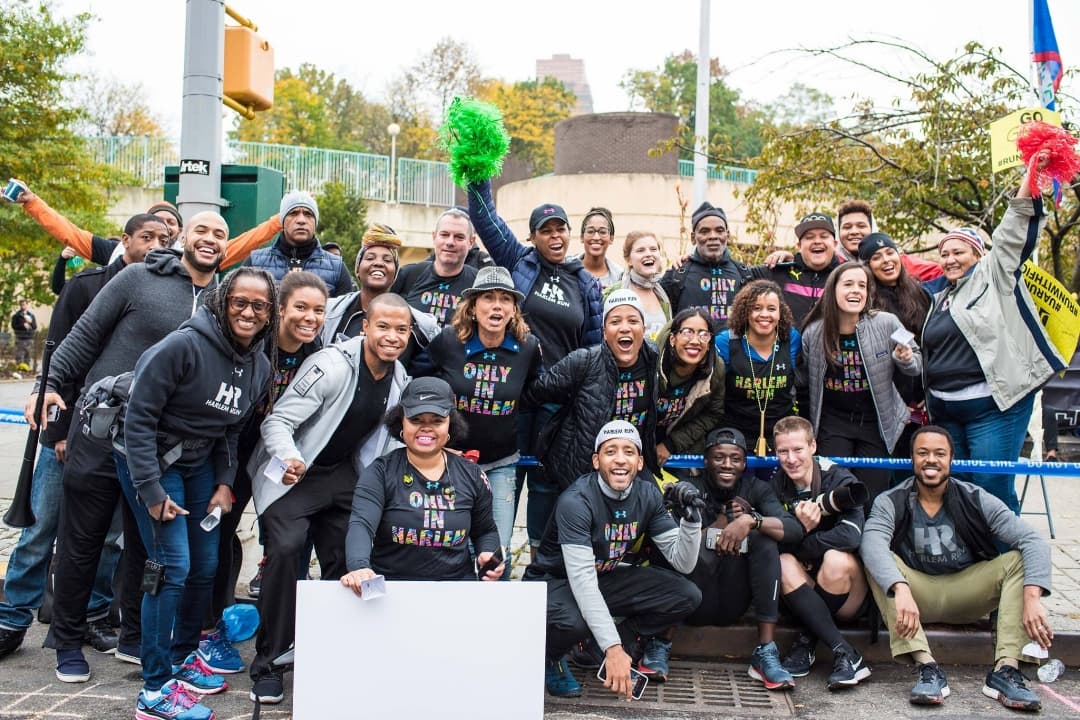
Where Harlem's Streets Became the Starting Line
There is a particular electricity to running through Harlem. The brownstones, the murals, the sound of the neighbourhood shifting from one block to the next, the sense that every street corner carries a story. It was precisely that energy that Amir and Alison, the two founders of Harlem Run, chose to harness when they launched the crew in November 2013. The question they were asking was not just how to get people moving. It was deeper than that: how do you use running as a tool to reshape what a neighbourhood believes about itself? Harlem Run was their answer, and more than a decade later, the experiment is still very much alive on those same streets. The crew came into being at a moment when the running boom was well underway in New York City, yet much of it felt concentrated below 96th Street. Amir and Alison saw something missing. The communities that make up Harlem, with all their diversity, history, and pride, deserved the same access to the fitness culture, the camaraderie, and the sense of physical empowerment that running offers. They did not want to import something foreign into the neighbourhood. They wanted to grow something that was unmistakably of it. The result was a crew that has always defined itself less by pace or mileage and more by its commitment to the people who show up.A Movement Rooted in Service and Solidarity
Harlem Run describes itself as a transformative movement, and that language is deliberate. From the beginning, the founders framed the work as community organizing as much as fitness programming. The crew brings together trendsetters, fitness practitioners, and people who simply want to feel better in their bodies, and it holds all of them under the same roof. The philosophy is not complicated: come as you are, move together, and leave feeling stronger than you arrived. Membership has always been free. That decision, maintained consistently since 2013, is itself a statement about who running is for and who gets to belong to it. The ethos that Amir and Alison built into Harlem Run from the outset is one of radical welcome. Runners, walkers, and joggers of all sizes, ages, and abilities are genuinely invited, not as an afterthought or a marketing note, but as the actual operating principle of the crew. The run starts on time, every time. And it ends together, every time, with a collective stretch that signals something important: no one is left behind, and no one finishes alone. That ritual closing is as much a part of the Harlem Run experience as the miles themselves.The Captains Who Keep the Crew Moving
Building a crew that endures for more than a decade takes more than a founding vision. It takes people willing to show up week after week, in every season, to lead by example and hold the community together. Harlem Run has grown a deep bench of captains who carry that responsibility. Ike, Talisa, Jesse, Jeffrey, JD, Raydime, Philippa, and Lisa each bring their own story, their own pace, and their own presence to the group. Together they represent the diversity that Harlem Run has always championed: different backgrounds, different running histories, different reasons for being there, united by the simple act of moving through the same streets. This collective leadership model matters. A crew that depends entirely on one or two people is fragile. Harlem Run has built something more distributed, a web of captains who each have their own relationships with members, their own ways of encouraging newcomers, and their own understanding of what the neighbourhood means. That structure allows the crew to be consistent without being rigid, and it gives the community multiple points of connection and belonging.Twice a Week in the Heart of the Neighbourhood
The weekly rhythm of Harlem Run is built around two runs that anchor the community. On Thursday evenings, the crew gathers at 6:30 at Harlem United, a meeting point that carries its own significance as a longstanding community institution in the neighbourhood. On Monday evenings, the starting gun is at 7:00 at Harlem Shake, a spot that feels emblematic of the neighbourhood's layered identity, familiar, a little bold, and deeply local. Together these two weekly sessions give the crew a heartbeat, a recurring pulse that members can count on no matter what the week has thrown at them. There is something quietly powerful about that regularity. It means that on any given Thursday evening or Monday night, someone can show up for the first time, not knowing a single face in the crowd, and immediately be folded into something. The routine lowers the barrier to entry. You do not need to plan ahead or book a spot. You just need to know the address and the time. That accessibility is entirely intentional, and it reflects the crew's foundational belief that the best running community is one that anyone can walk into.Running Through an Iconic Neighbourhood
Harlem is not a backdrop. For Harlem Run, it is the whole point. The neighbourhood that gave the world the Harlem Renaissance, that shaped jazz and hip-hop and visual art and literature and activism, is the same neighbourhood these runners move through twice a week. There is an awareness, sometimes spoken and sometimes simply felt, that running these streets is an act of claiming space and celebrating place. The routes wind through a neighbourhood in constant evolution, past institutions that have been there for generations and new spots still finding their footing, and the crew holds both in its gaze without flinching. That rootedness in Harlem distinguishes the crew from groups that happen to be located in a neighbourhood versus groups that are genuinely of it. Harlem Run was built by people who call Harlem home and who wanted to create something that reflected that identity. The streets they run are not chosen at random. They are chosen because they matter, because they connect people to the place they live in and love, and because moving through a neighbourhood on foot is one of the most honest ways to know it.An Invitation That Has Always Been Open
More than a decade in, Harlem Run continues to extend the same invitation that Amir and Alison first made in November 2013. Come as you are. Run, walk, or jog. Bring your pace, whatever it is. The membership is free and the welcome is genuine. The crew's Instagram, @harlemrun, tracks the ongoing life of the community, and the website at harlemrun.com holds the information you need to find your way to the start line. What Harlem Run has built over its years of existence is something that cannot be reduced to a mileage log or a membership count. It is a community of people who have chosen to spend their evenings moving through one of the world's great neighbourhoods alongside others who share a belief in the power of showing up. Strong, positive, diverse, and free: those are not just words on a page for this crew. They are the operating conditions of every run, every stretch at the end, every new face that becomes a familiar one. The streets of Harlem have always had stories to tell. Harlem Run just gives people a reason to go out and hear them.Featured Crew
R
RunningCrews Editorial
RunningCrews.com