 RunningCrews
The Moment After Selling the Restaurants
There is a specific kind of clarity that arrives when you step away from something you have built for years. For Lucho, the founder of Hardpace, that moment came after selling his restaurants in early 2025. The transaction closed, the kitchens were no longer his, and what replaced the noise of service and supply chains was something quieter and more urgent: the realization that he needed to move. Not as a hobby, not as discipline, but as a basic requirement for functioning well. He had spent years in an industry built around other people's pleasure, and somewhere in that time, his own physical well-being had drifted to the margins. So he started running again. And then, almost immediately, he started thinking about who else might need the same thing. That question became Hardpace. Founded in Madrid in February 2025, the crew was not assembled around a shared athletic ambition or a competitive calendar. It was built around a simpler observation: that sport, specifically running, has a way of being presented as something for a particular kind of person, someone already fit, already fast, already fluent in the language of training plans and race times. Lucho did not recognize himself in that version of the sport, and he suspected he was not alone. What he wanted to build was something that removed those invisible entry requirements entirely. The result is a crew that describes itself not as a running club but as something that exists for people, not runners. The distinction matters to everyone involved.Open Doors, No Posturing
Hardpace is not a closed club, and it is not a technical one. Those two words, open and without posturing, appear in how Lucho talks about the crew, and they also show up in the way the sessions are structured. There are no membership fees. There is no application process. Anyone who wants to show up can show up. Around 30 members now run with Hardpace on a regular basis, a number that feels intentional in its smallness, intimate enough that people actually know each other's names and stories, large enough that the energy of a group run is genuinely present on both weekly sessions. The crew gathers at Hardpace's home base, Café del Lago, which serves as the social and logistical anchor for the group. The café functions as the kind of place where a post-run coffee does not feel rushed, where the conversation that starts during a Saturday morning run can continue at a table without anyone checking the time. That continuity between movement and rest, between effort and ease, is part of what Hardpace is trying to model. Running is not a separate compartment of the day. It connects to everything else, including breakfast and conversation and the slow pleasure of recovering together.Two Sessions, Two Completely Different Moods
The weekly rhythm of Hardpace is built around two runs that share almost nothing except the city they move through. The first is Easy Saturdays. The crew meets at Ejercito Del Aire at ten in the morning, sets out on a relaxed five-kilometre route, and ends up at breakfast together. The pace is easy by design. This is not a warmup for something harder. It is the point. The Saturday run exists for people who want to move their bodies without pressure, who need the social structure of a group to get out of the house, who are finding their way back to sport after a long absence, or who are simply in a phase of life where a gentle Saturday morning run followed by food and company is exactly the right dose. There is no shame in easy. There is, in fact, considerable wisdom in it. Tuesdays are something else. Hard Tuesdays begin at eight in the evening, meeting in central Madrid, and they are built around training with a purpose. Intervals, fartleks, long runs, the sessions rotate and take the group to different locations across the city depending on the format. The pace is moderate, pushing toward effort without tipping into the kind of intensity that only suits people who are already in strong shape. The goal is improvement, gradual and real, over time. For members who showed up on a Saturday feeling tentative, Tuesday is the session that begins to show them what they are capable of. The two sessions work together without being formally linked, each serving a different need within the same community.Madrid as the Stage for Something Honest
Madrid is a city that absorbs running in a particular way. Its parks are expansive, its streets stay warm long into the evening, and its culture has always made room for people who want to move through public space with intention. The Ejercito Del Aire meeting point for Easy Saturdays sits close enough to some of the city's most recognizable green corridors to allow for routes that feel removed from traffic and noise even within a dense urban environment. The Tuesday sessions, shifting location each week, use the city as a training circuit, exploring different districts and surfaces, which means that members who run with Hardpace regularly develop an intuitive map of Madrid laid down through their own feet. This relationship to the city is not incidental. Lucho built Hardpace in Madrid because that is where his life is rooted, where the restaurants were, where the pivot happened, where the need arose. The crew is not trying to replicate something imported from elsewhere. It is growing out of a specific place, shaped by the rhythms of a city that runs late, eats late, and keeps its social life active well into the evening. A Tuesday session at eight o'clock is not unusual in Madrid. It is simply when people are free. That kind of fit between a crew and its city is harder to manufacture than it looks.The Strava Thread That Holds It Together
For a crew this young, the digital infrastructure is light and deliberate. Hardpace maintains an active presence on Instagram, where the tone matches the philosophy: straightforward, unpolished, honest about what the crew is and is not. The Strava club functions as the practical connective tissue, allowing members to log their runs, track the group's activity, and stay accountable without the overhead of a more formal structure. These tools exist to serve the community, not to perform it. There are no elaborate branding efforts, no merchandise drops, no curated aesthetic that sits at a careful distance from the actual experience of running with the group. What you see is close to what you get. Lucho remains the active driver of Hardpace, and his presence within the crew carries the sincerity of someone who built this for himself as much as for anyone else. He is not coaching from a distance. He is on the routes. He is at breakfast on Saturday. He is the person who felt the pull of sport return after years of running kitchens rather than roads, and who decided that the most honest response to that feeling was to make it available to others. The crew he has built reflects the person who founded it: direct, open, not particularly interested in appearances, and entirely serious about the underlying idea that movement is something everyone needs and almost no one should be talked out of trying.Who Runs with Hardpace
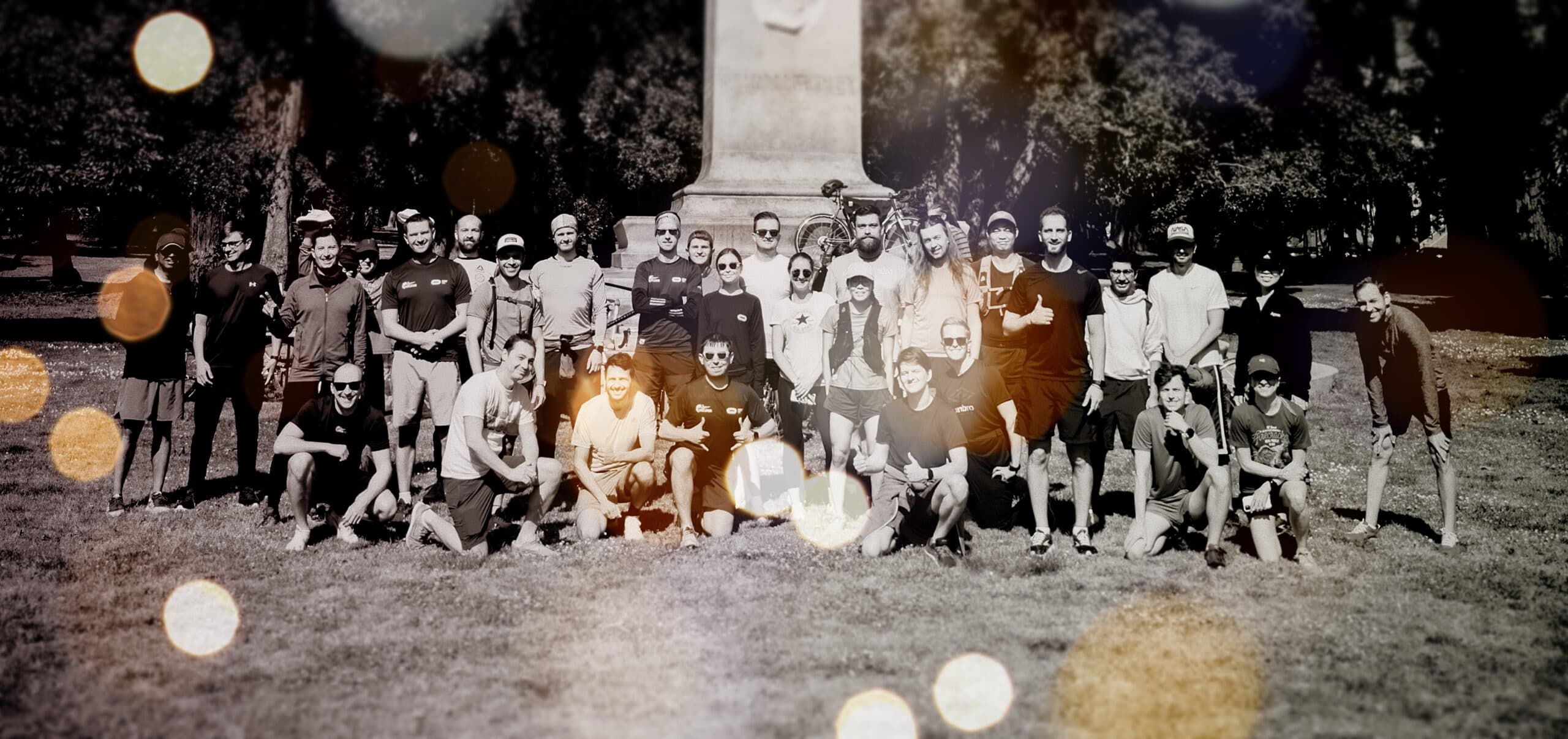
The thirty or so people who currently run with Hardpace represent the spread you might expect from a crew that has explicitly removed the filters. Some are returning to sport after years away. Some are newer to running and needed a group to make it feel less solitary. Some are consistent runners who wanted a community rather than just a training plan. What they share is not a particular fitness level or a race history but a willingness to show up, to do the work at whatever pace makes sense for them, and to be present with the people around them. The crew does not ask members to declare a goal or commit to a trajectory. It asks them to come back next week. That simplicity is more radical than it sounds. Running culture, particularly in cities with active and visible crews, can accumulate a weight of expectations around performance and identity that makes the first step through the door feel harder than it should. Hardpace was designed as a counterargument to that weight. The name itself carries a certain confidence, Hardpace suggests effort and intention, but the crew wraps that edge in an accessibility that refuses to let anyone feel like they do not belong. You do not need to earn your place here. You just need to show up at Ejercito Del Aire on a Saturday morning, and let the rest follow from there.R
RunningCrews Editorial
RunningCrews.com