 RunningCrews
Renegades of the Triathlon World
There is a parking lot at East Potomac Golf Course, right at the tip of Hains Point, where the Potomac and Anacostia rivers converge and the air carries the particular quiet of a city that has not yet fully woken up. On Wednesday evenings, a small group of athletes rolls in, clips into pedals, and gets to work. No fanfare, no elaborate ceremony. Just movement, effort, and the kind of shared purpose that does not need much explaining. This is where GRIT USA trains, and it tells you almost everything about who they are. Founded in January 2020 by Marcus, a multidisciplinary designer, brand strategist, and accomplished endurance athlete based in Washington, DC, GRIT USA arrived with a specific and urgent purpose. Marcus had spent years introducing newcomers to the world of triathlon, and in that time he had seen clearly what the sport was missing: accessible pathways for Black and minority athletes, coaching opportunities for underrepresented communities, and a team built and led by people who looked like the athletes they served. GRIT USA was his answer to that gap. The name is not accidental. Grit is what gets you through the second half of a long ride. It is what carries you through the final miles of a run when your legs have nothing left to offer. It is also, in a broader sense, what it takes to challenge the organizational culture of a sport that has historically left certain communities on the outside looking in.Drawing from Bridge the Gap
The philosophical roots of GRIT USA reach into a wider movement. Marcus drew direct inspiration from Bridge the Gap, the underground running and lifestyle collective that reframed the urban landscape as a space for athletic expression and community building. The idea that city streets, river trails, and public spaces belong to everyone, that they are as valid an arena for serious endurance training as any private facility or suburban greenway, became central to GRIT USA's identity. Washington, DC, with its layered geography of monuments, neighborhoods, waterways, and parkland, offered exactly the kind of terrain that rewards that mindset. The crew did not simply inherit this philosophy. They adapted it to the specific context of the American capital, threading together the city's physical landscape and its social fabric into a coherent vision for what a multisport team could be. That vision rests on three pillars. The first is pushing individuals to new personal limits, the straightforward athletic mandate that draws most people to endurance sports in the first place. The second is inspiring communities, extending the impact of athletic achievement beyond the finish line and into the neighborhoods where athletes live. The third, and perhaps most distinctive, is effecting sociocultural change within the sport itself. This means actively working to create opportunities where few existed before: Black coaches, Black race directors, clinics designed for urban youth and adults who have never had a clear route into collegiate or high-level programs. Marcus has spent more than seven years building toward this vision, and GRIT USA is its most concrete expression.The People Who Show Up
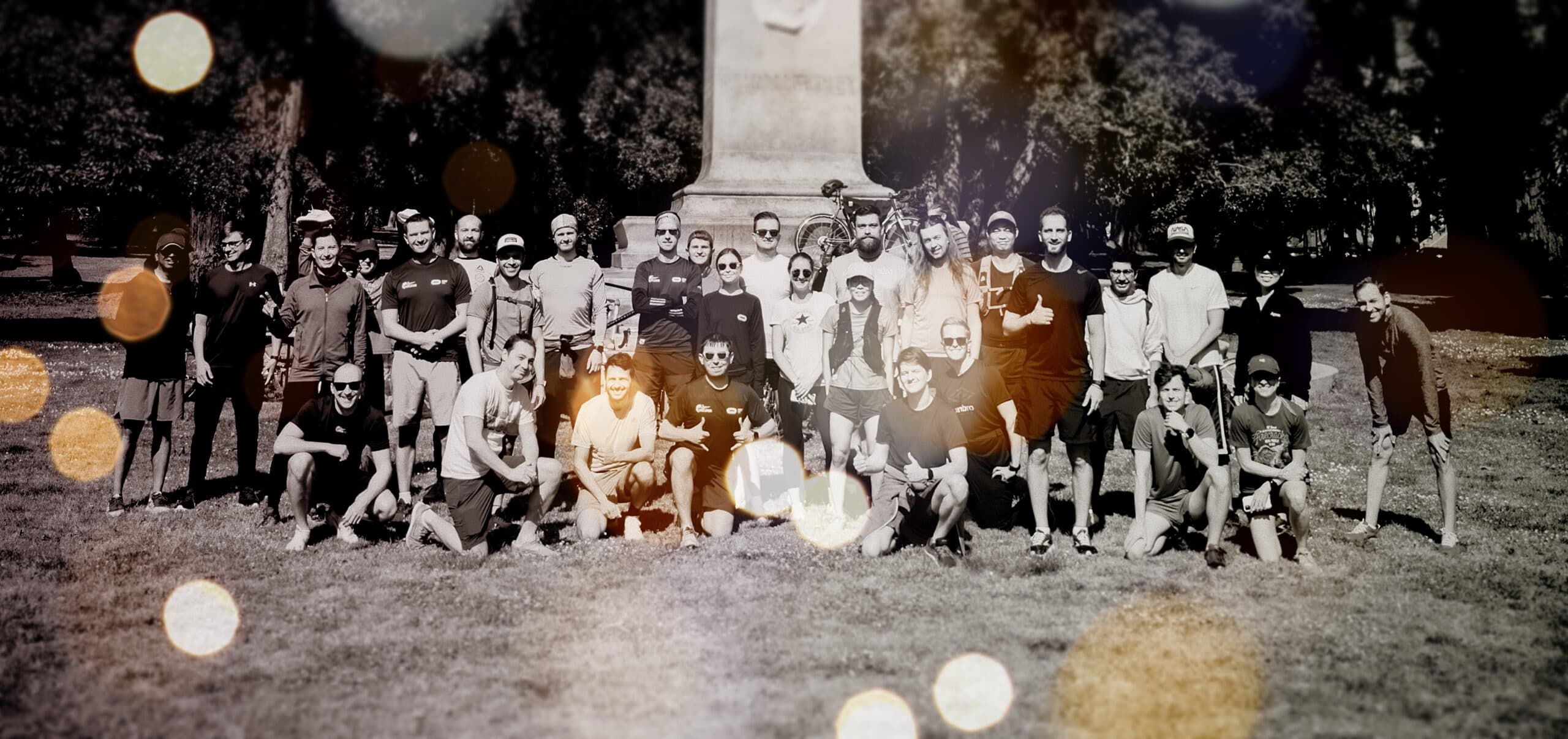
GRIT USA is a small team by design, currently around 15 members, and that size reflects something intentional. The crew is not trying to be everything to everyone. It is trying to be something specific and real to a defined group of people who are serious about multisport and about what the sport can mean for their community. Leading the team alongside Marcus are two captains: Michael and Faren. The presence of captains in a crew this size signals something about how GRIT USA operates. There is structure here, accountability, and shared leadership. This is not a casual weekend run club. It is a team, with all the responsibility and mutual commitment that word implies. The athletes who train with GRIT USA span different experience levels and backgrounds, but they share a common thread: a willingness to be challenged and a belief that endurance sports have something to offer them, regardless of whether the sport's mainstream has always agreed. The crew meets at two locations that carry their own significance. lululemon Georgetown, tucked into one of DC's most historic and walkable neighborhoods, serves as the Sunday meeting point. Hains Point, that narrow peninsula jutting into the confluence of two rivers, is where the midweek sessions happen. Both locations are public, accessible, and deeply embedded in the city's geography.Wednesday Bricks and Sunday Long Runs
The rhythm of GRIT USA's training week reflects the demands of multisport competition. The Wednesday Brick session, beginning at 6:30 PM at Hains Point, is the crew's signature midweek workout. The term "brick" refers to the back-to-back combination of cycling and running that is fundamental to triathlon preparation. Training the body to transition from one discipline to another, to shake off the heaviness in the legs after a hard ride and find a running stride, is one of the more demanding skills in endurance sports. Doing it consistently, in a group, on a Wednesday evening after whatever the workday has already asked of you, is a reliable measure of commitment. Saturday mornings bring team rides that cover serious distance at a genuinely demanding pace, roughly 50 miles with average speeds in the 21 to 23 mph range. These are not leisurely spins. They are workouts that require fitness, focus, and the kind of trust that develops between athletes who train together regularly. Sunday mornings shift to the run, with the crew gathering at lululemon Georgetown at 8 AM to head out into the city. The routes available from Georgetown are among the most scenic in Washington, with the C&O Canal towpath, the Capital Crescent Trail, and the broader network of parkland along the Potomac all within easy reach. Running in this city is its own kind of privilege, and GRIT USA takes full advantage of the terrain.Washington DC as Training Ground
Washington, DC rewards the endurance athlete in ways that are both obvious and quietly surprising. The obvious part: the National Mall, the Lincoln Memorial Reflecting Pool, the monuments that appear and recede as you run through the morning light, make for a backdrop that never fully loses its impact, even after hundreds of miles. The less obvious part is the city's variety. Rock Creek Park offers miles of trail running through genuine forest, a few minutes from neighborhoods as dense and urban as any in the country. The Capital Crescent Trail connects Georgetown to Silver Spring along a former rail corridor, flat and well-surfaced and popular with cyclists and runners alike. Hains Point itself, where GRIT USA runs its Brick sessions, loops around a narrow peninsula with river views on both sides and reliably steady wind. The city also has a running culture with real depth. The Marine Corps Marathon draws tens of thousands of participants through a course that threads past the capital's most recognizable landmarks, with a finish near the Marine Corps War Memorial that carries genuine emotional weight. The Credit Union Cherry Blossom Ten Mile Run, held each spring when the famous cherry trees along the Tidal Basin are at peak bloom, is one of the more beautiful race experiences anywhere in the country. For a multisport team like GRIT USA, this event calendar provides both motivation and context, a reminder that training has destinations, and that the city they run through takes running seriously.Changing the Narrative in Multisport
The broader ambition behind GRIT USA has not diminished since Marcus founded the team in January 2020. If anything, the years since have made the work feel more necessary. The conversation around diversity and representation in endurance sports has grown louder, but conversation alone does not open doors. What opens doors is the patient, consistent work of building teams, training athletes, developing coaches, and showing up at races with a presence that changes what the sport looks like to the next person who is considering whether it has a place for them. GRIT USA is doing that work in Washington, DC, with a small and committed group of athletes, two captains, and a founder who has spent the better part of a decade making the case that triathlon belongs to everyone. They train at Hains Point on Wednesday evenings and gather at lululemon Georgetown on Sunday mornings, and they race with the understanding that every finish line they cross is also an argument. An argument that the sport can hold more people, more stories, and more voices than it currently does. For anyone who has ever looked at the start line of a triathlon and wondered where the people who looked like them were, GRIT USA is part of the answer.Featured Crew
R
RunningCrews Editorial
RunningCrews.com