 RunningCrews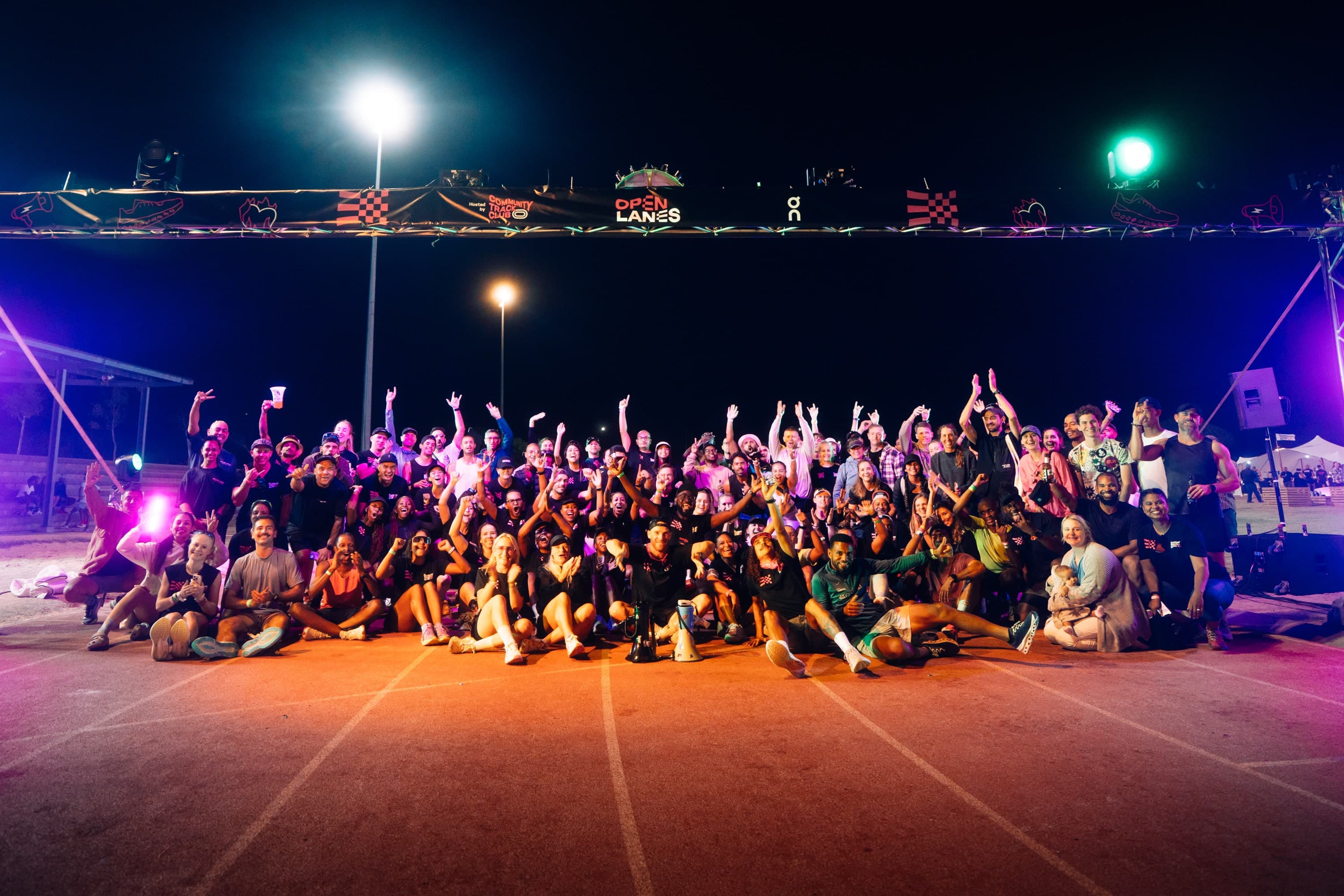
A Track That Belongs to Everyone
There is a particular electricity to the sound of spikes on a rubberised track, the sharp intake of breath before a starting signal, the collective lean into a bend. For most of running's history, that feeling has been reserved for a narrow slice of the sport: the competitive, the coached, the fast. When Community Track Club founders Erin and Mike stood at the edge of Cape Town's Green Point Athletic Stadium in January 2023, they were asking a straightforward question: why should any of that be exclusive? The answer, as far as they were concerned, was that it should not be. And so they built something to prove it. The premise behind Community Track Club was never complicated, and that simplicity is arguably its greatest strength. Track running, with its measured distances, its structured efforts, and its clear feedback, is one of the most honest forms of athletic training available to any runner. Yet access to it, both physical and psychological, has long felt out of reach for anyone who did not already consider themselves a serious competitor. Erin and Mike set out to dismantle that perception from the ground up, designing a space where showing up mattered more than how fast you showed up.Green Point and the City Behind the Club
Cape Town is a city that has always had a complicated relationship with who gets to participate in public life, including public sport. Against that backdrop, Community Track Club's decision to base itself at the Green Point Athletic Stadium carries a certain weight. Green Point sits in one of the most iconic stretches of the city, within sight of the Atlantic Seaboard, surrounded by the sprawling Green Point Urban Park. It is a venue with history and infrastructure, the kind of place that signals seriousness of purpose. Choosing it as the home of an explicitly inclusive running club was a deliberate act, a statement that this space and this sport belong to the whole city. Cape Town's running culture is deep and varied. The city produced world-class athletes and hosts some of South Africa's most beloved road races. But club-level track culture has often remained siloed, oriented toward competitive athletes working toward specific time standards. Community Track Club arrived as a counterpoint to that, not in opposition to competitive running, but as an expansion of the track's invitation list.How the Track Meets Actually Work
Every six weeks, Community Track Club convenes at Green Point Athletic Stadium for an inclusive track meet. The format is thoughtful in its design. Rather than grouping runners by arbitrary ability labels or leaving people to self-select nervously into heats, the club organises pace groups according to 5k times. It is a system that rewards honesty and removes the anxiety of not knowing where you belong. A runner who has never set foot on a track before can look at their recent parkrun time, find their group, and step onto the start line with the same sense of legitimate participation as someone who has been racing for years. This structure matters enormously in practice. When pace groupings are well-calibrated, every runner in every heat experiences something close to an actual race: genuine competition with athletes of similar ability, the sensation of being pushed and pulling someone else along, the satisfaction of a finish that required real effort. Guest hosts and coaches rotate through the sessions, bringing different expertise and perspectives to the event. That rotating cast keeps the programming fresh and gives Community Track Club a sense of being plugged into a wider running ecosystem rather than operating in isolation.Coaches, Guests, and the Collective Effort
The decision to bring in guest coaches is one of the more distinctive elements of how Community Track Club has chosen to grow. Many running crews rely on a single founding voice, a charismatic leader whose approach shapes every session. Community Track Club has built in variety from the start. Different coaches bring different training philosophies, different warm-up routines, different cues for running form and race tactics. For the roughly 200 members who have joined since the club's founding, this means consistent exposure to a range of ideas about how to run well and how to train intelligently. There is also something socially generous about this model. It prevents the club from becoming too dependent on any one personality and distributes ownership of the community more broadly. When a guest coach leads a session, they bring their own network and their own community with them, often introducing new faces to the track meet format for the first time. Over time, this has contributed to a membership that is genuinely diverse in background and ability, people who arrived through different doors but found themselves on the same track.Building a Close-Knit Community Through Shared Effort
Around 200 runners now count themselves as part of Community Track Club, a number that speaks to real momentum for a club that launched in January 2023. That growth did not happen through heavy marketing or brand-building. It happened because track meets are viscerally shareable experiences. You run a hard 400 metres in a group of people at your exact fitness level, and you leave with something to talk about. You feel it in your legs on the way home. You remember the person who finished just ahead of you and the one you managed to hold off. The community that has formed around these six-weekly gatherings is described by those involved as close-knit, built on mutual encouragement both on and off the track. Runners follow each other's progress on Strava, check in between meets, and show up for each other in the way that shared physical challenge tends to produce. The regularity of the format, the same stadium, the same structure, every six weeks, creates a rhythm that runners can organise their training around. The track meet becomes a target, a way of measuring where you are and where you are heading.An Open Invitation to the Track
Community Track Club exists because Erin and Mike believed that the experience of standing on a track, in a proper athletic stadium, surrounded by people who are there to run hard and support each other, should be available to everyone with a pair of running shoes and the desire to try. That belief has translated into a club that now gathers around 200 members in Cape Town, with a format that is replicable, welcoming, and genuinely structured around removing barriers rather than erecting them. If you have ever watched a track meet from the stands and wondered whether there was a place for you on the track, Community Track Club's answer is unambiguous. The pace groups exist precisely so that you can find out. Cape Town's Green Point Athletic Stadium has plenty of room, and every six weeks, a lane is open.Featured Crew
R
RunningCrews Editorial
RunningCrews.com