 RunningCrews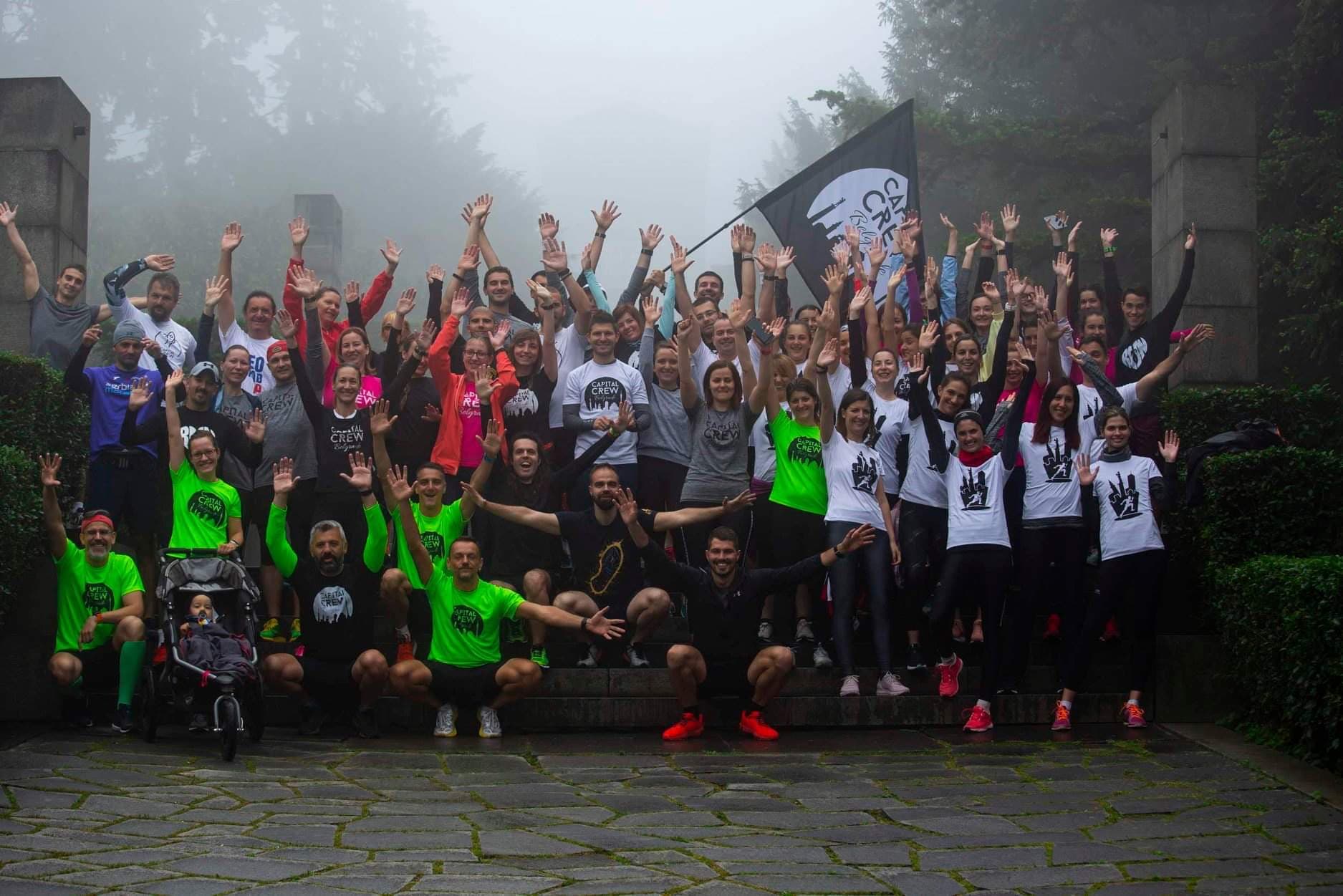
A Crew Built on Dissatisfaction
There is a particular kind of frustration that productive things are made from. In early 2018, Martina and Dimitrić, two founders and partners in a shared vision, looked at the running scene in Serbia and found it lacking. Not lacking in runners, and not lacking in races. What was missing was a space for people who wanted to run without the weight of competition pressing down on every stride. So in February 2018, they did the straightforward thing: they built that space themselves. Around fifty people showed up for the beginning of what would become Capital Crew Belgrade, and the crew has been growing steadily ever since. The name carries a double meaning that the founders chose deliberately. Belgrade is the capital of Serbia, a fact known to anyone with a map. But within the crew's own framing, it is also the capital of running in this part of the Balkans. That is not a boast so much as a statement of intent. Martina and Dimitrić wanted to build something that would define what running culture in this region could look like when it was done right. The name is a claim and a commitment at once. It anchors the crew to place and to purpose in a single word.The Only Competition Is Yesterday
The philosophy at Capital Crew Belgrade is simple enough to state but harder to find in practice. The only competition worth measuring yourself against is your own previous performance. There are no rankings within the crew, no internal race results posted on a leaderboard, no culture of comparing finish times over post-run coffee. What matters is whether you are moving better than you were last month, last season, last year. That orientation changes everything about how a run feels. The anxiety that comes with being watched and judged simply dissolves when the group around you is genuinely indifferent to where you finish and genuinely curious about how you felt along the way. This has made the crew magnetic to a wide range of people. Individuals who run alone most of the week come for the company. Couples run side by side at a pace that suits them both. Families show up, parents and children finding a shared rhythm on the same routes. The range of distances the crew covers, from 5 kilometres on an easy weekday morning to full marathon distances for those training toward a specific goal, reflects just how broad the invitation actually is. Capital Crew Belgrade now numbers around 150 members, a figure that has grown organically through word of mouth and through the simple experience of showing up and feeling welcome.Four Runs a Week Across Two Iconic Spots
The weekly rhythm of Capital Crew Belgrade is anchored by two locations that carry their own significance in the city. Hotel Jugoslavija, the storied brutalist landmark on the banks of the Danube in New Belgrade, serves as the meeting point for Tuesday mornings at eight, Tuesday evenings at seven, Thursday mornings at eight, and Thursday evenings at seven. The building itself is a piece of Belgrade history, a Soviet-era monument to a particular moment in Yugoslav modernity, and gathering beside it before a run gives the whole thing an atmospheric charge that a generic car park simply cannot provide. Saturday mornings belong to Ada Ciganlija, the river island that Belgrade locals have long treated as the city's living room. The lake that wraps around the island offers kilometres of waterside path, and on a Saturday morning the whole of the city seems to have the same idea. Running here with Capital Crew Belgrade means becoming part of a larger weekend ritual. The paths are flat and forgiving, the scenery is easy on the eyes regardless of the season, and the crowd of swimmers, cyclists, and dog walkers around you creates an energy that makes the kilometres pass without much notice. It is a very Belgrade kind of run: unhurried, social, and quietly proud of its own city.Nine Days on the Mountain
The clearest expression of what Capital Crew Belgrade is really about may be the annual training camp on Kopaonik. Serbia's largest mountain, rising to around two thousand metres above sea level, becomes the crew's temporary home for nine days each year. The programme is intensive by design. Twice-daily workouts push members harder than any single weekly run would, but the structure around those sessions is what makes the camp genuinely different from a standard running retreat. Between sessions, members go hiking and climbing. There is a spa and a swimming pool. Table tennis and basketball happen. A zip line cuts through the forest. An adventure park offers something for the less running-obsessed members of the group. Yoga sessions appear on the schedule. The point is not simply to accumulate training load in a mountain setting. The point is to spend nine days living alongside your running crew in a way that ordinary weekly runs never quite allow. Conversations go deeper. Friendships form between people who might otherwise only nod to each other at the Tuesday evening start line. By the time the camp ends, the group is measurably closer than it was on arrival. The final day of the camp brings everything together with participation in the Kopaonik Trail Race, which offers distances of seven and fifteen kilometres through the forest. After nine days of double sessions, those trail distances feel like a celebration rather than a test. Members who arrived at the mountain as acquaintances cross the finish line as friends. It is exactly the kind of shared experience that Martina and Dimitrić had in mind when they founded the crew: purposeful, joyful, and entirely outside the competitive framework that had left them dissatisfied with Serbian running in the first place.Belgrade as a Running City
Belgrade rewards the runner who is willing to look past its reputation for late nights and heavy food. The city sits at the confluence of the Sava and the Danube, which means that anyone heading out from the centre has access to riverside paths on two rivers within a short warm-up. The old fortress of Kalemegdan stands above that confluence, offering a vantage point over the water and across into Vojvodina that very few European capitals can match. The streets of Dorćol and Savamala are alive with texture and history. New Belgrade's wide boulevards and park corridors provide flat, uninterrupted stretches for tempo work. The city is not a running destination in the way that, say, a mountain resort might be, but it has more to offer a runner than most visitors ever discover. Capital Crew Belgrade has built its weekly routes with that terrain in mind. The Danube path near Hotel Jugoslavija carries the crew along the water through New Belgrade's quieter stretches. The Ada Ciganlija loop keeps members on the island's perimeter, with the lake visible on one side and the river on the other. These are not incidental meeting points chosen for convenience. They reflect a deliberate reading of the city's geography, a sense that running in Belgrade should feel like running in Belgrade, rooted in the specific character of its riverbanks and its parks.An Open Door on the Danube
For anyone arriving in Belgrade who runs, or for anyone living in the city who has been running alone and wondering whether something more is available, Capital Crew Belgrade represents a straightforward answer. The weekly schedule is consistent and accessible: Tuesday and Thursday at both morning and evening hours from Hotel Jugoslavija, Saturday mornings at Ada Ciganlija Lake. The range of times means that the crew's runs can fit around most working schedules, and the absence of competitive pressure means that the question of pace need not be a barrier. The crew that Martina and Dimitrić assembled from a founding group of around fifty runners has grown into a community of roughly 150, spread across ages, backgrounds, and running experience levels. Families run here. Beginners and long-distance runners share the same start line on the Danube. The mountain camp each year on Kopaonik deepens those connections in ways that go beyond the sport itself. What started as a response to dissatisfaction with the existing scene has become something positive in its own right: a crew with its own calendar, its own mountain tradition, its own philosophy about what running is actually for. In Belgrade, the capital of running in the Balkans, that counts for a great deal.Featured Crew
R
RunningCrews Editorial
RunningCrews.com