 RunningCrews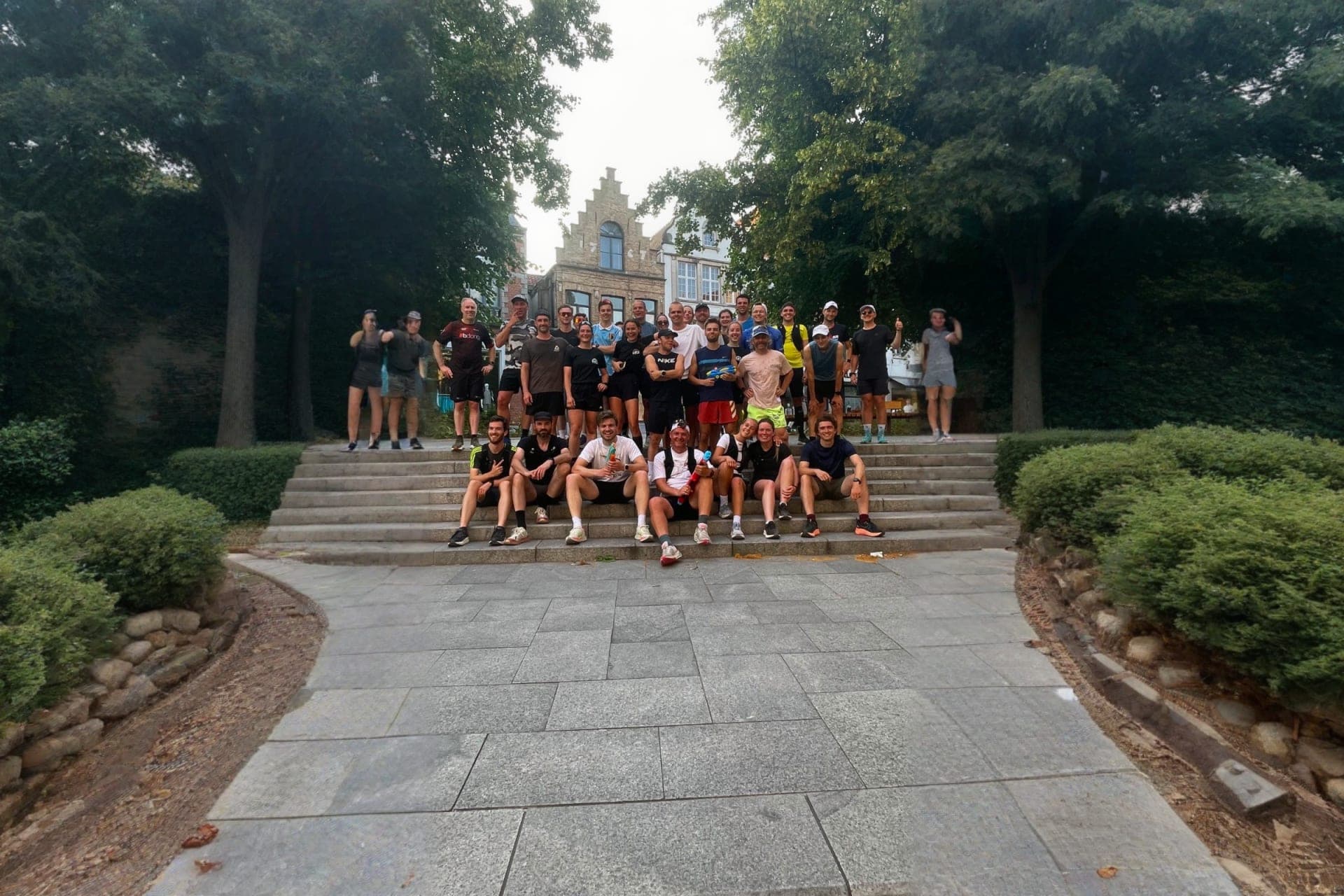
There was no run club in Bruges. For a medieval city of canal bridges and cobblestoned lanes, a city that draws visitors from every corner of the world, that absence felt oddly conspicuous. Emmerson, a Bruges local who had spent years travelling to run clubs in other cities, kept coming home with the same thought: why not here? In June 2024, he stopped asking the question and started answering it. Bruges Running Crew was born at Gentpoort, one of the city's four surviving medieval city gates, and from that first gathering it set out to do something simple but quietly radical: give Bruges its own running community.
Emmerson is not a casual observer of what running communities can become. Before founding Bruges Running Crew, he was a competitive youth athlete with crosscup victories and podiums at the Belgian championships in the 400m and 800m. He understood pace, discipline, and the particular satisfaction of crossing a finish line ahead of the field. But the thing that stayed with him from all those races was not the hardware. It was the people. The warmth of a shared warm-up, the conversation on a cool-down, the easy camaraderie that running tends to produce between strangers. When he joined run clubs in Antwerp, Ghent, or Brussels on visits, he felt it again and again. He wanted to bring that feeling home. The name followed naturally from the place: a run club in Bruges, called Bruges Running Crew. Straightforward, proud, exactly right.
From One Idea to a Weekly Rhythm
What Emmerson launched in the summer of 2024 grew faster than anyone had quite expected. A single weekly run became two. Then a monthly coffee run was added. Then a long run on the first Sunday of each month. By the time autumn arrived, Bruges Running Crew had quietly become the city's running community, a phrase that feels earned rather than claimed. Today six captains share the responsibility of keeping the crew moving, including Julie and Joachim, two of the captains who help organise and lead the weekly sessions. Emmerson built the foundation. The captains carry it forward. That handoff, from a single founder to a team of six, is itself a small story of what a running crew can grow into when the original intention is community rather than personal brand.
The weekly schedule reflects that intention. Slow Monday gathers the crew at Gentpoort every Monday evening at 19:30 for a medium-distance run at an easy pace. The name is deliberate and the tone it sets is important. There is no pressure here, no segment to chase, no Strava leaderboard anxiety. Social Thursday does the same on Thursday evenings at 19:30, meeting at Smedenpoort, another of the city's historic gates, and heading out for a run that is as much about conversation as kilometres. Two evenings a week, two city gates, one consistent message: show up, run easy, enjoy the company.
Sunday Runs and the Coffee Ritual
The weekend schedule adds two more distinct flavours. On the first Sunday of every month, the crew meets at Kruispoort at 09:30 for the Long Run Sunday, a half-marathon distance at an easy pace. This is not a race simulation or a training block. It is a chance to cover real ground together, to move through the wider landscape around Bruges, to spend two or more hours in the kind of conversation that only happens when people are moving side by side for a long time. The pace is kept accessible so that the group stays together and no one gets left behind on the road.
The second Sunday of every month belongs to Coffee Sunday. The crew meets at 09:30 at Stera, a plant bar in Bruges, for a medium-distance social run before settling in for coffee together. This particular ritual captures something that Emmerson always admired about run clubs in other cities: the run is the vehicle, but the table afterward is where the community actually forms. Stera makes a fitting backdrop. A plant bar in a city already famous for its beauty offers a certain unhurried quality, a sense that the morning is worth taking slowly. Coffee Sunday has become one of the most anticipated fixtures in the Bruges Running Crew calendar, and it is easy to understand why.
Running Through a City Built for It
Bruges is an unusual place to run. The historic centre, a UNESCO World Heritage Site, is compact and dense with visual detail: the Rozenhoedkaai reflected in still water, the Belfry rising above the market square, the Begijnhof quiet and green in the early morning. The city gates that serve as Bruges Running Crew's meeting points, Gentpoort, Smedenpoort, Kruispoort, are not just convenient landmarks. They mark the original boundary of the medieval city, and running from them outward means crossing the line between the preserved past and the lived present of a Flemish city in the twenty-first century. Routes fan out from these gates into the residential neighbourhoods and green corridors that most visitors never see, the Bruges that belongs to the people who actually live there.
That local quality matters to Bruges Running Crew. This is not a crew built for tourism or spectacle. It is built for the city's residents, the people who pass those gates every day on the way to work, who know the cafes and the back streets and the names of the canal bridges. Running together through that familiar landscape gives it a new dimension. The same street you cycle down at speed looks different at a conversational jog with five people alongside you. The crew runs in the place they live, and that groundedness is part of what makes each session feel like it belongs.
Who Runs With Bruges Running Crew
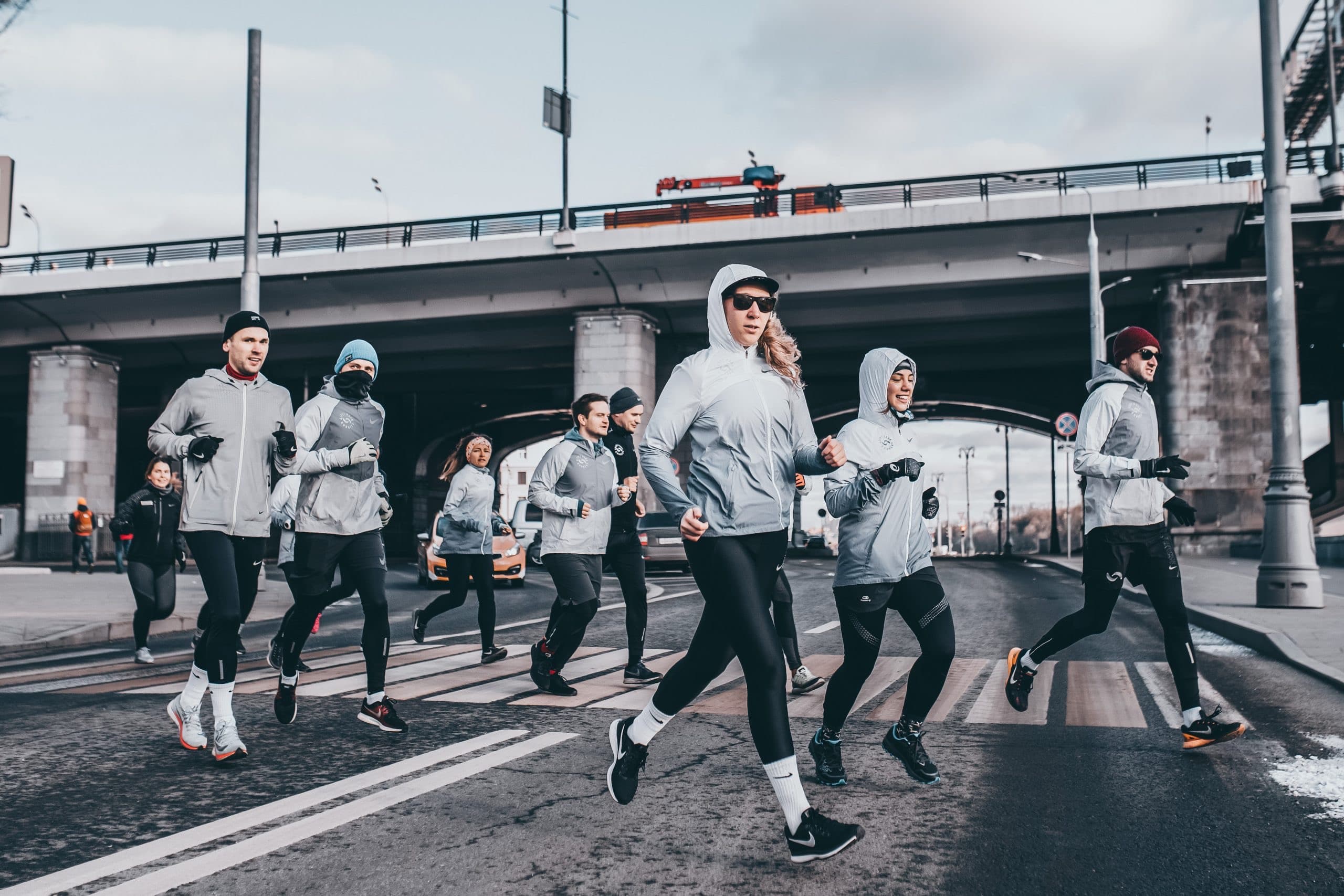
Open to everyone and free to join, Bruges Running Crew does not filter by speed, age, or running background. Teenagers run alongside retirees. Competitive runners who want an easy social session run alongside people who have never entered a race and have no intention of doing so. The range is not incidental. It is the point. Emmerson's own journey from competitive youth athlete to community founder reflects a genuine belief that running's greatest value is not the performance it produces but the connection it enables. All four weekly sessions are run at an easy pace, which means the group moves together rather than splintering into ability bands. The crew arrives as a group and finishes as a group, and that small structural choice has a large social effect.
The membership is free and the welcome is genuine. Bruges Running Crew asks nothing of its members except the willingness to show up. You can come once and never return. You can come every week for a year. You can run Coffee Sunday without ever running Slow Monday. The schedule is designed to offer options rather than obligations. What tends to happen, though, is that people come for one run and keep coming back, not because they have committed to a training programme but because the company is good, the pace is easy, and a city gate at dusk or a plant bar on a Sunday morning turns out to be exactly the right place to be. That is the simple thing Emmerson built, and in Bruges, it was exactly what was missing.
Featured Crew
RunningCrews Editorial
RunningCrews.com