 RunningCrews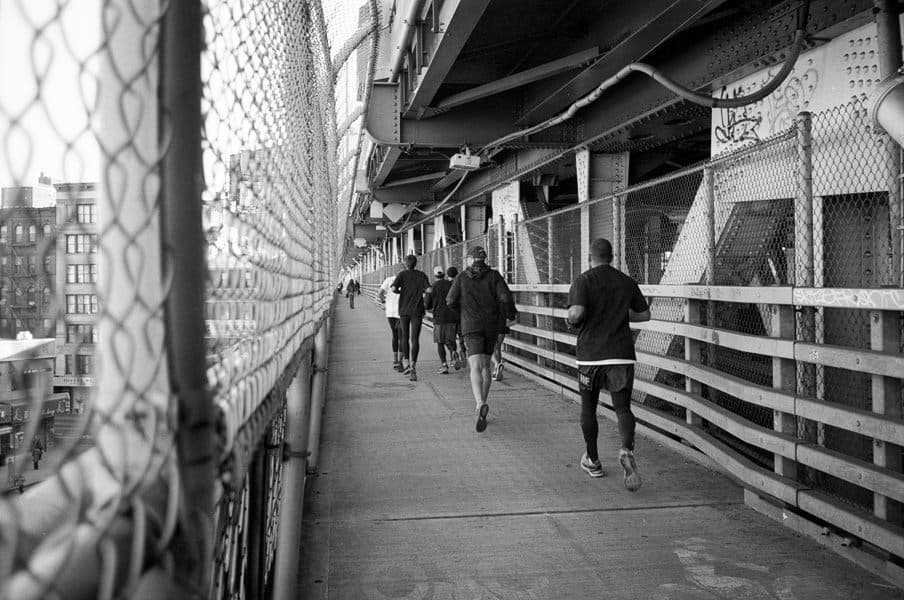
A Missed Feeling That Became a Movement
The idea was planted in Berlin. Nicola and Azib had spent time in the German capital and discovered something they had never encountered at home: running crews. Not just casual jogging groups, but communities with identity, energy, and a shared drive to push harder together. When the two moved back to Düsseldorf, that energy stayed with them. The city they returned to was full of runners, but what was missing was the crew. No collective. No culture around the run. Just individuals out on their own. The absence was noticeable, and it left a gap that was hard to ignore. It was Iko, a founding member of Kraft Runners, who gave the idea its first push. His question was simple: why not start your own? At the time, it felt more like a wish than a plan. There was enthusiasm, but also the hesitation that tends to come with turning a feeling into something real. Slowly though, the pieces came together. A WhatsApp group was created. The name Bridge Runners Düsseldorf was chosen. A small circle of people from the city was invited. And then came the run that changed everything. When Nicola and Azib met Holger and Hanniel and went out for a long run together, the feeling they had been chasing since Berlin came back. That was the moment the crew truly began. Bridge Runners Düsseldorf was officially founded in June 2019, but the four founders have always considered August 2019 their real birthday, the month when the vibe finally clicked into place.Non-Elites Who Train Like the Pros
Bridge Runners Düsseldorf is built around a simple but powerful premise: you do not need to be fast to start training seriously. The crew is made up of non-elite runners who found or rediscovered their love for running later in life, and who have since committed to the kind of structured, intentional training that was once associated only with competitive athletes. Tempo runs. Track workouts. Long efforts. These are not the hallmarks of a casual jogging group. They are the tools of runners who want to get better, and Bridge Runners Düsseldorf has built its entire weekly schedule around them. What drives this approach is the belief that progress has no expiration date. There is no age at which the window closes, no pace so slow that improvement becomes impossible. The crew's own founders are living proof of that. Several of them came to running seriously only in their adult years, and yet they have built something that now draws around 100 members to the streets and tracks of Düsseldorf each week. That growth, from a WhatsApp group to a crew of that size, reflects something genuine. People come because the training works, and they stay because the people make it worth showing up for. The founding core of Stefan, Holger, Hanniel, Eli, Nicola, and Azib continues to drive the crew's direction. Their shared philosophy is straightforward: running is a team sport. Goals set together are goals more likely to be met. That collective mentality shapes everything from how runs are structured to how new members are welcomed into the group.Three Runs a Week with Real Purpose
The weekly rhythm of Bridge Runners Düsseldorf is one of the things that sets its culture apart. Rather than organizing a single social run and calling it a week, the crew runs three times, each session with a distinct purpose and a different physiological target. Turbo Tuesday is the tempo run. Designed to push the lactate threshold and sharpen mental resilience, it is the session that asks runners to hold a challenging pace for a sustained effort. The discomfort is part of the point. Runners who commit to Tuesday regularly find that paces that once felt uncomfortable begin to feel manageable, and then natural. Track Thursday is the crew's signature session. Every Thursday evening at 18:30, members gather at the Bezirkssportanlage Düsseltal, the district sports facility on Windscheidstraße in the Düsseltal neighbourhood. The track workout format teaches runners to understand their own paces, to control effort across intervals, and to recover with intention. For many newer members, this is their first real introduction to structured interval training, and it tends to change how they think about running entirely. Sunday belongs to the long run. Where Tuesday sharpens speed and Thursday builds precision, Sunday is about accumulation. Longer distances, slower effort, the kind of sustained movement that builds the aerobic base and the muscular durability that every other session depends on. Together, the three sessions form a coherent training week, one that was designed not by accident but by founders who understood that running only becomes a team sport when the team shows up with intention.A Community That Skews Young and Runs Serious
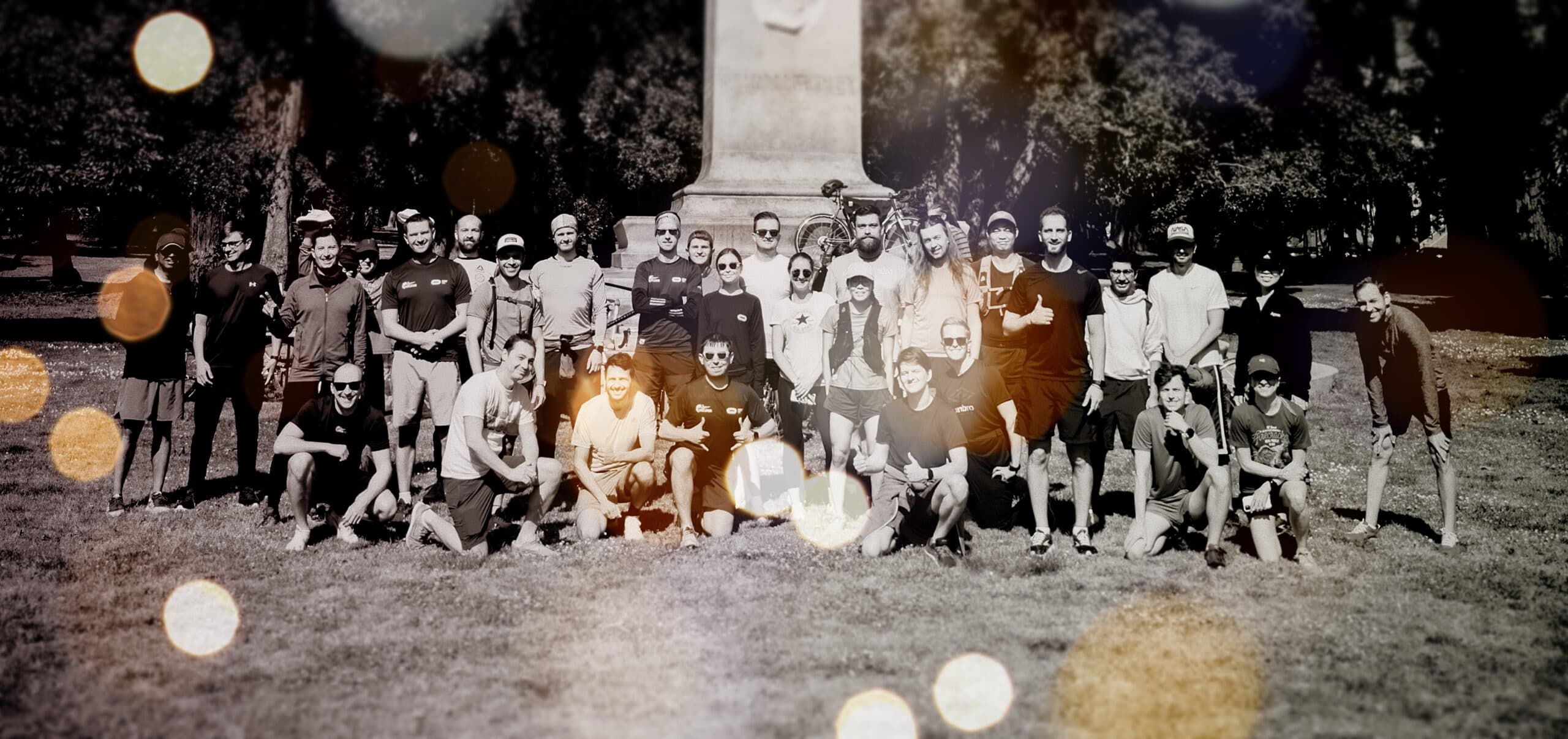
Walk up to a Bridge Runners Düsseldorf session and the energy is immediately recognizable. The crew draws a younger demographic, runners in their twenties and thirties who are drawn to the combination of structured training and genuine social connection. These are people who want to improve, who enjoy the accountability of a group, and who appreciate that showing up to a track workout is a shared commitment rather than a solitary one. The crew is open to anyone who wants to join, regardless of current pace or experience. That openness is not just rhetoric; it is reflected in the way the workouts are run and the way new members are treated when they arrive for the first time. The founders came to running later themselves, which gives the whole crew a particular patience with people who are still finding their stride. Nobody is made to feel out of place because they are slower, newer, or less confident. The standard is effort and attitude, not performance. Around 100 members now run regularly with Bridge Runners Düsseldorf, a number that has grown steadily since those first tentative group runs in 2019. The crew follows the activity on Strava and stays connected via Instagram at bridge.runners, where the community shares training milestones, race results, and the small, everyday moments that make running with other people different from running alone.Running Through One of Germany's Most Scenic Cities
Düsseldorf offers runners a surprisingly rich variety of terrain and scenery for a city of its size. The Rhine River is the dominant feature, and the path that runs along its western bank stretches for well over ten kilometres, flat and wide, tracing the edge of the Altstadt and continuing south past bridges, parks, and waterfront terraces. On a clear morning, the light on the water and the outline of the city behind you make for a run that is genuinely hard to tire of. The Hofgarten, one of the oldest public parks in Germany, sits close to the city centre and offers a quieter, greener alternative. Shaded paths wind through manicured lawns and past Baroque monuments, and the low traffic makes it a favourite for early morning efforts. Further east, the Düsseltal area itself, home to the crew's Thursday track, sits in a residential neighbourhood that feels grounded and local, far from the tourist-facing gloss of the Altstadt. For those who want longer routes, the city connects to the broader Rhine cycling and running infrastructure, which links Düsseldorf to neighbouring towns and allows for truly extended Sunday outings. The river route in particular invites exploration: the scenery changes gradually, the path is well-maintained, and the distance can be extended or shortened without backtracking. It is the kind of running environment that rewards consistency and repays effort with new things to notice each time.Racing in Düsseldorf Across the Year
The city gives its runners plenty to aim for on the race calendar. The Metro Marathon Düsseldorf, held each April, is the flagship event, a fast, flat course that draws participants from across Germany and beyond. Its reputation as a personal best course makes it a natural target for Bridge Runners Düsseldorf members who have spent months building their threshold and long-run fitness for exactly this kind of effort. The Rheinuferlauf, a 10-kilometre race run along the riverbank, offers a shorter, sharper challenge and a different kind of atmosphere. The Düsseldorf Half Marathon rounds out the major events, threading through the city's most recognizable streets and past landmarks that take on a different quality when you are running through them at pace rather than strolling past on a weekend afternoon. Together, these events give runners who train seriously with a crew something concrete to direct their preparation toward, and a shared finish line to celebrate when the work pays off.No Borders Just Bridges
The phrase that defines Bridge Runners Düsseldorf is not complicated. No borders, just bridges. It is a line that works on more than one level. Düsseldorf is a city of bridges, physically and symbolically, a place where the Rhine demands crossing and where different parts of the city are held together by the structures that connect them. Running is the bridge the crew has built between people who might otherwise never have met, between a Berlin memory and a Düsseldorf reality, between someone who used to run and someone who is only just beginning. The crew's website has the details for anyone who wants to know more, and showing up on a Thursday evening at Bezirkssportanlage Düsseltal at 18:30 is the simplest way to see what it is all about. The track will be there. So will the crew.Featured Crew
R
RunningCrews Editorial
RunningCrews.com