 RunningCrews
There is a running club from the American West Coast that never left the imagination of a group of runners in Japan. Athletics Far East Fukuoka draws its inspiration from Athletics West, the legendary track and field club founded in 1977 in the United States, a team that shaped what it meant to be a serious yet spirited runner. That founding myth, carried across an ocean and replanted in Japanese soil, became the seed of something genuinely new. The name itself tells the story: if Athletics West was born on one edge of the world, Athletics Far East would rise on the other. What started in Tokyo eventually found a home in Fukuoka, a city with its own deep relationship with long-distance running, and the crew has been growing in that fertile ground ever since.
Fukuoka is not an accidental choice for a crew with ambitions like these. The city sits at the southwestern tip of Kyushu, open to the sea, alive with a distinct energy that feels both coastal and quietly competitive. It has hosted one of Asia's oldest and most prestigious marathons for decades, drawing elite runners from around the world each December. The streets here have seen champions. The waterfronts and parks carry the memory of serious training, and yet there is also something unhurried and livable about Fukuoka that invites a different kind of running culture, one that does not separate performance from pleasure, speed from beauty, effort from daily life. Athletics Far East Fukuoka belongs to both of those worlds.
Inspired by the West, Rooted in the East
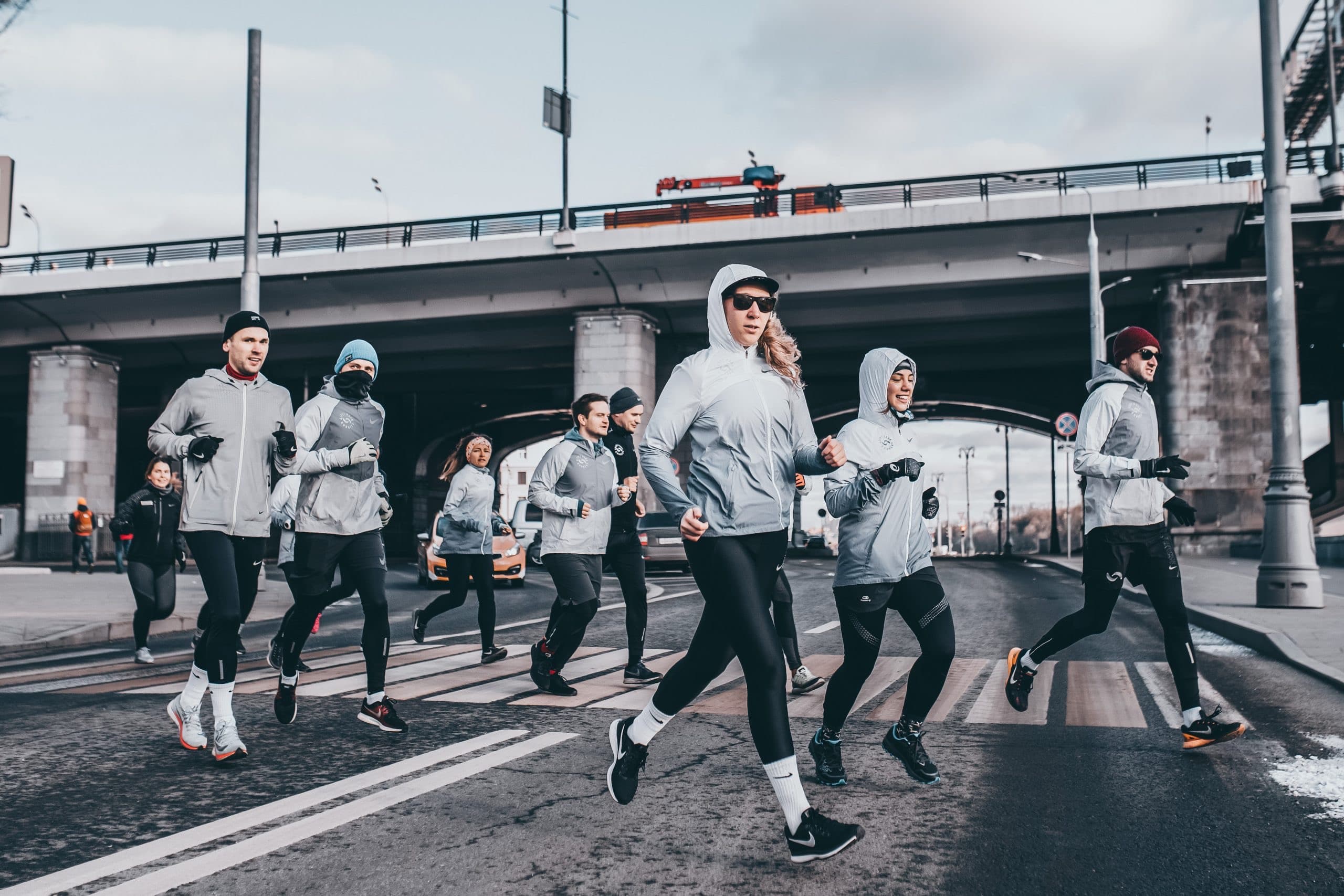
The original Athletics West was more than a training group. It was a statement about what running could mean in a person's life. Founded during an era when American distance running was at a cultural peak, it gathered serious athletes around a shared belief in excellence and community. Athletics Far East carried that spirit forward but translated it into something suited to its own time and place. The crew does not simply run to compete. It runs to live better, to think more clearly, to feel the passage of time in a way that modern city life rarely allows. Seasons matter here. The transition from summer heat to autumn cool, from winter cold to the first warmth of spring, is not background noise. It is part of the run itself, something members notice and talk about, something the crew is built to experience together. What holds Athletics Far East Fukuoka together is an unusually wide cross-section of people. The membership reads like an unlikely gathering: a brand director who thinks in campaigns and categories, a model who understands the body as both instrument and image, a martial arts fighter who knows discipline from the inside out, a graphic designer who sees the city differently at six in the morning, a photographer who frames the run as much as they run it, and office workers whose reasons for lacing up are quieter but no less real. These are people who come from different professional worlds, carry different ambitions, and measure progress by entirely different standards. And yet they find themselves at the same meeting point, at the same hour, moving through the same streets together.Running for Reasons That Are Entirely Your Own
The crew does not ask you to justify your motivation. Some members run to push harder, to test what the body can do when the mind wants to quit. Others run to feel more beautiful, in the physical sense of strength and posture and the quiet confidence that comes from showing up consistently. Some run because creative work demands a kind of mental clearing that a desk cannot provide, and a long run through Fukuoka's waterfront or parks delivers exactly that. Others run simply to be present in the season, to feel rain or wind or morning light on their face as something real and unmediated. Athletics Far East Fukuoka holds all of these motivations without ranking them. The brand director's goal and the fighter's goal sit side by side without hierarchy. This openness is not accidental. It reflects a genuine philosophy about what a running crew can be. The founders understood from the start that the most interesting communities are built around a shared activity rather than a shared goal. When the activity is running and the activity is regular and the people are different enough from one another to spark real conversation, something starts to happen. Ideas cross-pollinate. Perspectives shift. A martial artist's approach to pain tolerance finds its way into a designer's creative practice. A photographer's habit of noticing light changes the way a brand director sees a morning route. These crossings are not engineered. They happen because people who run together inevitably begin to know each other.The City as a Training Ground and a Canvas
Fukuoka rewards runners who pay attention. The city has water on multiple sides, with Hakata Bay to the north and the Naka River threading through the urban center. Running here means moving between districts that feel genuinely distinct, from the dense commercial energy of Tenjin to the quieter residential streets of Ohashi, from the broad paths along the waterfront to the older lanes of Hakata itself. Each neighborhood has its own texture and pace. The city is compact enough to cover serious ground in a single run but varied enough that no two routes feel identical. For a crew built around the idea that running should engage the full senses, including sight, sound, smell, and the felt quality of the ground underfoot, Fukuoka is an exceptionally good city to be in. Athletics Far East Fukuoka carries the legacy of a specific American running tradition into one of Japan's most distinctive cities, and the result is a crew that feels genuinely its own. The name connects east and west, past and present, the competitive and the contemplative. The membership connects people who would not otherwise find themselves in the same room, let alone moving through the same streets at the same speed. And the philosophy connects the individual reasons people run with something larger, a shared sense that this matters, that showing up matters, that the community built around the run is as real and as valuable as the run itself. Something, as the crew puts it simply and honestly, may spring along the way.R
RunningCrews Editorial
RunningCrews.com