 RunningCrews
Four Hundred and Forty-Two Kilometres
That number is not arbitrary. It is the exact distance between Belgrade and Zagreb, two capitals that spent much of the 1990s defined by conflict, grief, and the kind of history that does not wash away quickly. So when a group of runners from both cities decided to name their shared crew after that stretch of road, they were making something clear: the distance is real, the past is real, and they are going to run through it anyway. The 442 Crew is the result of that decision, a crew born not from convenience or geography but from a deliberate, almost stubborn belief that sport can do what diplomacy sometimes cannot. The crew grew out of a collaboration between two established running communities in the region: the Belgrade Urban Running Team from Serbia and Zagreb Runners from Croatia. Both crews had already built strong local identities and loyal followings in their home cities. But somewhere along the way, the people behind them found each other, recognised something familiar, and realised that the walls their countries had built were not walls they wanted to keep standing. The 442 Crew became the bridge. Founders Aleksa, Milko, Neven, Sven, Nikola, and Domi are the people who made that bridge possible, and captains Marko and others continue to hold it together on both sides of the border. Around 80 members now run under that name, spread across two countries and united by a single, quietly radical idea.A Movement Bigger Than the Run
The 442 Crew operates under the wider umbrella of the Bridge the Gap movement, a global initiative that uses sport, recreation, and community to push back against nationalism and xenophobia. That context matters. The crew is not simply a group of friends who happen to live in two different countries and enjoy running together, though they are that too. They are consciously part of something larger: a network of people who believe that lacing up and showing up is itself a political act, one that says movement and connection matter more than division. Their own words put it plainly: they had a troubled past, and they are focusing on a future full of miles and smiles. There is no romanticism or naivety in that framing. It is grounded and honest about what came before, while refusing to let it dictate what comes next. This positioning gives the 442 Crew a clarity of purpose that is uncommon in the running world. Many crews form around a neighbourhood, a pace group, or a shared aesthetic. This one formed around a shared conviction. That conviction shapes everything from how they recruit members to how they talk about what they do and why. Running is the activity, but mutual respect, friendship, and the active rejection of tribalism are the foundation. For a crew operating in a region where the wounds of recent history are still present in everyday life, that foundation takes genuine courage to lay down and maintain.Running the Cities That Shaped Them
The physical landscapes of Belgrade and Zagreb are as different as their histories, and the 442 Crew uses both to full effect. In Belgrade, morning runs along the banks of the Danube offer a particular kind of quiet that the city rarely grants at other hours. The silhouette of the Kalemegdan Fortress rises above the water, ancient and unhurried, while the runners below move through a city still waking up. The crew traces routes through the city's layered neighbourhoods, where Ottoman-era architecture sits alongside socialist-era housing blocks and new construction, a physical map of how many pasts a single city can hold at once. In Zagreb, the character of the runs shifts. The crew winds through the upper town's cobblestone lanes, past the Zagreb Cathedral and the open-air energy of the Dolac Market, where vendors and early shoppers mix with runners in a way that feels entirely natural. Zagreb is compact, walkable, and architecturally cohesive in a way Belgrade is not, and the runs there reflect that intimacy. There is a sense of moving through a city that knows itself well. Together, the two cities give the 442 Crew a dual home, a rare thing for any crew, and one that reinforces everything they stand for. They are not a Belgrade crew that sometimes visits Zagreb, or vice versa. They belong to both, equally and deliberately.Races Without Borders
The 442 Crew's ambitions do not stop at city limits or national borders. The crew has participated in races far beyond the Balkans, travelling together to events that give their story a wider audience. They have run the streets of New York during the New York Marathon and the coastal roads of Barcelona in the Barcelona Marathon, among others. Each appearance at a major international race is also a kind of testimony: here are people from Serbia and Croatia, running together, representing something other than division. Both home cities also offer strong racing calendars of their own. The Belgrade Marathon takes runners through Republic Square, past the Saint Sava Temple, and along Knez Mihailova Street before finishing at Terazije Square, a route that threads through the historical and cultural heart of the city. The Zagreb Marathon winds through Ban Jelačić Square, the Upper Town, and the cathedral district, drawing local and international participants into an urban course that showcases the city's architectural density. The 442 Crew's members know these races intimately, as home turf, as proving grounds, and as platforms for the message they carry every time they run together.Who Runs With the 442 Crew
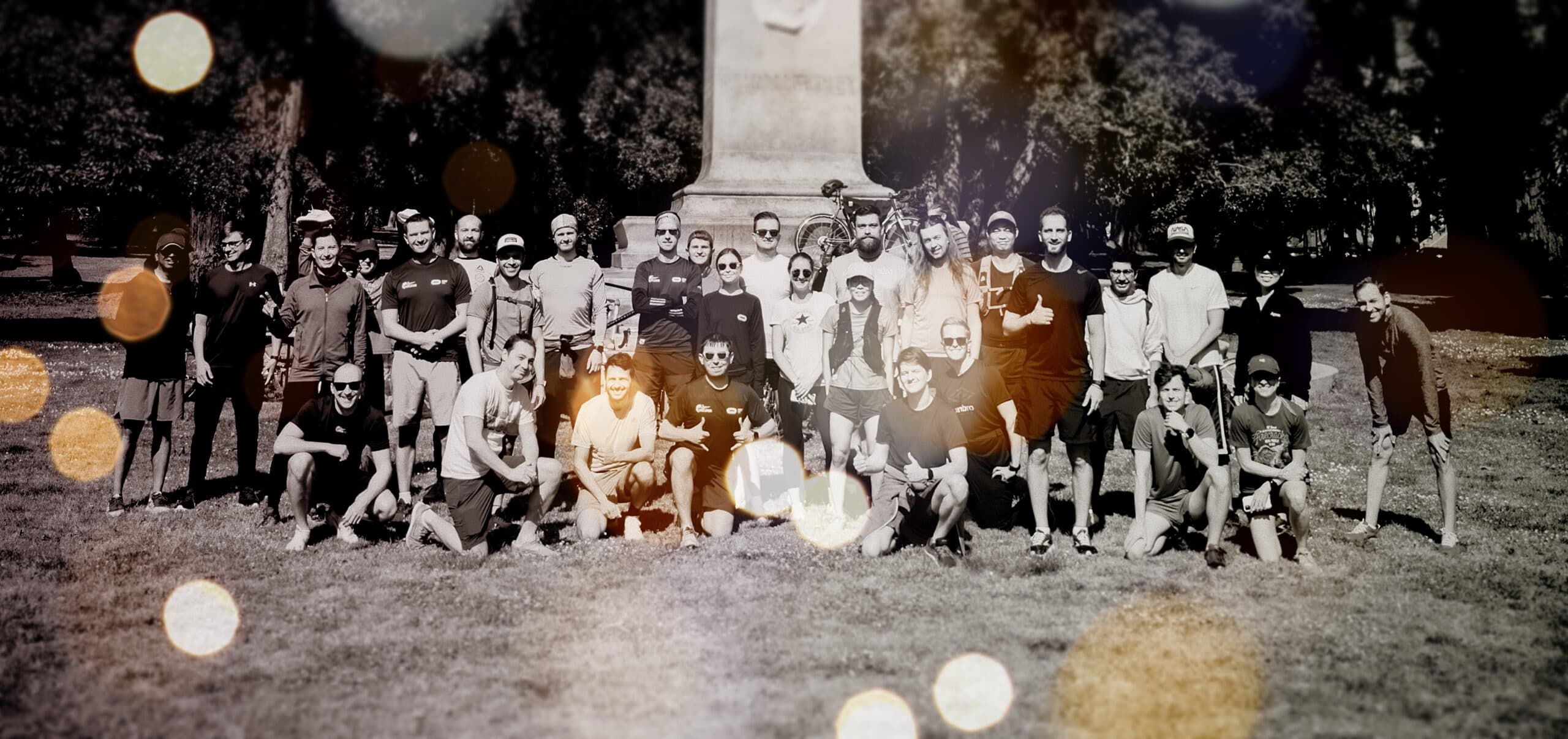
The roughly 80 members who make up the 442 Crew today are drawn from both sides of the border, with roots in the founding communities of Belgrade Urban Running Team and Zagreb Runners. What holds them together is not pace or mileage, though the crew encompasses runners across the full spectrum of experience. It is something harder to quantify: a shared sense of what running can mean when it is pointed at something beyond personal improvement. The crew's runs are described simply as happening at any time, somewhere in Croatia and Serbia, a schedule that reflects the cross-border reality of their existence. There is no single meeting point, no fixed weekly slot. The crew finds each other, and then they run. That flexibility is part of what makes the 442 Crew unusual. Most crews build their community around a recurring ritual, a Thursday evening 10k, a Saturday long run from a specific corner of a specific park. The 442 Crew's ritual is the relationship itself. The runs are the expression of something that already exists, not the mechanism for creating it. That is a subtle but meaningful difference, and it speaks to how deeply the founding idea has taken root. The people behind this crew did not meet because they ran. They run because of what they found in each other.A Legacy Still Being Written
The 442 Crew is still growing, still crossing borders, still collecting members who find in running the same freedom from the past that the founders first glimpsed. Their legacy is not yet fixed, which is exactly as it should be. Legacies that calcify too early tend to become monuments rather than movements. The 442 Crew is still very much a movement, one with muddy shoes, an open invitation, and a number that means something every time it is spoken aloud. Follow the crew on Instagram at 442crew to track where they are running next, in Belgrade, in Zagreb, or somewhere else entirely on the long road between the two. The gap is real. The bridge is too.Featured Crew

R
RunningCrews Editorial
RunningCrews.com