 RunningCrews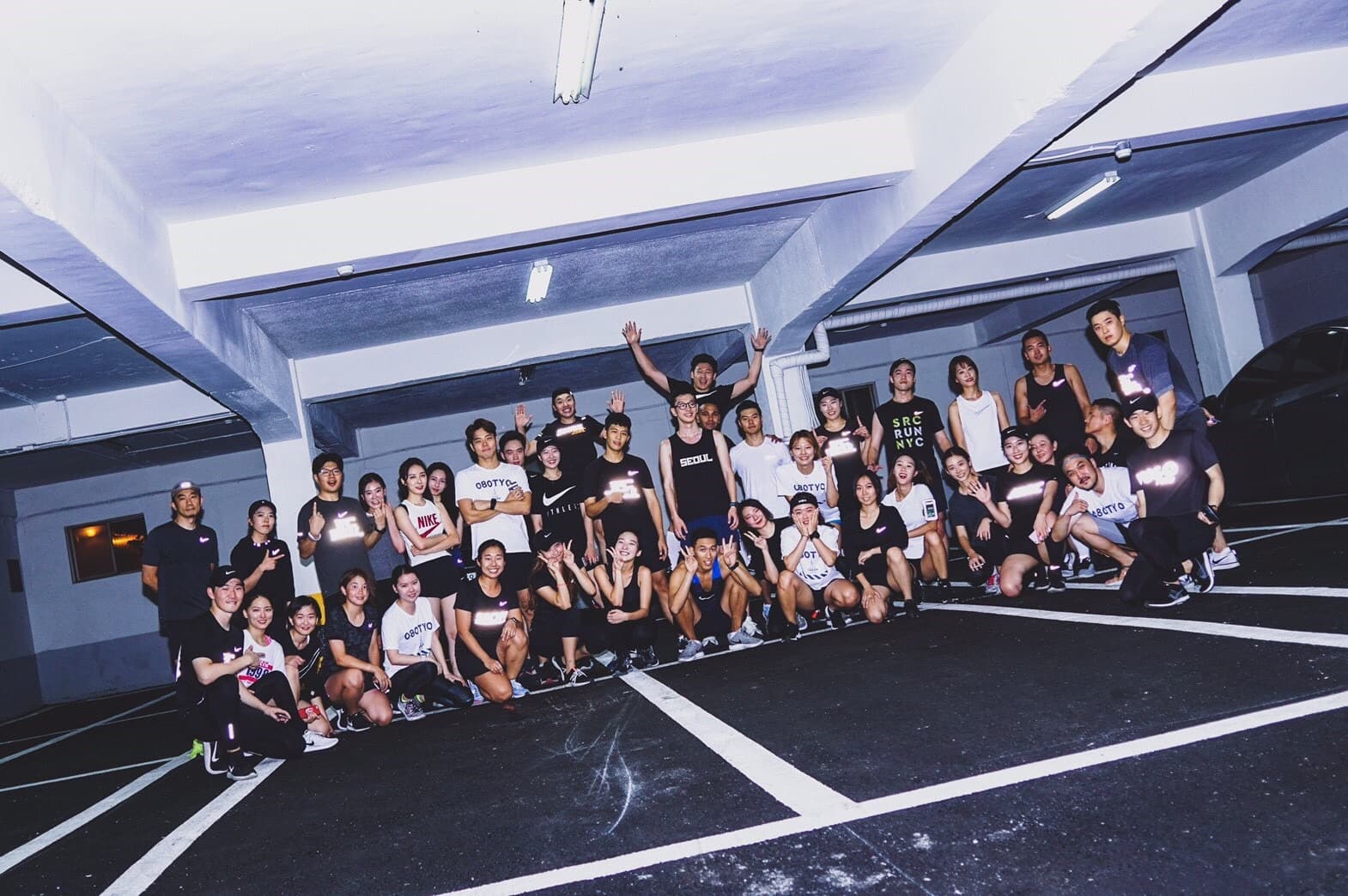
Three digits. That is all it took to build an identity. In Japan, mobile numbers beginning with 080 belong to a generation: young people, city dwellers, people who move fast and think freely. When Koichi, Higashi, and Nashil co-founded their running crew in Tokyo in March 2017, the name they chose was not arbitrary. 080Tokyo is a declaration rooted in telephone area codes, youth culture, and the particular charge that comes from living in one of the world's most kinetic cities. To anyone on the outside, it reads like a string of numbers. To the people who run with it, it is a badge and a promise.
A Name With Deep Tokyo Roots
The story of how a phone prefix became a cultural symbol says something important about how 080Tokyo thinks. The crew did not name itself after a neighbourhood, a landmark, or a pace target. It reached into the quiet infrastructure of everyday Japanese life and pulled out something that felt true. In Japan, the first three digits of a mobile number can say something about who you are and when you came of age. 080 belongs to a wave of young people for whom Tokyo is not a backdrop but a living, shifting project. By weaving that prefix into their identity, the founders signalled that this crew would be about people first: their conversations, their energy, their willingness to meet strangers and move through the city together. The name is a secret handshake legible only to those who know what to listen for, and that quiet sense of insider knowledge has shaped the crew's culture from the start.Three Founders, One Shared Conviction
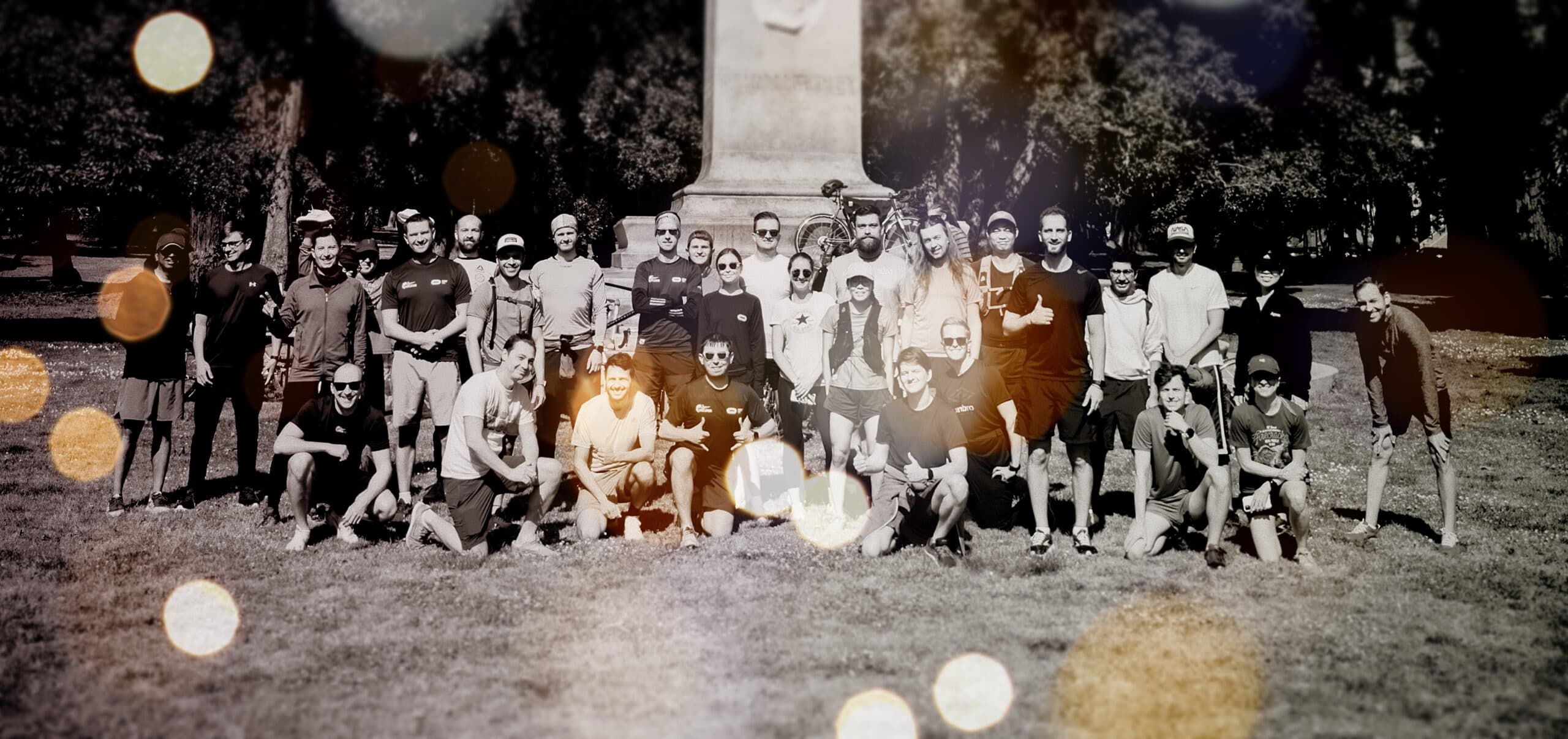
Koichi, Higashi, and Nashil came together around a shared conviction: that running, as a social act, has the power to dismantle barriers that polite conversation rarely touches. Language barriers. Professional hierarchies. The particular reserve that can make it difficult to form genuine friendships in a city as large as Tokyo. The three founders believed that putting bodies in motion together, side by side, breathing the same air and sharing the same route, could do what business cards and small talk cannot. From that belief, they built something loose enough to welcome anyone and strong enough to hold around a hundred members together today. The crew draws runners from multiple nationalities and professions, and the conversations that happen on a Monday evening run often span several languages within the same kilometre.What MissionZero Means on the Ground
080Tokyo operates under a framework they call MissionZero, a set of three principles that guide how the crew thinks about its place in the world. The first is a permanent orientation toward young people, keeping the crew's energy and purpose anchored in the generation that is still figuring out what kind of city it wants to live in. The second is the belief that real communication, the kind that actually changes people, happens through shared physical experience rather than through screens or structured events. The third is a conscious awareness of the societal issues that affect the people running alongside you: economic pressures on young workers, isolation in dense urban environments, the difficulty of building meaningful community in a city that often rewards self-sufficiency over collaboration. These are not abstract values printed on a website. They shape the events the crew organises, the conversations they encourage, and the decision to keep the crew open rather than selective. Anyone can join. That is not a footnote; it is the whole point.The Saturday Club and the Brotherhood of the Loose Run
Inside 080Tokyo lives a thing called the Saturday Club. The crew describes it as the loosest and most social cultural running club in Tokyo, which is a description worth pausing on. In a city where clubs, teams, and professional associations tend toward formality and hierarchy, the Saturday Club positions itself as a deliberate counterweight. Its focus is well-being, not performance. Its purpose is to help runners experience the city and its culture rather than to chase splits or prepare for race day. The Saturday Club is where the crew's philosophy becomes most visible: no exclusions, no pace requirements, no gatekeeping. Just people moving through Tokyo together and finding out what the city looks and feels like from the inside of a run. It functions as the social heart of 080Tokyo, the place where new members become regulars and regulars become friends.Running Shibuya With Speakers and Without Apology
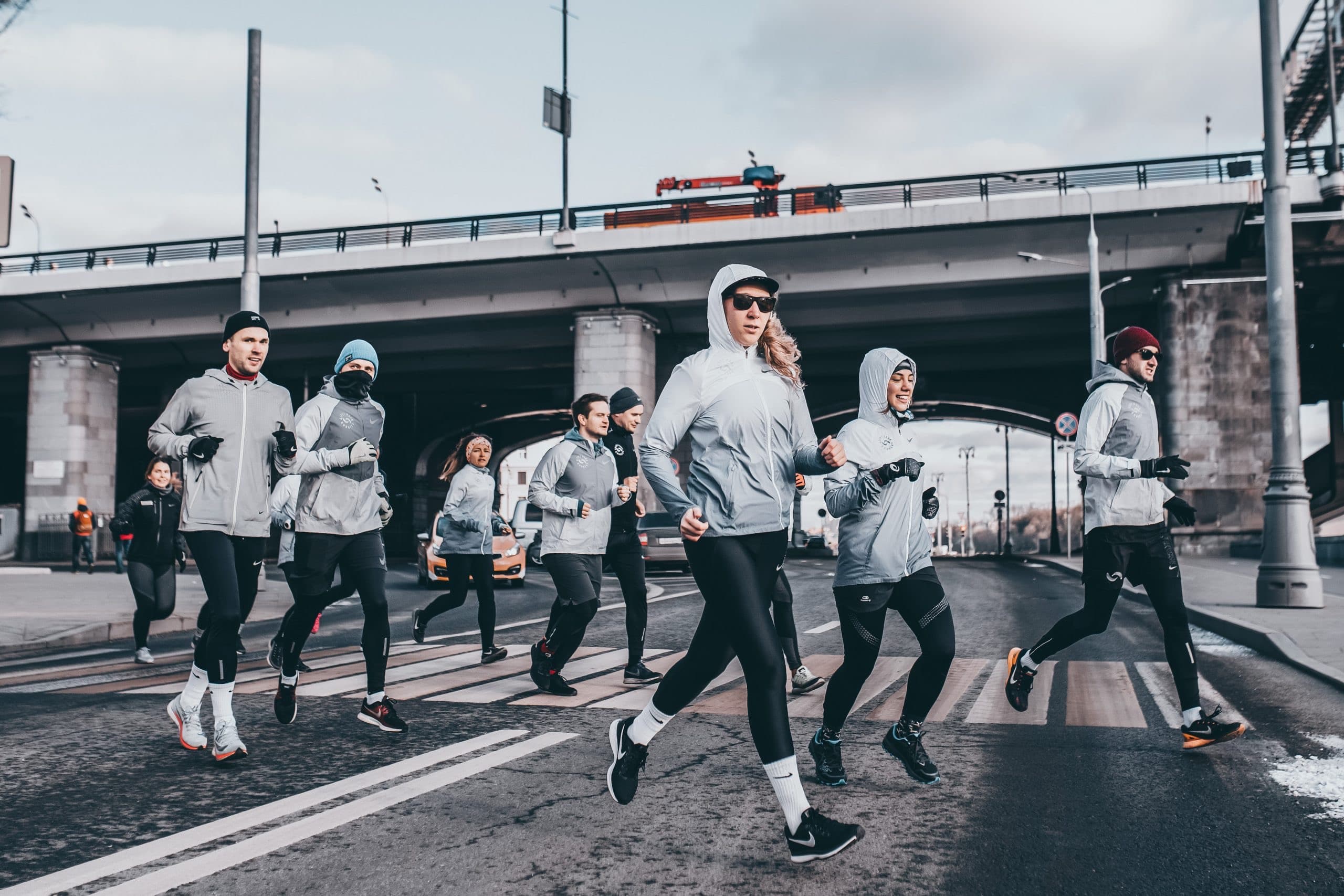
080Tokyo has a habit that captures something essential about who they are. When they run through Shibuya, they bring speakers and play music. In a city that prizes order and quiet public behaviour, this is a minor act of defiance, and an effective one. The sound draws eyes. It draws curiosity. It draws people who might otherwise never approach a running group and ask if they can come along. Yuna, the crew's captain, has spoken about how running with 080Tokyo freed him from the pressure to conform, giving him room to express himself in a way that feels genuinely fun rather than performance-driven. Running through Shibuya with music playing is not a stunt. It is an invitation, one that broadcasts the crew's energy before a single word is exchanged. Shibuya, with its crossing, its competing storefronts, its layers of visual and sonic noise, turns out to be the perfect stage for a crew that believes running is communication.Mondays at Yoyogi, and the Run After the Run
The crew gathers on Monday evenings, meeting at Yoyogi Park at 20:10. Yoyogi is one of Tokyo's most beloved green spaces, a place that can feel almost startlingly quiet once you move away from the surrounding streets and into its tree-lined paths. For a crew that runs through Shibuya on other days, the contrast is part of the point. Tokyo contains multitudes, and 080Tokyo has made a habit of moving through as many of them as possible. After the run, the crew heads to Hachiman-yu, their regular meeting place and the neighbourhood public bath that has become central to their identity. The sento, or public bathhouse, is a Tokyo institution with a long social history, and 080Tokyo has revived that tradition in their own way. The post-run soak is where the distances between people collapse entirely. Rank, nationality, language ability: none of it matters in the changing room or the hot water. The run opens the conversation; the bath deepens it.Building Across Borders and Between Cities
080Tokyo has not stayed within Tokyo's borders. The crew has organised running events alongside crews from South Korea and other parts of Japan, using those collaborations to expand their network and test the idea that running crews can function as bridges between communities that rarely interact otherwise. These cross-border events reflect the same logic that drives MissionZero: sport as a vehicle for genuine exchange, not just competition. The crew sees running as a tool for addressing social problems, particularly among younger generations who may feel disconnected from the institutions and communities around them. That is an ambitious claim, but 080Tokyo is willing to make it, and to back it up with the steady, unglamorous work of showing up every week, welcoming new faces, and keeping the door open. Around a hundred members have found their way in so far. The number keeps growing.Tokyo as Running Ground
The city that 080Tokyo calls home offers an extraordinary range of terrain for anyone willing to lace up and go. The paths around the Imperial Palace have long been a fixture of Tokyo running culture. Sumida River and the Tamagawa offer longer, flatter routes with the water always in view. Yoyogi Park provides a green refuge in the middle of the city, the kind of place where the urban noise dims and the only sounds are footsteps and conversation. Tokyo's calendar fills with races throughout the year, from the Tokyo Marathon in February, which draws elite runners and enthusiastic amateurs from across the globe, to smaller local events that let crews like 080Tokyo race as a unit and carry their identity into competition. For a crew built on connection and movement, the city is not just a backdrop. It is the whole environment: dense, generous, unpredictable, and always offering another route to explore together. 080Tokyo has spent years learning its rhythms, and the learning is still going.Featured Crew
R
RunningCrews Editorial
RunningCrews.com